Provoking the Fire: Ahab's Legacy and Our Choices
"And Ahab made a grove; and Ahab did more to provoke the LORD God of Israel to anger than all the kings of Israel that were before him." - 1 Kings 16:33
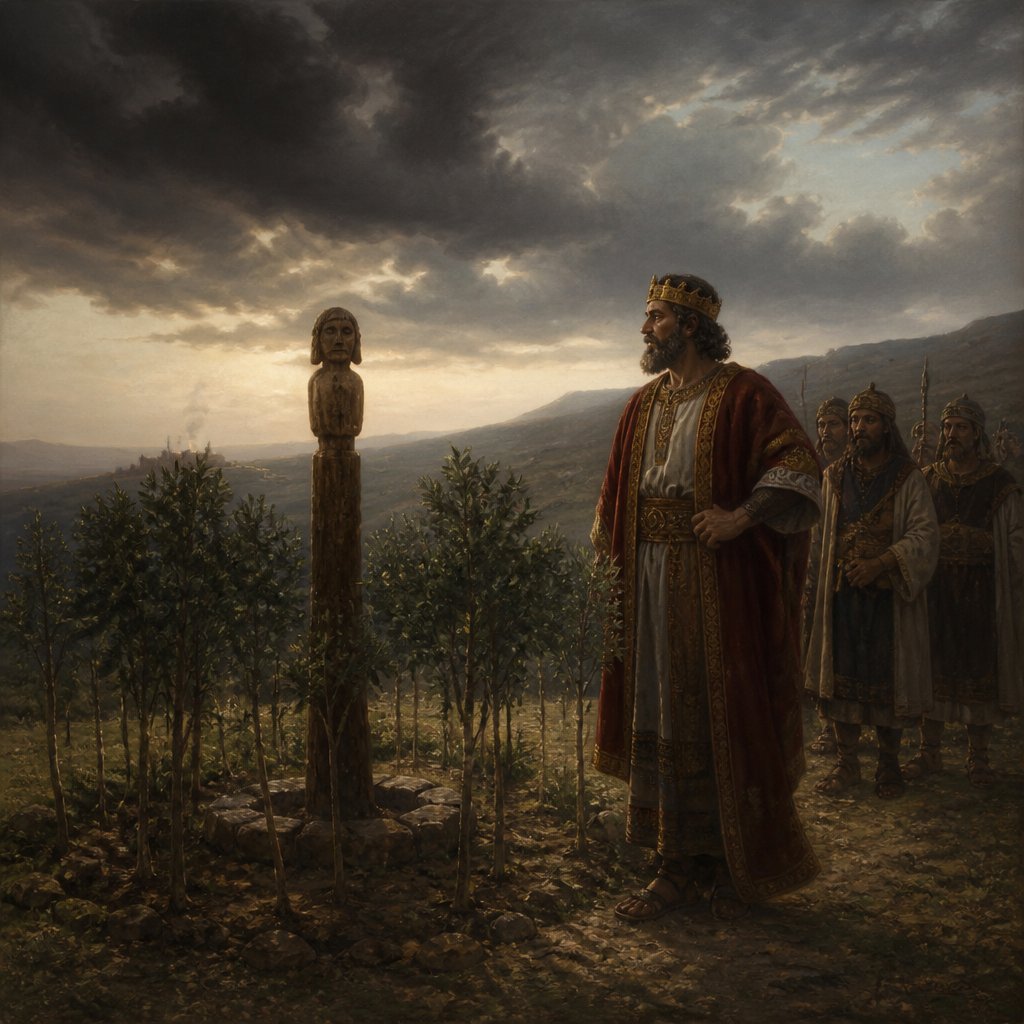
In 1 Kings 16:33, we read, “And Ahab made a grove; and Ahab did more to provoke the LORD God of Israel to anger than all the kings of Israel that were before him.” This grave indictment of King Ahab stands not just as a historical assessment but as a clarion call for reflection on the choices that lead us either into deeper fellowship with God or further away from His grace.
Ahab, the seventh king of Israel and the son of Omri, is widely regarded as one of the most wicked rulers in Israel's history. His reign was marked by idolatry and a blatant disregard for the commands of God. The reference to Ahab making a grove—an altar or place of worship for the Canaanite goddess Asherah—highlights his blatant turn away from the worship of Yahweh and sets the stage for understanding the depth of his sin. To provoke the LORD God of Israel to anger is no trivial charge; it signifies a purposeful rebellion against divine authority and truth.
What does it mean for us today to provoke God to anger? Ahab's actions can be seen as symptomatic of a deeper issue, one that resonates in our contemporary context. In today’s society, idolatry often takes forms that are less overt than the ancient worship of Asherah or Baal. Many contend with the idols of materialism, self-gratification, and societal approval, allowing these sometimes innocuous interests to become the 'groves' in our own lives. Ahab’s choices serve as a warning: each small concession we make toward worldly ways can lead to a greater estrangement from God.
The text specifies that Ahab did more than all the kings before him to provoke God. This phrase compels us to reflect on the continuous nature of rebellion against God’s commands. With each subsequent ruler, there was a gradual decline in fidelity to God, but Ahab's acts were a culmination of compounded disobedience. For us, it begs the question: Are our individual decisions leading us closer to or further away from God? As Christians, we are called to a deeper level of obedience and commitment, yet it is often in the casual ways we allow the world to influence us that we find ourselves provoking the Spirit.
Moreover, we must consider what led Ahab to compound his wrongs. The cultural influences of the time, as well as his own personal desires, shaped his decisions. He was influenced by his marriage to Jezebel, who was fervently committed to the worship of the Baals, and this partnership appears to have extinguished any remaining resistance in Ahab’s heart against idolatry. We must ask ourselves who or what are the influences in our lives. Are there people or ideologies that encourage us toward laxity in our faith? Are we surrounding ourselves with voices that compromise our commitment to God?
Ahab’s story ultimately serves as a poignant reminder of the weight of our choices and the impact they have not just on us but on our communities. Leaders lead by example, and the influence we wield matters immensely. Ahab’s legacy teaches us that our decisions echo far beyond our immediate circles, resonating through generations.
As we meditate on this verse, let us ask for God’s grace to identify our own groves—those places where we might be tempted to make compromises that lead us away from Him. God does not take lightly the rebellion of His people. We have an opportunity to arise each day and choose the path of righteousness, allowing every decision to bring glory to His name.
Let us pray for clarity as we navigate these choices and seek to live lives that do not provoke our Lord to anger, but rather, invite His presence and blessing into our hearts and homes. In doing so, may we contribute to a legacy of faithfulness rather than one of rebellion, lighting the way for those who come after us.
Want to reflect more on 1 Kings 16:33?
Continue your spiritual journey with Bible Chat — an AI-powered tool for exploring God's Word through conversation. Ask questions, discover connections, and deepen your understanding.
Get Our Apps


1 Kings 16:33 Artwork

1 Kings 16:33 - "And Ahab made a grove; and Ahab did more to provoke the LORD God of Israel to anger than all the kings of Israel that were before him."
"And Ahab made a grove; and Ahab did more to provoke the LORD God of Israel to anger than all the kings of Israel that were before him." - 1 Kings 16:33

1 Chronicles 16:33 – "Then shall the trees of the forest sing for joy before the Lord, for he comes to judge the earth."

1 Kings 22:33 - "And it came to pass, when the captains of the chariots perceived that it was not the king of Israel, that they turned back from pursuing him."

1 Kings 6:33 - "So also made he for the door of the temple posts of olive tree, a fourth part of the wall."

1 Chronicles 16:33 - "Then shall the trees of the wood sing out at the presence of the LORD, because he cometh to judge the earth."

1 Kings 7:33 - "And the work of the wheels was like the work of a chariot wheel: their axletrees, and their naves, and their felloes, and their spokes, were all molten."

John 16:33

John 16:33

John 16:33

John 16:33
John 16:33

John 16:33

1 Kings 20:16 - "And they went out at noon. But Ben-hadad was drinking himself drunk in the pavilions, he and the kings, the thirty and two kings that helped him."

1 Kings 15:33 - "In the third year of Asa king of Judah began Baasha the son of Ahijah to reign over all Israel in Tirzah, twenty and four years."

1 Kings 16:14 - "Now the rest of the acts of Elah, and all that he did, are they not written in the book of the chronicles of the kings of Israel?"

1 Kings 1:16 - "And Bath-sheba bowed, and did obeisance unto the king. And the king said, What wouldest thou?"

1 Kings 1:33 - "The king also said unto them, Take with you the servants of your lord, and cause Solomon my son to ride upon mine own mule, and bring him down to Gihon:"

1 Kings 4:16 - "Baanah the son of Hushai was in Asher and in Aloth:"

1 Kings 16:1 - "Then the word of the LORD came to Jehu the son of Hanani against Baasha, saying,"

1 Kings 16:5 - "Now the rest of the acts of Baasha, and what he did, and his might, are they not written in the book of the chronicles of the kings of Israel?"

1 Kings 16:20 - "Now the rest of the acts of Zimri, and his treason that he wrought, are they not written in the book of the chronicles of the kings of Israel?"

1 Timothy 6:15-16 – "God, the blessed and only Ruler, the King of kings and Lord of lords."

1 Timothy 6:15-16 – "God, the blessed and only Ruler, the King of kings and Lord of lords."
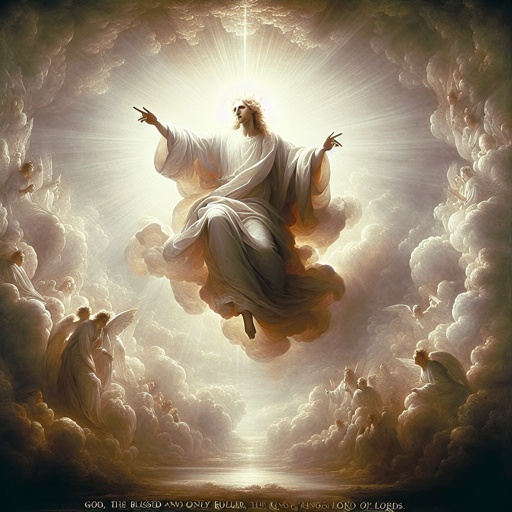
1 Timothy 6:15-16 – "God, the blessed and only Ruler, the King of kings and Lord of lords."

John 16 : 33

1 Timothy 6:15-16 – "God, the blessed and only Ruler, the King of kings and Lord of lords."

1 Kings 15:16 - "¶ And there was war between Asa and Baasha king of Israel all their days."

1 Timothy 6:15-16 – "God, the blessed and only Ruler, the King of kings and Lord of lords."

1 Kings 3:16 - "¶ Then came there two women, that were harlots, unto the king, and stood before him."