The Legacy of Choices: Reflections on Ahab's Rebellion
"And Ahab the son of Omri did evil in the sight of the LORD above all that were before him." - 1 Kings 16:30
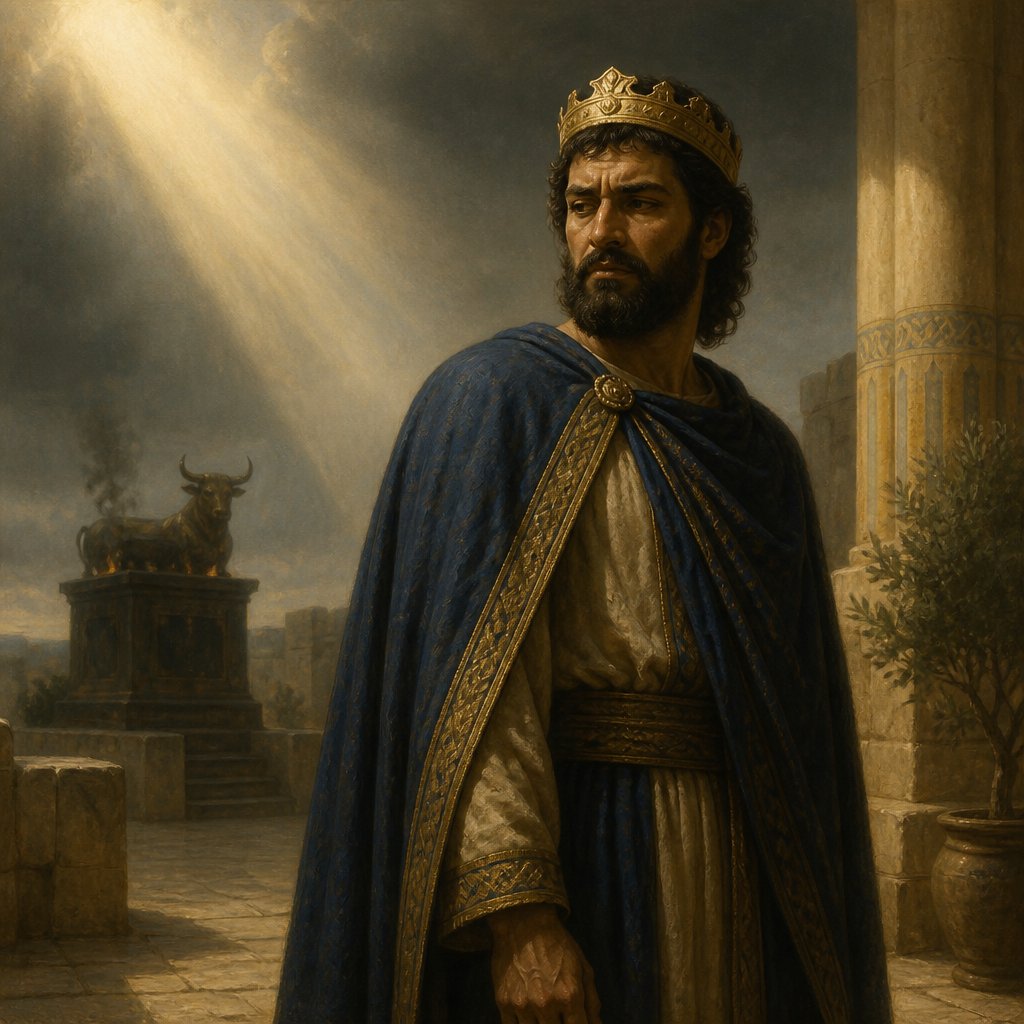
In the annals of biblical history, there are figures whose stories serve as cautionary tales, and among these stands King Ahab, son of Omri, whose reign in Israel marked a profound departure from faithfulness to God. The scripture in 1 Kings 16:30 states, "And Ahab the son of Omri did evil in the sight of the LORD above all that were before him." This verse encapsulates the essence of Ahab’s legacy—a legacy not just of disobedience, but one that profoundly illustrates the consequences of a life led by choices contrary to God's will.
To fully grasp the significance of this declaration, it is essential to recognize the context in which Ahab reigned. He was not an isolated case of moral failure; his father Omri also led a controversial reign. However, Ahab took this a step further. He embraced idolatry, particularly the worship of Baal, a practice that the Israelites were specifically commanded to eschew. Through his marriage to Jezebel, a Phoenician princess, Ahab not only aligned himself politically but spiritually, further entrenching the worship of false gods within the very fabric of Israelite society.
The phrase "did evil in the sight of the LORD" is striking. It reminds us of the omnipresence of God—He sees all, including the hidden places of our hearts and deeds. Ahab’s actions were not confined to the privacy of his palace; they were open defiance against the Creator. His sin was manifold: he instituted the worship of Baal, built a temple for this idol, and led his people astray. In doing so, he invited divine judgment upon himself and his nation, forgetting that God's eyes are ever-watchful and His justice inevitable.
In contemplating Ahab's life, we are admonished to consider the weights of the choices we make. Ahab had the opportunity to lead Israel back to God, to restore the covenant relationship that had defined his ancestors. Yet, instead, he continued in the path of rebellion, prioritizing political alliances and personal gain over spiritual fidelity. This raises an important question relevant to our own lives: how often do we choose the allure of worldly success or acceptance over faithfulness to God?
Each decision we make contributes to the legacy we leave behind. Ahab experienced immediate gains through his alliances and idol worship, but his legacy was that of profound failure—a man whose name would be synonymous with evil through generations. The choices we make, while they may seem inconsequential in the moment, accumulate and forge a path that leads either towards God or away from Him. We cannot afford to take our decision-making lightly, for they do not merely affect us in isolation; they impact our families, communities, and future generations.
Moreover, Ahab's story is a stark reminder of the destructive nature of a divided heart. When he chose to worship Baal, he did not abandon God altogether; rather, he attempted to serve both God and idols, a practice that brought about tumult and turmoil. In our lives, we might find ourselves struggling with similar dualities. Do we seek fulfillment in our careers and possessions, or do we genuinely trust that God's goodness is sufficient? It is crucial to recognize that divided loyalty breeds chaos, a lesson evident in the tragic demise of Ahab and his dynasty.
Let us reflect on this sobering account and ask ourselves: what legacy are we building? Are we, like Ahab, following the troubling paths set by others, or are we actively seeking to align our choices with God's will? As we search our hearts, may we strive to choose the narrow path of righteousness, recognizing that our decisions today echo into eternity. Ahab's legacy speaks to us across the ages, urging us to embrace faithfulness, integrity, and a steadfast love for God above all.
In conclusion, let us pursue a life that honors God, knowing that our legacy, much like that of Ahab, will be defined by the choices we make in our pursuit of faith. May we endeavor to say that we acted "not in evil but in the sight of the LORD" and thus create a legacy of faithfulness for generations to come. Amen.
Want to reflect more on 1 Kings 16:30?
Continue your spiritual journey with Bible Chat — an AI-powered tool for exploring God's Word through conversation. Ask questions, discover connections, and deepen your understanding.
Get Our Apps


1 Kings 16:30 Artwork

1 Kings 16:30 - "And Ahab the son of Omri did evil in the sight of the LORD above all that were before him."
"And Ahab the son of Omri did evil in the sight of the LORD above all that were before him." - 1 Kings 16:30

1 Kings 11:30-31

1 Kings 11:30-31

1 Kings 11:30-31

1 Kings 14:30 - "And there was war between Rehoboam and Jeroboam all their days."

1 Kings 6:30 - "And the floor of the house he overlaid with gold, within and without."

1 Kings 11:30 - "And Ahijah caught the new garment that was on him, and rent it in twelve pieces:"

1 Chronicles 16:30 - "Fear before him, all the earth: the world also shall be stable, that it be not moved."

1 Kings 4:30 - "And Solomon's wisdom excelled the wisdom of all the children of the east country, and all the wisdom of Egypt."

1 Kings 12:30 - "And this thing became a sin: for the people went to worship before the one, even unto Dan."

1 Kings 20:16 - "And they went out at noon. But Ben-hadad was drinking himself drunk in the pavilions, he and the kings, the thirty and two kings that helped him."

1 Kings 16:14 - "Now the rest of the acts of Elah, and all that he did, are they not written in the book of the chronicles of the kings of Israel?"

1 Kings 1:16 - "And Bath-sheba bowed, and did obeisance unto the king. And the king said, What wouldest thou?"

1 Kings 4:16 - "Baanah the son of Hushai was in Asher and in Aloth:"

1 Kings 16:1 - "Then the word of the LORD came to Jehu the son of Hanani against Baasha, saying,"

1 Kings 16:5 - "Now the rest of the acts of Baasha, and what he did, and his might, are they not written in the book of the chronicles of the kings of Israel?"

1 Kings 16:20 - "Now the rest of the acts of Zimri, and his treason that he wrought, are they not written in the book of the chronicles of the kings of Israel?"

1 Timothy 6:15-16 – "God, the blessed and only Ruler, the King of kings and Lord of lords."

1 Timothy 6:15-16 – "God, the blessed and only Ruler, the King of kings and Lord of lords."
1 Timothy 6:15-16 – "God, the blessed and only Ruler, the King of kings and Lord of lords."

1 Kings 13:30 - "And he laid his carcase in his own grave; and they mourned over him, saying, Alas, my brother!"

1 Timothy 6:15-16 – "God, the blessed and only Ruler, the King of kings and Lord of lords."

1 Kings 15:16 - "¶ And there was war between Asa and Baasha king of Israel all their days."

1 Timothy 6:15-16 – "God, the blessed and only Ruler, the King of kings and Lord of lords."

"And there was war between Rehoboam and Jeroboam all their days." - 1 Kings 14:30

1 Kings 3:16 - "¶ Then came there two women, that were harlots, unto the king, and stood before him."

1 Kings 16:27 - "Now the rest of the acts of Omri which he did, and his might that he shewed, are they not written in the book of the chronicles of the kings of Israel?"

"And the floor of the house he overlaid with gold, within and without." - 1 Kings 6:30

1 Kings 16:33 - "And Ahab made a grove; and Ahab did more to provoke the LORD God of Israel to anger than all the kings of Israel that were before him."