Walking in the Ways of Jeroboam: A Call to Faithfulness
"For he walked in all the way of Jeroboam the son of Nebat, and in his sin wherewith he made Israel to sin, to provoke the LORD God of Israel to anger with their vanities." - 1 Kings 16:26
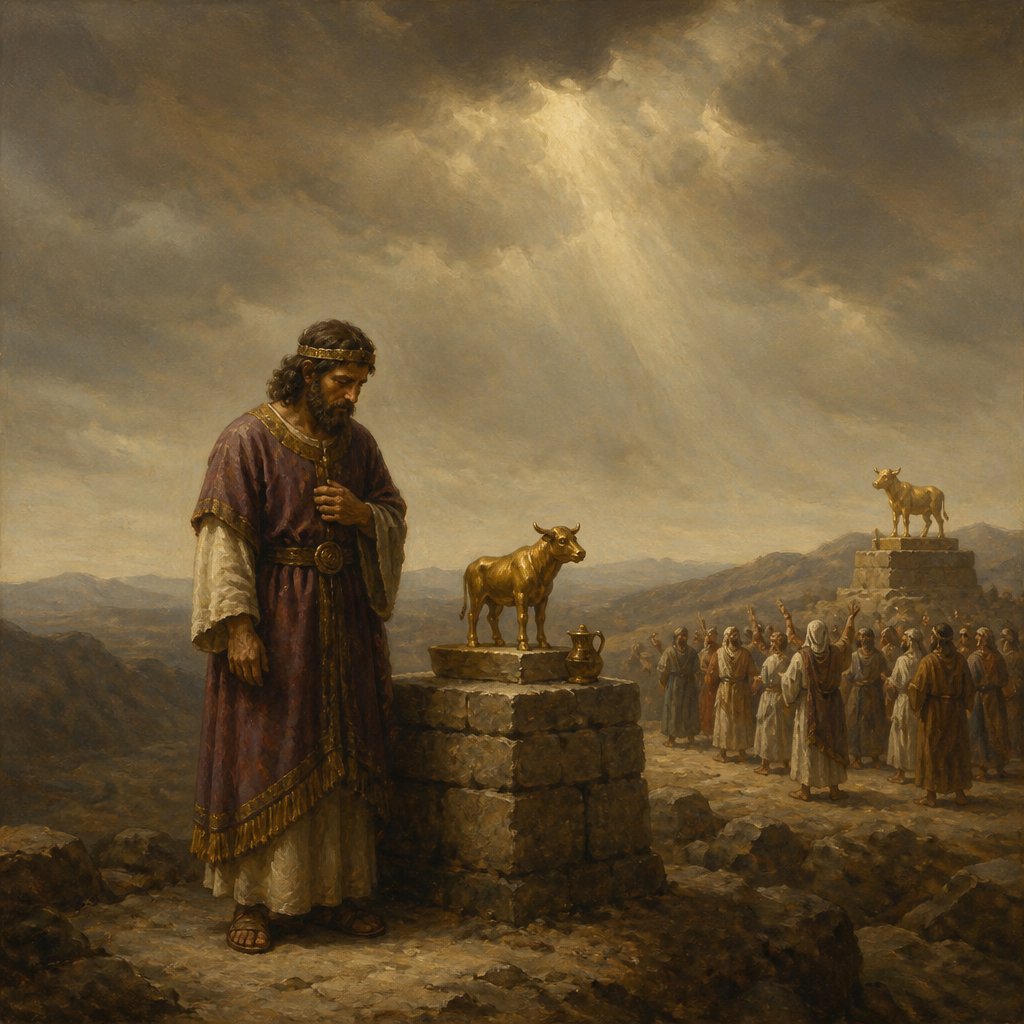
In 1 Kings 16:26, we read a sobering evaluation of King Ahaziah’s leadership: "For he walked in all the way of Jeroboam the son of Nebat, and in his sin wherewith he made Israel to sin, to provoke the LORD God of Israel to anger with their vanities." This passage unveils a profound lesson about legacy, influence, and the serious consequences of turning away from the true God.
Jeroboam, the son of Nebat, is a pivotal figure in the history of Israel. He was the first king of the northern kingdom, Israel, after the division of the united monarchy. His reign was characterized by a departure from the worship of the true God. Rather than leading his people toward repentance and faithfulness, he led them into idolatry by making golden calves and establishing false worship centers. His actions set a framework for sin that would have repercussions for generations.
The phrase "he walked in all the way of Jeroboam" highlights a critical concept—walking in someone’s way denotes the adoption of their beliefs, practices, and values. Ahaziah followed in the footsteps of Jeroboam instead of rejecting his sinful practices. This suggests that he not only committed the same sins, but embraced the same heart posture that led to rebellion against God. The passage states that Ahaziah "provoked the LORD God of Israel to anger with their vanities." Such an indictment underscores the gravity of his actions and the seriousness of idolatry, which the Lord vehemently opposes.
In our modern context, it’s vital to reflect upon whose footsteps we are following. Are we walking in the ways of those who honor God, or do we find ourselves mimicking the practices of those who would lead us astray? The dangers are real, and the influences of our surroundings can lead us to compromise our values and faith. Like Ahaziah, we may not realize the magnitude of our choices until faced with their consequences.
The vanities mentioned in this verse represent the hollow and worthless pursuits that often distract us from the true worship of God. Even in our time, modern vanities can take many shapes: the pursuit of material wealth, the quest for social status, or the longing for popularity. When we prioritize these above our relationship with God, we are, in essence, provoking Him to anger. The Lord desires our hearts, and when they wander toward vanity, we distance ourselves from His blessing and favor.
Moreover, Ahaziah’s legacy serves as a warning about the long-lasting impacts of one’s life choices, especially for leaders. Those entrusted with authority must be vigilant in their spiritual walk. Their personal choices can lead entire nations up or down a path of righteousness or rebellion. Therefore, it is crucial for us to examine our lives. Are we influencing others positively toward Christ or inadvertently leading them into idolatry—as was the downfall of Jeroboam and Ahaziah?
As you ponder this scripture today, consider the areas of your life where you may be following the ways of 'your own Jeroboams.' Confess any unfaithfulness and ask the Lord to help you turn away from vanities. Seek to be a vessel of honor, emulating Christ instead of the patterns of a fallen world. Your walk should reflect a life committed to the Lord, which ultimately influences others toward Him.
As we repent and strive to align our lives with God’s will, may we also encourage those around us—whether in our families, workplaces, or communities—to seek authenticity in their relationship with the Lord. Let us leave behind a legacy of faithfulness, unlike that of Jeroboam and Ahaziah, so that we may provoke God only to bless us with His presence and love.
Want to reflect more on 1 Kings 16:26?
Continue your spiritual journey with Bible Chat — an AI-powered tool for exploring God's Word through conversation. Ask questions, discover connections, and deepen your understanding.
Get Our Apps


1 Kings 16:26 Artwork

1 Kings 16:26 - "For he walked in all the way of Jeroboam the son of Nebat, and in his sin wherewith he made Israel to sin, to provoke the LORD God of Israel to anger with their vanities."
"For he walked in all the way of Jeroboam the son of Nebat, and in his sin wherewith he made Israel to sin, to provoke the LORD God of Israel to anger with their vanities." - 1 Kings 16:26

1 Kings 14:26
1 Kings 14:26

1 Chronicles 16:26 - "For all the gods of the people are idols: but the LORD made the heavens."

1 Kings 6:26 - "The height of the one cherub was ten cubits, and so was it of the other cherub."

1 Kings 20:16 - "And they went out at noon. But Ben-hadad was drinking himself drunk in the pavilions, he and the kings, the thirty and two kings that helped him."

1 Kings 16:14 - "Now the rest of the acts of Elah, and all that he did, are they not written in the book of the chronicles of the kings of Israel?"

1 Kings 12:26 - "And Jeroboam said in his heart, Now shall the kingdom return to the house of David:"

1 Kings 1:16 - "And Bath-sheba bowed, and did obeisance unto the king. And the king said, What wouldest thou?"

1 Kings 4:16 - "Baanah the son of Hushai was in Asher and in Aloth:"

1 Kings 16:1 - "Then the word of the LORD came to Jehu the son of Hanani against Baasha, saying,"

1 Kings 16:5 - "Now the rest of the acts of Baasha, and what he did, and his might, are they not written in the book of the chronicles of the kings of Israel?"

1 Kings 16:20 - "Now the rest of the acts of Zimri, and his treason that he wrought, are they not written in the book of the chronicles of the kings of Israel?"

1 Timothy 6:15-16 – "God, the blessed and only Ruler, the King of kings and Lord of lords."

1 Timothy 6:15-16 – "God, the blessed and only Ruler, the King of kings and Lord of lords."
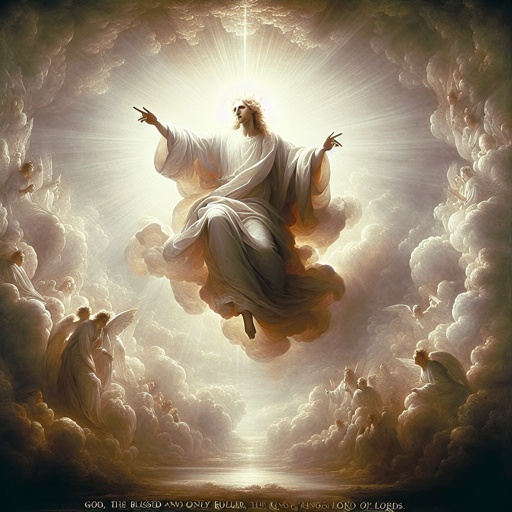
1 Timothy 6:15-16 – "God, the blessed and only Ruler, the King of kings and Lord of lords."

1 Kings 4:26 - "¶ And Solomon had forty thousand stalls of horses for his chariots, and twelve thousand horsemen."

1 Kings 1:26 - "But me, even me thy servant, and Zadok the priest, and Benaiah the son of Jehoiada, and thy servant Solomon, hath he not called."

1 Kings 22:26 - "And the king of Israel said, Take Micaiah, and carry him back unto Amon the governor of the city, and to Joash the king's son;"

1 Timothy 6:15-16 – "God, the blessed and only Ruler, the King of kings and Lord of lords."

1 Kings 15:16 - "¶ And there was war between Asa and Baasha king of Israel all their days."

1 Timothy 6:15-16 – "God, the blessed and only Ruler, the King of kings and Lord of lords."

1 Kings 3:16 - "¶ Then came there two women, that were harlots, unto the king, and stood before him."

1 Kings 16:27 - "Now the rest of the acts of Omri which he did, and his might that he shewed, are they not written in the book of the chronicles of the kings of Israel?"

1 Kings 9:26 - "¶ And king Solomon made a navy of ships in Ezion-geber, which is beside Eloth, on the shore of the Red sea, in the land of Edom."

1 Kings 16:33 - "And Ahab made a grove; and Ahab did more to provoke the LORD God of Israel to anger than all the kings of Israel that were before him."

1 Kings 20:26 - "And it came to pass at the return of the year, that Ben-hadad numbered the Syrians, and went up to Aphek, to fight against Israel."

1 Chronicles 26:16 - "To Shuppim and Hosah the lot came forth westward, with the gate Shallecheth, by the causeway of the going up, ward against ward."

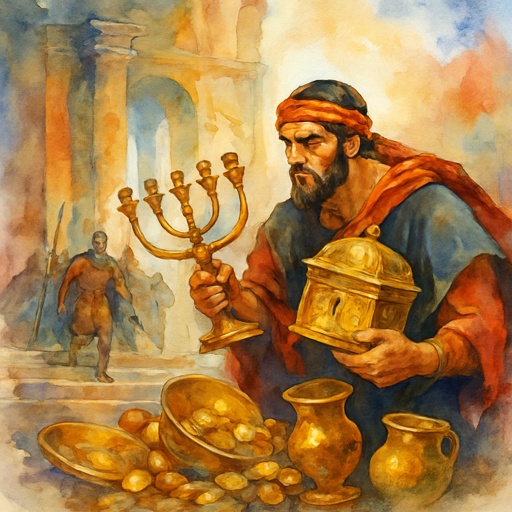
1 Kings 14:26 Show the King of Egypt dressed in Egyptian kingly attire overseeing the removal of the treasures.