Destruction of Idols: A Lesson from Zimri's Revolt
"Thus did Zimri destroy all the house of Baasha, according to the word of the LORD, which he spake against Baasha by Jehu the prophet," - 1 Kings 16:12

In the annals of biblical history, few stories stand out as strikingly as the downfall of King Baasha and the rise of Zimri as recorded in 1 Kings 16:12 — "Thus did Zimri destroy all the house of Baasha, according to the word of the LORD, which he spake against Baasha by Jehu the prophet." This verse captures a pivotal moment in Israel's history, where the divine decree coincided with the tumultuous events of human leadership, betrayal, and judgment.
To truly understand the depth of this passage, we need to reflect on the context of Baasha's reign. Baasha came to power after the assassination of King Nadab, overthrowing the previous dynasty. Initially, Baasha seemed to accomplish God’s will by fulfilling the prophecy against the house of Jeroboam. However, the trajectory of his reign soon descended into idolatry and disobedience. Baasha's sins were not merely personal failings but systemic; they led the entire nation of Israel away from the covenant with God. He encouraged the worship of foreign gods, thus setting a precedent for further moral decay within Israel.
Enter Zimri, a character whose rise is as abrupt as his fall. Zimri's revolt against Baasha was not merely political but filled with theological implications. He acted in direct response to God’s prophecy delivered through the prophet Jehu. In this verse, we see the intersection of divine prophecy and human action, where Zimri's destructive act was portrayed as the fulfillment of God's judgment against Baasha. This crucial turn of events teaches us about God’s sovereignty and the execution of divine justice in the world.
God’s will is manifest through His prophets, and Jehu’s declaration was unambiguous: Baasha's house would face annihilation due to its blatant rebellion. In our modern context, it is vital to recognize how God communicates His will today. The Scriptures are replete with the words of the prophets, and they set forth truths that transcend time. We are all called to examine our lives and assess whether we are aligned with God’s commands or veering off into spiritual disobedience. Through Zimri’s tumultuous actions, we find a mirror that reflects our own struggles with idolatry, be it in the form of materialism, ego, relationships, or anything that competes with our allegiance to God.
Moreover, Zimri’s story is a cautionary tale about the consequences of betrayal and treachery. Though he was a tool in God’s hand, his means—brutal and unyielding—foreshadowed the chaos that would follow his own brief reign. Just as Zimri hastily destroyed Baasha’s legacy, he would soon find his own rule crumbling. History teaches us that those who pursue power through deception often pay an insurmountable price. Power gained unlawfully leads to instability and unrest, both internally and externally.
As we delve deeper into this passage, the spiritual application beckons us to consider our own lives. Are we destroying the 'house of Baasha' in our own hearts? Are there idols that we recognize but refuse to confront? The destructive nature of sin can often be subtle, akin to Baasha’s descent from a divinely appointed leader to one who forsook his covenant with God. We must commit ourselves to rooting out these idols, recognizing that God desires full surrender rather than partial obedience. Drawing from this passage, we are challenged to actively dismantle the structures of sin that reside within and around us, with the assurance that God is with us as we strive for holiness.
In conclusion, 1 Kings 16:12 serves as a powerful reminder of God's sovereign will being done in the world, no matter how chaotic the circumstances may seem. It prompts a reflection on our allegiance to God and the idols that may encroach upon our hearts. Let us choose to align our actions with God's word, destroy what needs to be destroyed, and live out our faith with integrity, recognizing both the brevity and seriousness of our spiritual governance.
Want to reflect more on 1 Kings 16:12?
Continue your spiritual journey with Bible Chat — an AI-powered tool for exploring God's Word through conversation. Ask questions, discover connections, and deepen your understanding.
Get Our Apps


1 Kings 16:12 Artwork

1 Kings 16:12 - "Thus did Zimri destroy all the house of Baasha, according to the word of the LORD, which he spake against Baasha by Jehu the prophet,"

"Thus did Zimri destroy all the house of Baasha, according to the word of the LORD, which he spake against Baasha by Jehu the prophet," - 1 Kings 16:12

Proverbs 16:12 - "It is an abomination to kings to commit wickedness: for the throne is established by righteousness."

2 Kings 12:16 - "The trespass money and sin money was not brought into the house of the LORD: it was the priests'."

2 Kings 16:12 - "And when the king was come from Damascus, the king saw the altar: and the king approached to the altar, and offered thereon."

1 Kings 12:11

1 Kings 12:11

1 Kings 12:10

1 Kings 12:10

1 kings 3:12

1 Kings 12:10

1 Kings 12:11

1 Kings 12:10
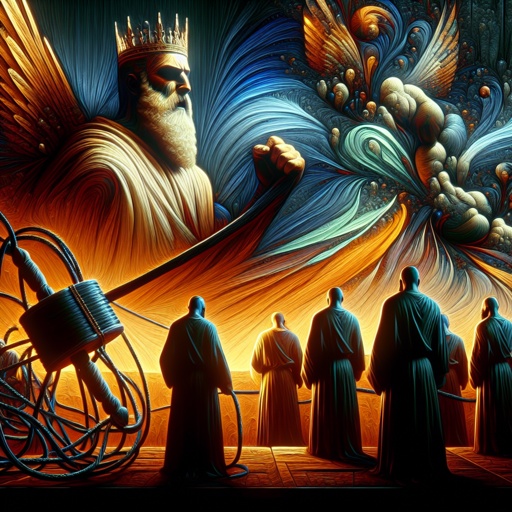
1 Kings 12:11

1 Kings 12:14

1 Kings 12:14

1 Kings 12:11

Joshua 1:12-16

Joshua 1:12-16

Revelation 1:12-16

"It is an abomination to kings to commit wickedness: for the throne is established by righteousness." - Proverbs 16:12

1 Kings 20:16 - "And they went out at noon. But Ben-hadad was drinking himself drunk in the pavilions, he and the kings, the thirty and two kings that helped him."

Revelation 1:12-16

1 Kings 16:14 - "Now the rest of the acts of Elah, and all that he did, are they not written in the book of the chronicles of the kings of Israel?"

1 Kings 1:16 - "And Bath-sheba bowed, and did obeisance unto the king. And the king said, What wouldest thou?"

1 Kings 4:16 - "Baanah the son of Hushai was in Asher and in Aloth:"

1 Kings 16:1 - "Then the word of the LORD came to Jehu the son of Hanani against Baasha, saying,"

1 Kings 16:5 - "Now the rest of the acts of Baasha, and what he did, and his might, are they not written in the book of the chronicles of the kings of Israel?"

1 Kings 16:20 - "Now the rest of the acts of Zimri, and his treason that he wrought, are they not written in the book of the chronicles of the kings of Israel?"

1 Timothy 6:15-16 – "God, the blessed and only Ruler, the King of kings and Lord of lords."