Lessons in Leadership from Abijam's Reign
"Now in the eighteenth year of king Jeroboam the son of Nebat reigned Abijam over Judah." - 1 Kings 15:1
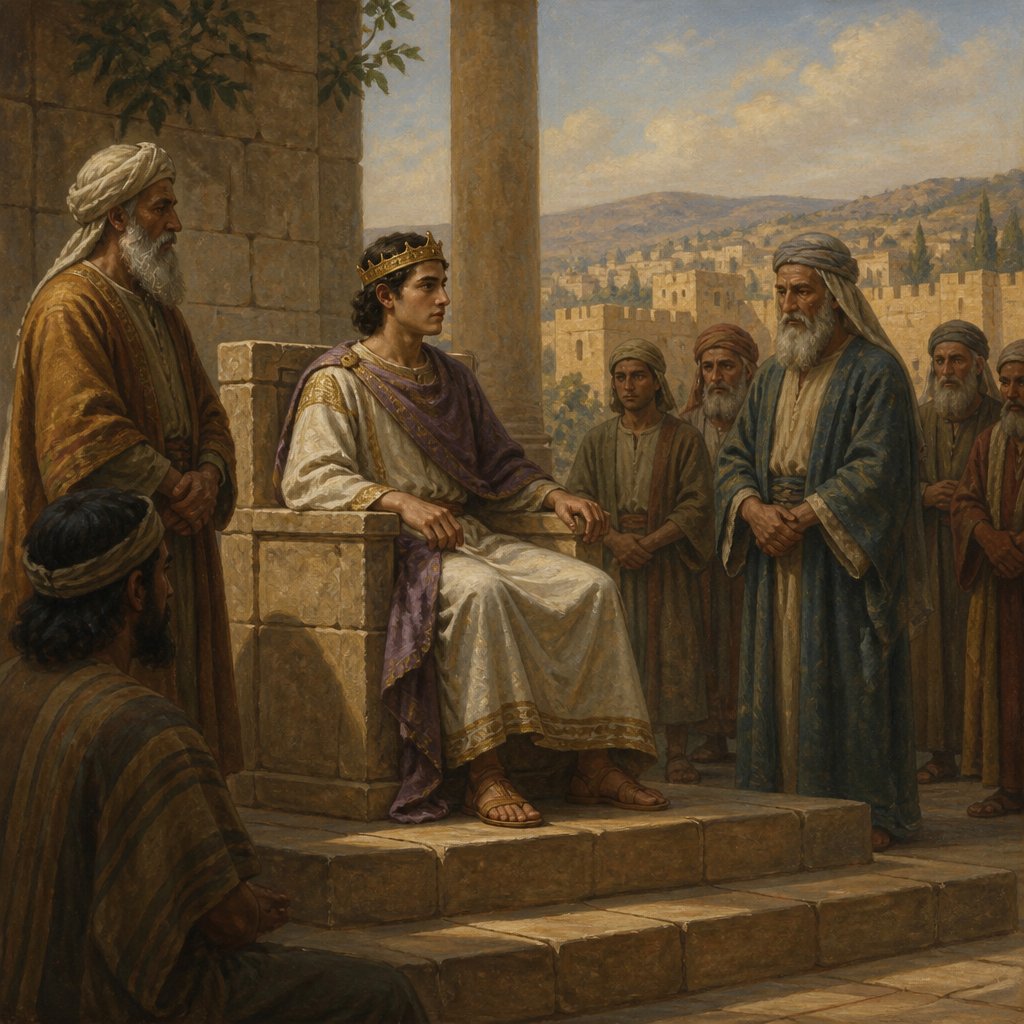
As we open our Bibles to 1 Kings 15:1, we are reminded of the unfolding narrative of Israel's kings, a backdrop not merely of political upheaval or dynastic transitions, but one rich with spiritual lessons. The verse states, "Now in the eighteenth year of king Jeroboam the son of Nebat reigned Abijam over Judah." At first glance, this verse might appear to be a simple timeline marker in the vast biblical history; however, when we delve deeper, it uncovers profound truths about leadership, legacy, and the importance of faithfulness to God.
**Understanding the Context**
To fully grasp the significance of Abijam's reign, we must consider the context surrounding it. Jeroboam, the king referred to in the verse, was known for leading Israel into idolatry and rebellion against God. He established golden calves in Bethel and Dan, prompting the Israelites to worship idols rather than the true God. Against this backdrop, Abijam ascends the throne in Judah—a kingdom which had remained a remnant of God's faithful people, albeit not without its share of issues.
Abijam was the son of Rehoboam, who was the son of Solomon. Historically, Judah had a more stable royal lineage, yet it was marked by fluctuating faithfulness to God. Abijam’s perspective as a king was vital for Judah’s identity and future.
**Leadership and Legacy**
Abijam's reign teaches us important lessons about the nature of leadership. Kingship is not merely about power or influence; it carries with it a divine responsibility. While Abijam had the bloodline of David, his heart was significantly influenced by the practices of his forefathers. 2 Chronicles 13:3 adds weight to our understanding, indicating that Abijam engaged in war against Jeroboam but did so with an inconsistent heart toward God.
In our own lives, we may find ourselves in positions of leadership—be it in our families, workplaces, or communities. Like Abijam, we have a legacy to uphold. We have received teachings and examples from those who came before us, both good and bad. Ronald N. Brown once said that “leadership is not just a skill; it’s a legacy.” Thus, how we lead reflects not only on us but on those who come after us. Do we carry the banner of faithfulness to God, or do we allow the influences around us—be it societal pressure or personal desires—to sway our decisions?
**Faithfulness in Adversity**
Moreover, Abijam’s reign reminds us of the duality of human experience: we can often be thrust into challenges that test our faithfulness. As a king, Abijam faced his father's legacy with the northern kingdom being influenced by Jeroboam's sinful practices. It is a reminder for us that our environment can be challenging, and at times it can feel like systems engineered against us. Yet, we must stand firm in our convictions and seek to honor God in all that we do. The story of Abijam can urge us to confront our ‘Jeroboams’—those sometimes overwhelming adversities and temptations that seek to lead us astray.
**A Call to Plan and Pray**
It becomes clear that the success of Abijam's reign wasn’t limited to military might but hinged on his relationship with God. While the circumstances were challenging, it's essential to remember here the power of prayer. Learning from historical precedents, our prayer life should be rooted in asking for wisdom and discernment consistently.
As we contemplate 1 Kings 15:1, let us challenge ourselves to leave a legacy of faithfulness. How can we ensure that our reign as leaders—whatever form that might take—is marked by a commitment to God? Let us strive to be leaders who not only acknowledge our legacies but embrace our responsibilities to instill Godly principles in our communities.
In conclusion, though Abijam’s reign may be overshadowed by the greater narrative of Israel's history, his story is a potent reminder of the intricacies of leadership—the challenges of faithfulness amidst adversity, and the legacy we leave behind. May we all endeavor to lead well, grounded in God’s love and faithfulness.
Want to reflect more on 1 Kings 15:1?
Continue your spiritual journey with Bible Chat — an AI-powered tool for exploring God's Word through conversation. Ask questions, discover connections, and deepen your understanding.
Get Our Apps


1 Kings 15:1 Artwork

1 Kings 15:1 - "Now in the eighteenth year of king Jeroboam the son of Nebat reigned Abijam over Judah."
"Now in the eighteenth year of king Jeroboam the son of Nebat reigned Abijam over Judah." - 1 Kings 15:1

1 kings 3:15

1 kings 3:15

1 Kings 1:15 - "¶ And Bath-sheba went in unto the king into the chamber: and the king was very old; and Abishag the Shunammite ministered unto the king."

1 Kings 15:31 - "¶ Now the rest of the acts of Nadab, and all that he did, are they not written in the book of the chronicles of the kings of Israel?"

1 Kings 10:15 - "Beside that he had of the merchantmen, and of the traffick of the spice merchants, and of all the kings of Arabia, and of the governors of the country."

1 Timothy 6:15-16 – "God, the blessed and only Ruler, the King of kings and Lord of lords."

1 Kings 15:32 - "And there was war between Asa and Baasha king of Israel all their days."

1 Kings 15:16 - "¶ And there was war between Asa and Baasha king of Israel all their days."

1 Timothy 6:15-16 – "God, the blessed and only Ruler, the King of kings and Lord of lords."

1 Timothy 6:15-16 – "God, the blessed and only Ruler, the King of kings and Lord of lords."

1 Timothy 6:15-16 – "God, the blessed and only Ruler, the King of kings and Lord of lords."

1 Kings 15:9 - "¶ And in the twentieth year of Jeroboam king of Israel reigned Asa over Judah."

1 Timothy 6:15-16 – "God, the blessed and only Ruler, the King of kings and Lord of lords."

1 Kings 15:6 - "And there was war between Rehoboam and Jeroboam all the days of his life."

1 Kings 13:15 - "Then he said unto him, Come home with me, and eat bread."

1 Kings 15:7 - "Now the rest of the acts of Abijam, and all that he did, are they not written in the book of the chronicles of the kings of Judah? And there was war between Abijam and Jeroboam."

1 Kings 4:15 - "Ahimaaz was in Naphtali; he also took Basmath the daughter of Solomon to wife:"

1 Kings 15:11 - "And Asa did that which was right in the eyes of the LORD, as did David his father."

1 Kings 15:15 - "And he brought in the things which his father had dedicated, and the things which himself had dedicated, into the house of the LORD, silver, and gold, and vessels."

1 Kings 15:2 - "Three years reigned he in Jerusalem. And his mother's name was Maachah, the daughter of Abishalom."

2 Kings 15:1 - "In the twenty and seventh year of Jeroboam king of Israel began Azariah son of Amaziah king of Judah to reign."

1 Kings 5:15 - "And Solomon had threescore and ten thousand that bare burdens, and fourscore thousand hewers in the mountains;"

1 Kings 15:28 - "Even in the third year of Asa king of Judah did Baasha slay him, and reigned in his stead."

1 Kings 15:14 - "But the high places were not removed: nevertheless Asa's heart was perfect with the LORD all his days."

1 Kings 15:10 - "And forty and one years reigned he in Jerusalem. And his mother's name was Maachah, the daughter of Abishalom."

1 Timothy 6:15 - "Which in his times he shall shew, who is the blessed and only Potentate, the King of kings, and Lord of lords;"

1 Kings 15:12 - "And he took away the sodomites out of the land, and removed all the idols that his fathers had made."

1 Kings 15:21 - "And it came to pass, when Baasha heard thereof, that he left off building of Ramah, and dwelt in Tirzah."