A Blind Prophet and a Broken Heart: Lessons from Jeroboam's Encounter with Ahijah
"And Jeroboam's wife did so, and arose, and went to Shiloh, and came to the house of Ahijah. But Ahijah could not see; for his eyes were set by reason of his age." - 1 Kings 14:4
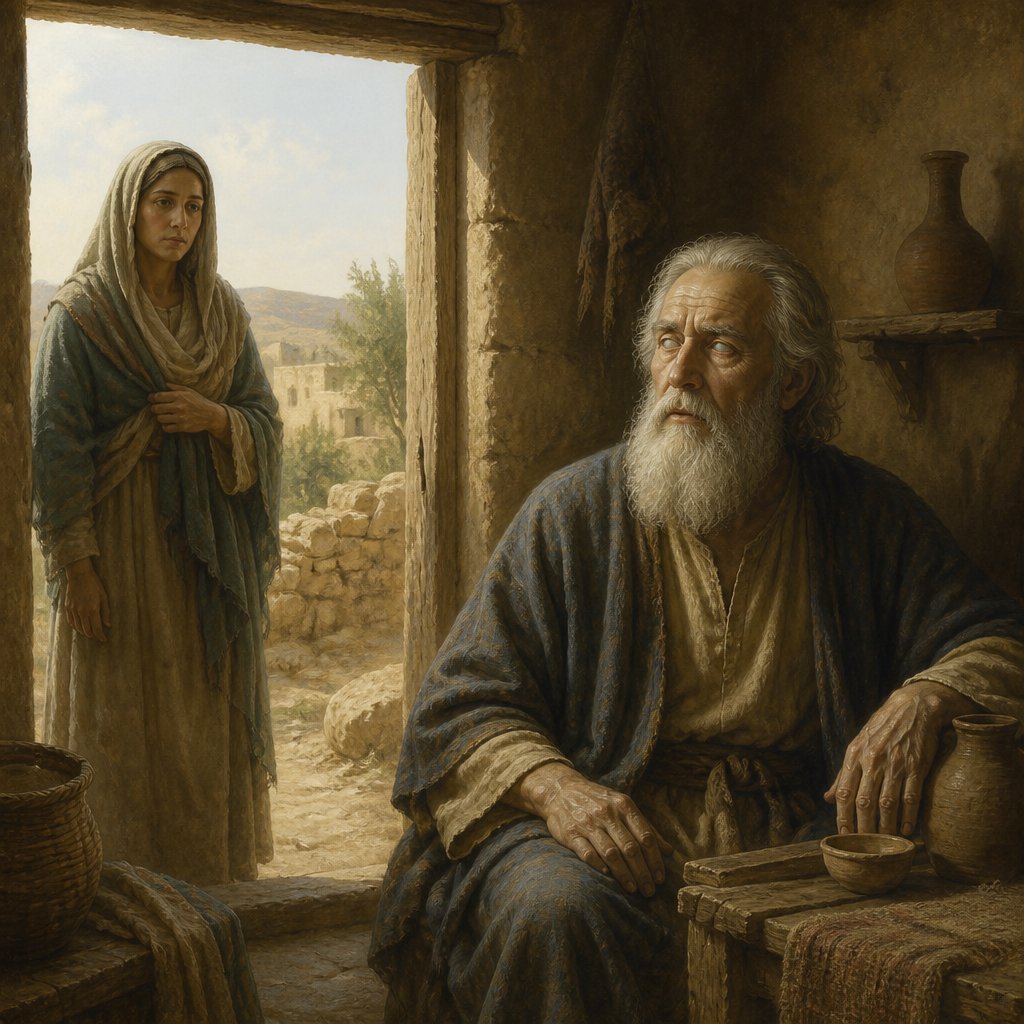
In the narrative of 1 Kings 14:4, we are given a glimpse into a pivotal moment in Israel's history. The verse reads:
"And Jeroboam's wife did so, and arose, and went to Shiloh, and came to the house of Ahijah. But Ahijah could not see; for his eyes were set by reason of his age." (1 Kings 14:4, KJV)
At first glance, this verse may seem quite simple: a woman disguises herself to consult a prophet who has lost his physical sight. Yet, beneath its surface lie profound truths about leadership, deception, spiritual blindness, and the mercy of God. Jeroboam, who was once a mighty figure in Israel, found himself in a tragic situation; he had led his people into idolatry and had turned away from the commands of the Lord. The negative consequences of his choices became evident through the affliction of his son, Abijah, who was ill.
Jeroboam’s wife’s visit to Ahijah is laden with symbolism. In her decision to go to Shiloh—where the presence of the Lord was known to dwell—she exposes the deep longing within her heart; a desire for hope in a time of despair. Shiloh was the site where Samuel had ministered and where the Ark of the Covenant was kept before its removal. It is a place rich in spiritual history, which indicates that she was seeking divine counsel in the wrong manner. Disguised as a common woman, she reflects the shame and guilt associated with her husband's actions. It presents us with a potent reminder that, even when we walk in darkness, there is a longing in our souls to encounter the truth.
Ahijah, the prophet, is an intriguing character in this story. Though he was blind, he was still a mouthpiece for God’s truth. His inability to physically see did not hinder him from perceiving what was needed to fulfill God’s purposes. This speaks to the essence of spiritual revelation: it is not merely about physical sight but rather about the ability to receive divine insight through the Holy Spirit. How many times do we rely solely on our physical eyes to judge a situation? Ahijah challenges us to remember that true perception comes from God, who sees the hearts and minds of men.
The contrast between the blind prophet and the disguised wife further underscores a spiritual principle: we may appear to be hiding from the truth, but in reality, God sees everything. The spiritual blindness that Jeroboam exhibited in his life led to dire consequences, not just for him but for a nation. This teaches us about the critical importance of spiritual vision.
Furthermore, Ahijah's interaction with Jeroboam's wife reveals the compassion of God, even in judgment. The prophecy he delivers predicts calamity for Jeroboam’s house due to disobedience, but it also holds a clear warning that failure to turn back to God will lead to destruction (1 Kings 14:7-16). In God's mercy, He gave them a chance to repent. As believers, we must always remember that God is ever ready to restore us if we choose to turn back to Him. The heart of God is to heal, to restore, and to redeem. Even when our circumstances seem dire, we must approach Him honestly, as Jeroboam’s wife should have done.
In wrapping up, let us reflect on our own lives. Are there areas where we are deceiving ourselves, wearing disguises rather than approaching God with authenticity? Are we leaning on our own understanding, veiled by spiritual blindness? Let us ask the Holy Spirit to illuminate our hearts, allowing us to recognize our needs for His healing touch. Much like Ahijah, we may not see the way forward, but we trust that God, in His wisdom, will guide us through any darkness.
May we never forget that each encounter with God is a chance for transformation. As we draw near to Him in prayer and repentance, may we be restored and equipped to walk boldly in His truth, holding firmly to the hope that He provides.
Want to reflect more on 1 Kings 14:4?
Continue your spiritual journey with Bible Chat — an AI-powered tool for exploring God's Word through conversation. Ask questions, discover connections, and deepen your understanding.
Get Our Apps


1 Kings 14:4 Artwork

1 Kings 14:4 - "And Jeroboam's wife did so, and arose, and went to Shiloh, and came to the house of Ahijah. But Ahijah could not see; for his eyes were set by reason of his age."
"And Jeroboam's wife did so, and arose, and went to Shiloh, and came to the house of Ahijah. But Ahijah could not see; for his eyes were set by reason of his age." - 1 Kings 14:4

1 Kings 4:14 - "Ahinadab the son of Iddo had Mahanaim:"

"Ahinadab the son of Iddo had Mahanaim:" - 1 Kings 4:14

1 Kings 14:1-20

1 Kings 14:26
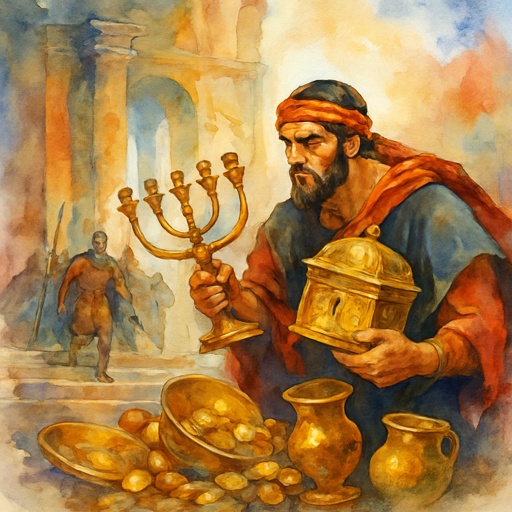
1 Kings 14:26

1 Kings 12:14

1 Kings 12:14

2 Kings 14:4 - "Howbeit the high places were not taken away: as yet the people did sacrifice and burnt incense on the high places."

1 Kings 14:1 - "At that time Abijah the son of Jeroboam fell sick."

1 Kings 9:14 - "And Hiram sent to the king sixscore talents of gold."

1 Kings 4:1 - "So king Solomon was king over all Israel."

1 Kings 14:29 - "¶ Now the rest of the acts of Rehoboam, and all that he did, are they not written in the book of the chronicles of the kings of Judah?"

1 Kings 16:14 - "Now the rest of the acts of Elah, and all that he did, are they not written in the book of the chronicles of the kings of Israel?"

1 Kings 6:14 - "So Solomon built the house, and finished it."

1 Kings 21:14 - "Then they sent to Jezebel, saying, Naboth is stoned, and is dead."

1 Kings 14:30 - "And there was war between Rehoboam and Jeroboam all their days."

2 Kings 4:14 - "And he said, What then is to be done for her? And Gehazi answered, Verily she hath no child, and her husband is old."

1 Kings 14:19 - "And the rest of the acts of Jeroboam, how he warred, and how he reigned, behold, they are written in the book of the chronicles of the kings of Israel."

1 Kings 4:4 - "And Benaiah the son of Jehoiada was over the host: and Zadok and Abiathar were the priests:"

1 Kings 1:4 - "And the damsel was very fair, and cherished the king, and ministered to him: but the king knew her not."

1 Thessalonians 4:14

Jeremiah 29: 4-14

Daniel 4:13-14

Jeremiah 29: 4-14

Daniel 4:10-14

Jeremiah 29: 4-14

Jeremiah 29: 4-14

Jeremiah 29: 4-14