The Legacy of Leadership: Lessons from Rehoboam's Reign
"¶ And Rehoboam the son of Solomon reigned in Judah. Rehoboam was forty and one years old when he began to reign, and he reigned seventeen years in Jerusalem, the city which the LORD did choose out of all the tribes of Israel, to put his name there. And his mother's name was Naamah an Ammonitess." - 1 Kings 14:21
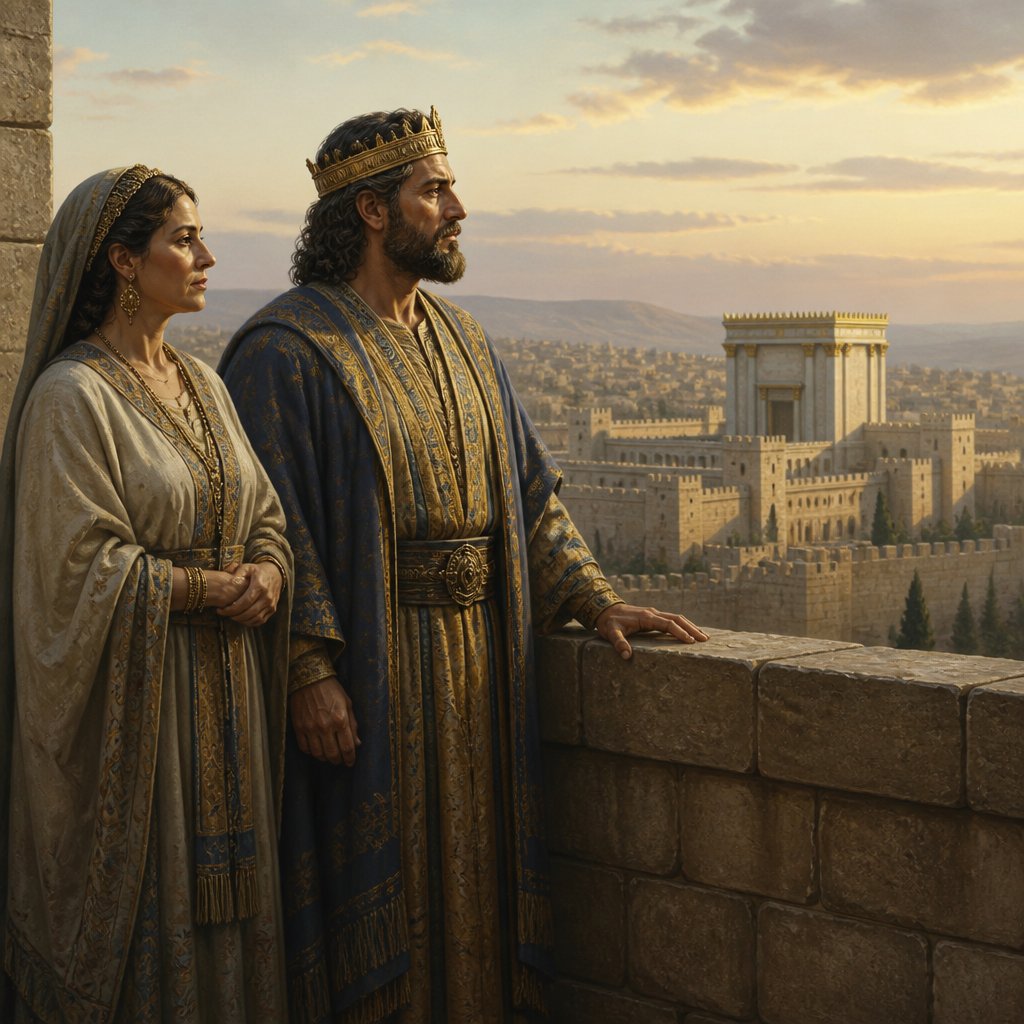
In the contemplation of sacred scripture, 1 Kings 14:21 presents us with a pivotal moment in the history of Israel, specifically through the figure of Rehoboam, the son of the wise king Solomon. The verse states: "And Rehoboam the son of Solomon reigned in Judah. Rehoboam was forty and one years old when he began to reign, and he reigned seventeen years in Jerusalem, the city which the LORD did choose out of all the tribes of Israel, to put his name there. And his mother’s name was Naamah an Ammonitess." (KJV)
Rehoboam's ascent to the throne serves as more than a historical record; it reflects profound truths about leadership, legacy, and the influence of heritage. As we meditate on this passage, we find a rich tapestry of lessons that resonate with our experience today.
### The Burden of Leadership
Rehoboam became king at the age of 41, an age that carries with it significant personal and professional experience. However, age alone does not equip one to lead. His reign lasted seventeen years, a period marked by both opportunity and challenge. Leadership often brings burdens that can seem overwhelmingly heavy, and for Rehoboam, it would be no different.
He inherited not just the throne but also the wisdom and reputation of his father, Solomon, whose reign was characterized by prosperity and peace. Rehoboam's decisions would either uphold that legacy or dismantle it. The weight of expectation can be a significant source of pressure, and like Rehoboam, we are often faced with choices that will define our legacies.
### The City Chosen by God
The fact that Rehoboam reigned in Jerusalem—the city chosen by the Lord to establish His name—underscores the divine significance of this leadership role. Jerusalem was not merely a geographical location; it was the spiritual and cultural heart of Israel. God had placed His name there, signifying His presence and His promises.
In our own lives, we are also placed in positions, whether in our families, workplaces, or communities, where the light of God’s name shines through our actions and decisions. Understanding that our spheres of influence are chosen by God calls us to a higher standard of conduct. Rehoboam's reign reminds us that we must be conscious of the implications of our leadership and how it reflects on God’s name.
### The Influence of Motherhood
The verse reveals a poignant detail about Rehoboam's lineage: his mother, Naamah, was an Ammonitess. This fact is noteworthy because it highlights the often-overlooked influence of maternal figures in shaping character and values. Naamah, a foreign woman, could have introduced different beliefs and customs into the royal household. Thus, Rehoboam's actions and attitudes may have been informed not only by his father's legacy but also by his mother’s background.
In our context, this speaks to the powerful role that our families play in our lives. The values instilled in us during our formative years can empower or hinder our decisions as leaders in our own rights. We must seek to honor and nurture the Godly heritage we pass onto the next generation while also being aware of destructive influences.
### The Call to Wisdom
The story of Rehoboam ultimately serves as a cautionary tale. He is often remembered for his fateful decision to reject the counsel of the elders and instead follow the advice of his peers. This led to division in the kingdom and a legacy marked by turmoil rather than the tranquility enjoyed under Solomon. It encourages us to seek wisdom and godly counsel in our own leadership journeys. As leaders—be they in the church, at home, or in our workplaces—let us intentionally seek the Lord's guidance and the wisdom of those who have walked the path before us.
### Conclusion
In conclusion, 1 Kings 14:21 encapsulates the essence of leadership and the weight it carries. As we reflect on Rehoboam’s life, let us resolve to lead with integrity, draw upon God’s wisdom, and remember the profound impact our decisions have on our legacy and the communities entrusted to our care. May we be leaders who honor God in all our endeavors, just as Jerusalem is a testament to His faithfulness, so may our lives reflect His glory.
Want to reflect more on 1 Kings 14:21?
Continue your spiritual journey with Bible Chat — an AI-powered tool for exploring God's Word through conversation. Ask questions, discover connections, and deepen your understanding.
Get Our Apps


1 Kings 14:21 Artwork
1 Kings 14:21 - "¶ And Rehoboam the son of Solomon reigned in Judah. Rehoboam was forty and one years old when he began to reign, and he reigned seventeen years in Jerusalem, the city which the LORD did choose out of all the tribes of Israel, to put his name there. And his mother's name was Naamah an Ammonitess."
"¶ And Rehoboam the son of Solomon reigned in Judah. Rehoboam was forty and one years old when he began to reign, and he reigned seventeen years in Jerusalem, the city which the LORD did choose out of all the tribes of Israel, to put his name there. And his mother's name was Naamah an Ammonitess." - 1 Kings 14:21

1 Kings 21:14 - "Then they sent to Jezebel, saying, Naboth is stoned, and is dead."

"Then they sent to Jezebel, saying, Naboth is stoned, and is dead." - 1 Kings 21:14

1 Kings 14:1-20

1 Kings 14:26
1 Kings 14:26

1 Kings 8:21

1 Kings 8:21

1 Kings 8:21

1 Kings 8:21

John 14:15-21

2 Kings 14:21 - "¶ And all the people of Judah took Azariah, which was sixteen years old, and made him king instead of his father Amaziah."

2 Kings 21:14 - "And I will forsake the remnant of mine inheritance, and deliver them into the hand of their enemies; and they shall become a prey and a spoil to all their enemies;"

1 Kings 12:14

1 Kings 12:14

1 Kings 14:1 - "At that time Abijah the son of Jeroboam fell sick."

1 Kings 21:28 - "And the word of the LORD came to Elijah the Tishbite, saying,"

1 Kings 21:17 - "¶ And the word of the LORD came to Elijah the Tishbite, saying,"

1 Kings 9:14 - "And Hiram sent to the king sixscore talents of gold."

1 Kings 14:29 - "¶ Now the rest of the acts of Rehoboam, and all that he did, are they not written in the book of the chronicles of the kings of Judah?"

1 Kings 16:14 - "Now the rest of the acts of Elah, and all that he did, are they not written in the book of the chronicles of the kings of Israel?"

1 Kings 21:12 - "They proclaimed a fast, and set Naboth on high among the people."

1 Kings 6:14 - "So Solomon built the house, and finished it."

1 Kings 4:14 - "Ahinadab the son of Iddo had Mahanaim:"

1 Kings 14:30 - "And there was war between Rehoboam and Jeroboam all their days."

1 Kings 21:1 - "And it came to pass after these things, that Naboth the Jezreelite had a vineyard, which was in Jezreel, hard by the palace of Ahab king of Samaria."

1 Kings 20:21 - "And the king of Israel went out, and smote the horses and chariots, and slew the Syrians with a great slaughter."

1 Kings 14:19 - "And the rest of the acts of Jeroboam, how he warred, and how he reigned, behold, they are written in the book of the chronicles of the kings of Israel."

1 Kings 22:21 - "And there came forth a spirit, and stood before the LORD, and said, I will persuade him."