The Choice of Rehoboam: Lessons in Leadership and Faithfulness
"But as for the children of Israel which dwelt in the cities of Judah, Rehoboam reigned over them." - 1 Kings 12:17

In the annals of biblical history, the stories of Israel and its kings serve as profound lessons for the faithful. Among these accounts, the reign of King Rehoboam in 1 Kings 12 stands as a pivotal moment that reflects both the complexity of human leadership and the consequences of choices made in the face of adversity. The verse, “But as for the children of Israel which dwelt in the cities of Judah, Rehoboam reigned over them” (1 Kings 12:17 KJV), encapsulates the division of a kingdom and the challenges faced by a new ruler.
Rehoboam, son of Solomon, came to the throne after his father’s death. Solomon had built a prosperous kingdom, but his reign was also marked by heavy taxation and forced labor that left some of the people discontented. When Rehoboam ascended to the throne, he was faced with a crucial decision: whether to continue in his father Solomon’s footsteps or to heed the advice of the people who sought relief.
The people, represented by Jeroboam, approached Rehoboam with a request: “Thy father made our yoke grievous: now therefore make thou the grievous service of thy father and his heavy yoke which he put upon us lighter, and we will serve thee” (1 Kings 12:4 KJV). In this moment, Rehoboam sought counsel from both the seasoned elders who had served his father and from the youthful advisors of his own generation. The elders advised him to serve the people and lighten their burdens, counsel that echoed the long-standing virtues of wisdom and humility in leadership. However, driven by a desire to assert his authority and buoyed by the encouragement of his peers, Rehoboam chose the harsher route, declaring that he would increase their burdens even further. In his refusal to yield, he lost ten tribes of Israel to Jeroboam, leading to a significant division of a once unified kingdom.
From this narrative, several lessons emerge, particularly applicable to our modern spiritual walk. First, leaders—whether in the church, at home, or in our communities—must recognize the weight of their influence and decisions. Rehoboam’s story warns against the pride that can blind leaders to the needs of those they govern. Service, humility, and the willingness to listen are cornerstones of effective leadership. When we choose to rule with an iron fist instead of a compassionate heart, we risk alienating those we are called to guide.
Moreover, the division this choice caused serves as a reminder of the importance of unity and community. In an age where divisions seem to grow ever deeper, we must strive to maintain the love and fellowship that God has called us to embody. Rehoboam’s refusal to heed wise counsel fractured the nation; similarly, our unwillingness to come together in the church can lead to discord and disunity. In Ephesians 4:3, we are instructed to endeavor to keep the unity of the Spirit in the bond of peace. This can only be achieved through humility, patience, and a collective commitment to follow Christ’s example.
In addition to leadership lessons, this passage urges us to reflect on our own responses to the voices around us. Are we listening for God’s wisdom in our decision-making, or are we influenced more by popular opinion and societal pressure, just as Rehoboam was swayed by his young peers? It is essential to discern the voice of the Lord through prayer and the study of Scripture. Godly counsel can often challenge our preconceived notions and guide us towards paths that promote justice and mercy.
Finally, we are reminded that our choices have consequences—both for ourselves and for those we impact. Just as Rehoboam’s decision led to a split kingdom, our choices can either build unity and faith or create division and strife. Let us be vigilant in our decisions and consider not only our desires but also the broader implications for our families, churches, and communities.
As we meditate on 1 Kings 12:17, may we learn from Rehoboam’s experience the value of humility, the necessity of wise counsel, and the importance of leadership that reflects the heart of our God. Let our choices reflect the love and grace we have received, fostering unity and peace in all that we do.
Want to reflect more on 1 Kings 12:17?
Continue your spiritual journey with Bible Chat — an AI-powered tool for exploring God's Word through conversation. Ask questions, discover connections, and deepen your understanding.
Get Our Apps


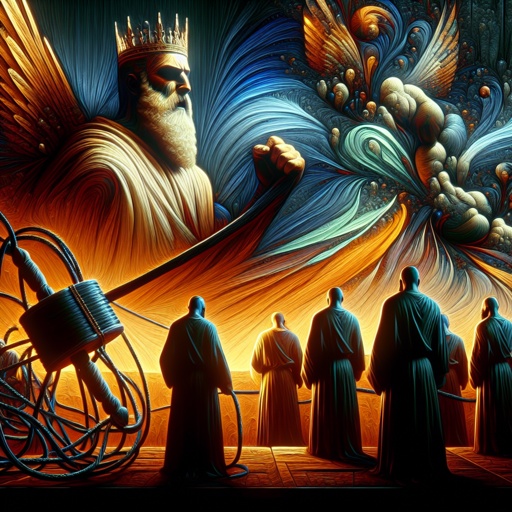
1 Kings 12:17 Artwork

1 Kings 12:17 - "But as for the children of Israel which dwelt in the cities of Judah, Rehoboam reigned over them."

"But as for the children of Israel which dwelt in the cities of Judah, Rehoboam reigned over them." - 1 Kings 12:17

1 Kings 12:11

1 Kings 12:11

1 Kings 12:10

1 Kings 12:10

1 Kings 12:10

1 Kings 12:11

1 Kings 12:10
1 Kings 12:11

1 Kings 12:14

1 Kings 12:14

1 Kings 12:11

Revelation 17:12 - "And the ten horns which thou sawest are ten kings, which have received no kingdom as yet; but receive power as kings one hour with the beast."

2 Kings 17:12 - "For they served idols, whereof the LORD had said unto them, Ye shall not do this thing."

1 Kings 4:17 - "Jehoshaphat the son of Paruah, in Issachar:"

2 Kings 12:17 - "¶ Then Hazael king of Syria went up, and fought against Gath, and took it: and Hazael set his face to go up to Jerusalem."

1 kings 3:12

1 Kings 17:12 - "And she said, As the LORD thy God liveth, I have not a cake, but an handful of meal in a barrel, and a little oil in a cruse: and, behold, I am gathering two sticks, that I may go in and dress it for me and my son, that we may eat it, and die."

1 Kings 21:17 - "¶ And the word of the LORD came to Elijah the Tishbite, saying,"

1 Kings 6:17 - "And the house, that is, the temple before it, was forty cubits long."

1 Kings 17:2 - "And the word of the LORD came unto him, saying,"

1 Kings 17:8 - "¶ And the word of the LORD came unto him, saying,"

1 Kings 9:17 - "And Solomon built Gezer, and Beth-horon the nether,"

1 Kings 12:1 - "And Rehoboam went to Shechem: for all Israel were come to Shechem to make him king."

1 Kings 17:17 - "¶ And it came to pass after these things, that the son of the woman, the mistress of the house, fell sick; and his sickness was so sore, that there was no breath left in him."

1 Kings 12:19 - "So Israel rebelled against the house of David unto this day."

1 Kings 16:17 - "And Omri went up from Gibbethon, and all Israel with him, and they besieged Tirzah."

1 Kings 21:12 - "They proclaimed a fast, and set Naboth on high among the people."

1 Kings 12:12 - "¶ So Jeroboam and all the people came to Rehoboam the third day, as the king had appointed, saying, Come to me again the third day."