God’s Divine Rearrangement: The Kingdom Taken and Given
"And he said to Jeroboam, Take thee ten pieces: for thus saith the LORD, the God of Israel, Behold, I will rend the kingdom out of the hand of Solomon, and will give ten tribes to thee:" - 1 Kings 11:31
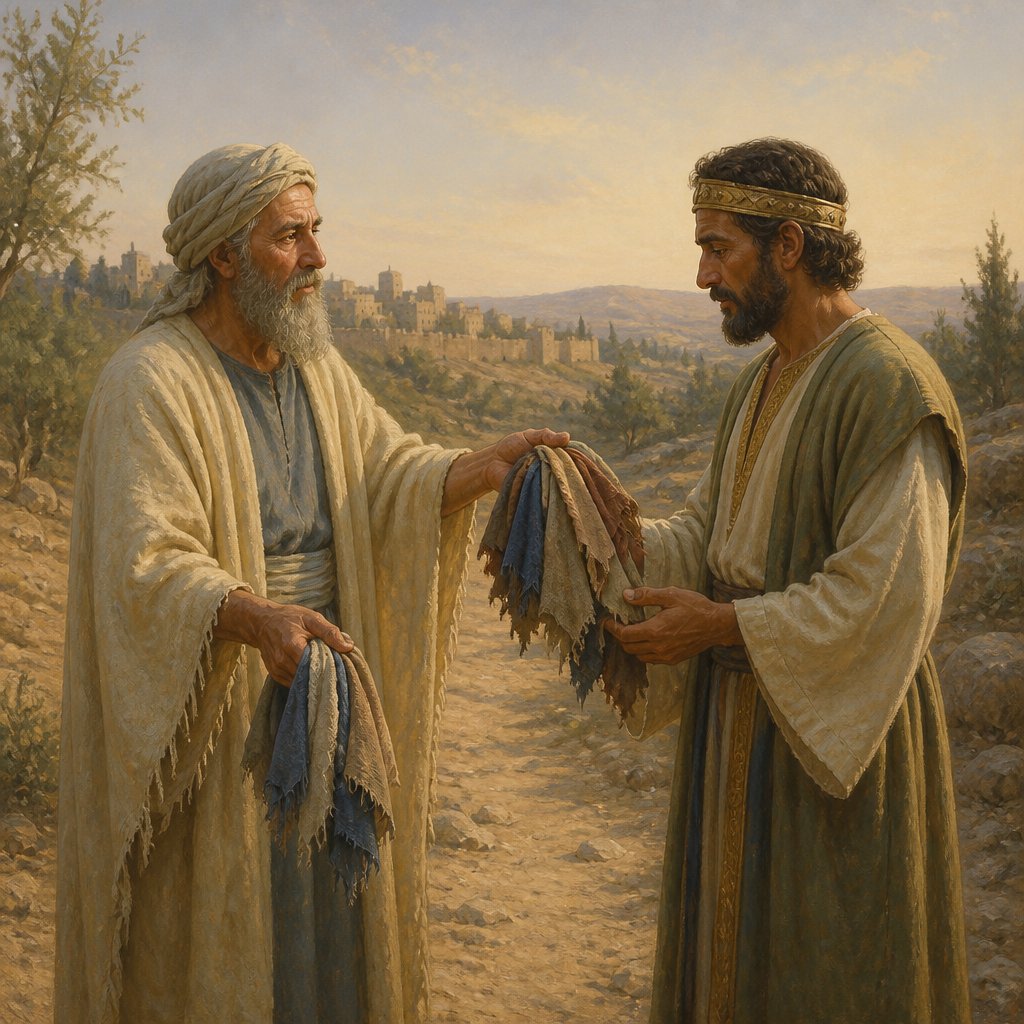
In the tumultuous history of Israel, 1 Kings 11:31 marks a pivotal moment that reverberates through generations. The verse reads: "And he said to Jeroboam, Take thee ten pieces: for thus saith the LORD, the God of Israel, Behold, I will rend the kingdom out of the hand of Solomon, and will give ten tribes to thee." These words, spoken by Ahijah the prophet, encapsulate the profound actions of God in response to human disobedience and the unfolding of His divine plan.
To understand the full weight of this proclamation, we must first consider the background of the Kingdom of Israel. Under Solomon’s reign, the kingdom enjoyed unprecedented wealth, wisdom, and peace. Yet, despite these blessings, Solomon's heart turned away from the Lord, influenced by the foreign wives he took, leading him to idolatry and a disengagement from the covenant relationship with God (1 Kings 11:4-6).
Solomon’s unfaithfulness did not go unnoticed. The Lord had already warned Solomon of the consequences of his actions, and in this moment, God chose to act decisively by dividing the kingdom. This division was not merely a punishment, but a part of a redemptive plan that demonstrated God’s sovereignty and providence. The phrase "I will rend the kingdom" indicates a forceful tearing apart, but it was also a painful necessity for a nation that had strayed from its covenant with its God.
The character of Jeroboam is introduced as he is summoned by the prophet. He is an intriguing figure, a former servant of Solomon who would rise to prominence. This part of Jeroboam’s narrative is significant as it reveals that God chooses unlikely candidates to fulfill His purposes. Often, we find that those who seem least qualified by worldly standards are precisely who God empowers to execute His divine will. The choice of Jeroboam also serves as a reminder to us that our past does not disqualify us from being used by God.
God’s declaration, "I will give ten tribes to thee," is a profound shift in the political landscape of Israel, emphasizing that God holds the authority to alter kingdoms and the fate of nations. As believers, this reminds us that human systems, no matter how strong or secure, are always under the sovereign hand of God. This principle should comfort us in our personal lives, especially during times of uncertainty. When situations seem dire or chaotic, God remains in control. He has a plan that transcends human understanding, and His purposes will prevail.
Yet, there is a duality present in this passage; while God’s judgment is evident, so too is His grace. Jeroboam is granted an incredible opportunity—to be the leader of the ten tribes—and with that comes both privilege and responsibility. God not only permits Jeroboam to lead but also gives him the chance to succeed; He states in verses 37-38 that if Jeroboam will heed His commands, he will establish his lineage as a lasting dynasty. Herein lies a vital lesson for us: opportunity coupled with obedience produces lasting impact. God desires us to walk in alignment with His will, so we may fully realize His plans for our lives.
As we meditate on this verse, let us reflect on our hearts and lives—are there areas where we have become disobedient to God's calling? Are we seeking to establish our kingdoms over God's? Let us remember that He is ready to realign our paths. May we also consider how we respond to God's divine rearrangements in our lives. Instead of resisting change or lamenting lost opportunities, we should embrace God’s sovereign will and respond with faithfulness, seeking His direction in all things.
In conclusion, 1 Kings 11:31 not only serves as a historical account; it stands as a profound reminder of God’s sovereignty, mercy, and the call to obedience. As we navigate the complexities of our lives, let us hold tightly to the truth that God can and does intervene, guiding us toward His ultimate plan for our lives.
Want to reflect more on 1 Kings 11:31?
Continue your spiritual journey with Bible Chat — an AI-powered tool for exploring God's Word through conversation. Ask questions, discover connections, and deepen your understanding.
Get Our Apps


1 Kings 11:31 Artwork

1 Kings 11:31 - "And he said to Jeroboam, Take thee ten pieces: for thus saith the LORD, the God of Israel, Behold, I will rend the kingdom out of the hand of Solomon, and will give ten tribes to thee:"
"And he said to Jeroboam, Take thee ten pieces: for thus saith the LORD, the God of Israel, Behold, I will rend the kingdom out of the hand of Solomon, and will give ten tribes to thee:" - 1 Kings 11:31

1 Kings 11:30-31

1 Kings 11:30-31

1 Kings 11:30-31

1 Kings 15:31 - "¶ Now the rest of the acts of Nadab, and all that he did, are they not written in the book of the chronicles of the kings of Israel?"

1 Kings 11:11

1 Kings 11:11

1 Kings 11:11

1 Kings 11:11

1 Kings 11:13

1 Kings 11:5

1 Kings 11:13

1 Kings 11:11

1 kings 11:11-13

1 Kings 11:11-13

1 Kings 11:29-32

1 Kings 11:11-13

1 Corinthians 11:31 - "For if we would judge ourselves, we should not be judged."

1 Kings 11:1-5

1 Kings 1:31 - "Then Bath-sheba bowed with her face to the earth, and did reverence to the king, and said, Let my lord king David live for ever."

1 Chronicles 11:31 - "Ithai the son of Ribai of Gibeah, that pertained to the children of Benjamin, Benaiah the Pirathonite,"

1 Kings 12:11

1 Kings 12:11

1 Samuel 31:11 - "¶ And when the inhabitants of Jabesh-gilead heard of that which the Philistines had done to Saul;"

1 Kings 12:11

1 Kings 12:11

1 Kings 12:11

1 Kings 12:31 - "And he made an house of high places, and made priests of the lowest of the people, which were not of the sons of Levi."

1 Kings 6:31 - "¶ And for the entering of the oracle he made doors of olive tree: the lintel and side posts were a fifth part of the wall."