In the Field of Destiny: A Reflection on 1 Kings 11:29
"And it came to pass at that time when Jeroboam went out of Jerusalem, that the prophet Ahijah the Shilonite found him in the way; and he had clad himself with a new garment; and they two were alone in the field:" - 1 Kings 11:29
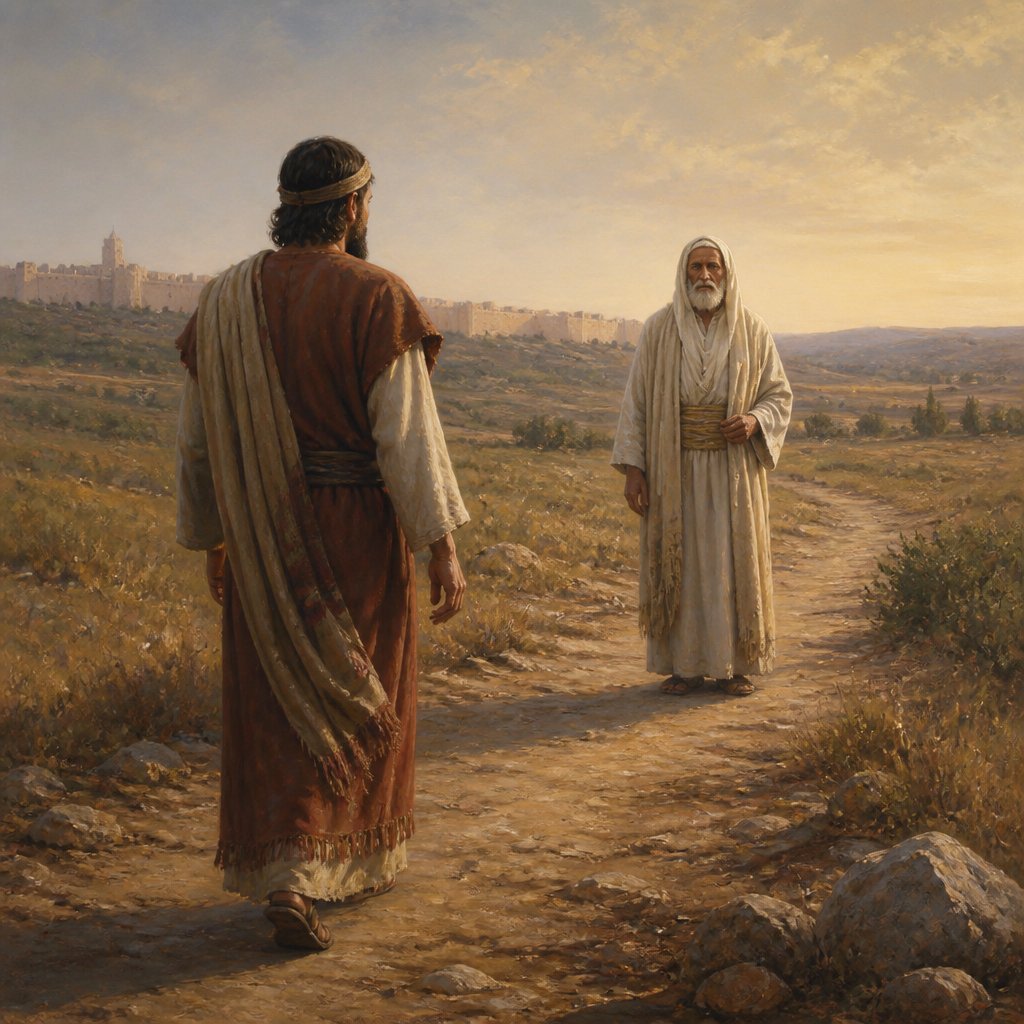
In 1 Kings 11:29, we encounter a pivotal moment in the life of Jeroboam, who would rise from humble beginnings to significant prominence in Israel's history. The verse states, "And it came to pass at that time when Jeroboam went out of Jerusalem, that the prophet Ahijah the Shilonite found him in the way; and he had clad himself with a new garment; and they two were alone in the field." This scene is packed with implications for our understanding of divine purpose, the prophetic role, and the moments when our destinies intersect with God's design.
First, let us explore the backdrop of this encounter. Jeroboam, previously a servant of King Solomon, had left Jerusalem, perhaps in search of clarity amidst uncertainty. The timing of Jeroboam’s departure is critical; it signifies a moment of transition, both personally for him and politically for Israel. His journey away from the influence of Solomon signals not only a physical movement but also an inward turn toward what God had planned for him—a plan that would alter the course of Israel’s history.
As Jeroboam leaves Jerusalem, we must remember that he was not aware of the significant role he was about to play in God's narrative. He was a common man, a servant who, as it turns out, was being prepared for something divine. This teaches us a vital lesson about our positions in life, whether we feel significant or insignificant. God often chooses the unassuming and prepares them for great tasks. In our own lives, we might find ourselves in situations that seem unremarkable or even disheartening, yet God is actively working behind the scenes, fashioning our paths according to His will.
When the prophet Ahijah encounters Jeroboam, we note the specifics of the context; Jeroboam is described as being clad in a new garment. This new garment is not mere decoration; it signifies a new identity and the onset of change. Garments in scripture often symbolize authority, calling, and new beginnings. Here is Jeroboam, clad in a fresh garment, representing both a physical renewal and an upcoming metamorphosis in his identity and role in Israel. We too are invited to shed old garments—of doubt, despair, and resignation—and don new ones stitched with faith, hope, and purpose.
Ahijah’s approach is crucial; he finds Jeroboam alone in the field. Fields are biblical metaphors for harvest, work, and calling. This solitude allows for a sacred moment when God speaks into Jeroboam’s life. How often do we withdraw from the noise of the world to find clarity in our own fields? In our daily lives, filled with distractions, it is imperative to carve out moments of solitude, where we can be vulnerable and open to the divine voice. God often finds us in these quiet, unassuming places and speaks profoundly into our circumstances.
God’s call upon Jeroboam was not just a personal initiative; it was part of a broader divine strategy for Israel. The subsequent verses reveal God's intentions for Jeroboam to rule over ten tribes of Israel, setting the stage for a new kingdom. This illustrates how God strategically aligns individual destinies with His overarching plan. In retrospect, Jeroboam’s encounter with Ahijah showcases how God orchestrates moments of significance in our lives.
In wrapping up, 1 Kings 11:29 represents a unique confluence of human choice and divine orchestration. Jeroboam’s experience encourages us to remain attentive during seemingly mundane moments of our daily journeys. Often, the destiny that God has painted for us becomes unveiled in the fields where we find ourselves alone, clad in the new garments of our growth and transformation. As we seek God’s leading, we can trust that just as He called Jeroboam, He calls each of us to significant roles in His redemptive plan.
Want to reflect more on 1 Kings 11:29?
Continue your spiritual journey with Bible Chat — an AI-powered tool for exploring God's Word through conversation. Ask questions, discover connections, and deepen your understanding.
Get Our Apps


1 Kings 11:29 Artwork

1 Kings 11:29-32

1 Kings 11:29 - "And it came to pass at that time when Jeroboam went out of Jerusalem, that the prophet Ahijah the Shilonite found him in the way; and he had clad himself with a new garment; and they two were alone in the field:"
"And it came to pass at that time when Jeroboam went out of Jerusalem, that the prophet Ahijah the Shilonite found him in the way; and he had clad himself with a new garment; and they two were alone in the field:" - 1 Kings 11:29

Jeremiah 29:11

1 Kings 11:11

1 Kings 11:11

1 Kings 11:11

1 Kings 11:11

1 Kings 11:13

1 Kings 11:5

1 Kings 11:13

1 Kings 14:29 - "¶ Now the rest of the acts of Rehoboam, and all that he did, are they not written in the book of the chronicles of the kings of Judah?"

1 Kings 11:11

1 Chronicles 11:29 - "Sibbecai the Hushathite, Ilai the Ahohite,"

1 kings 11:11-13

1 Kings 11:11-13

1 Corinthians 11:26-29

1 Corinthians 11:26-29

1 Kings 1:29 - "And the king sware, and said, As the LORD liveth, that hath redeemed my soul out of all distress,"

1 Kings 11:11-13

1 Kings 22:29 - "So the king of Israel and Jehoshaphat the king of Judah went up to Ramoth-gilead."

1 Kings 11:1-5

1 Kings 12:29 - "And he set the one in Beth-el, and the other put he in Dan."

1 Kings 11:30-31

1 Kings 11:30-31

1 Kings 11:30-31

1 Kings 12:11

1 Kings 12:11

1 Kings 10:29 - "And a chariot came up and went out of Egypt for six hundred shekels of silver, and an horse for an hundred and fifty: and so for all the kings of the Hittites, and for the kings of Syria, did they bring them out by their means."

1 Kings 12:11