From Death to Life: The Transformative Power of Love
"We know that we have passed from death unto life, because we love the brethren. He that loveth not his brother abideth in death." - 1 John 3:14
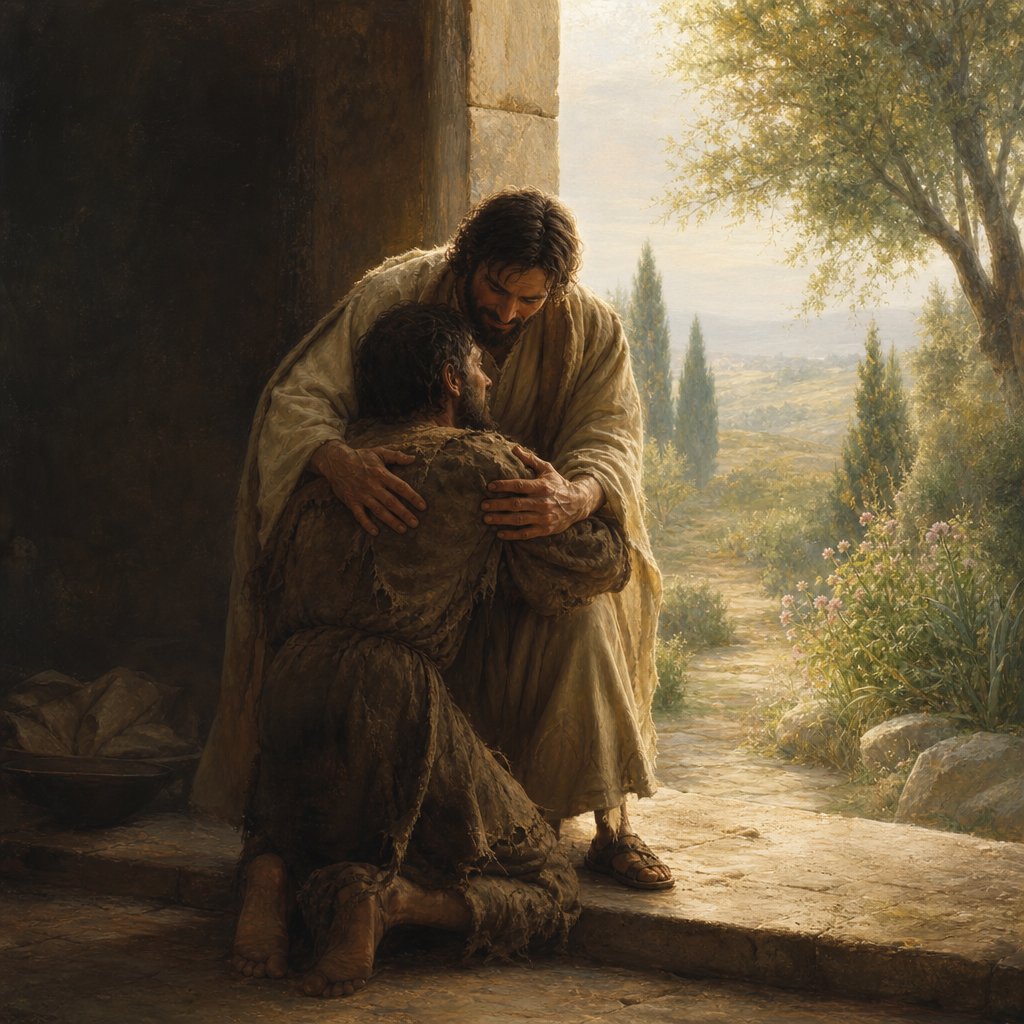
**Scripture Reference: 1 John 3:14 - "We know that we have passed from death unto life, because we love the brethren. He that loveth not his brother abideth in death."**
In the depths of the Christian faith lies a profound truth that reverberates through the ages: love is the definitive mark of a transformed life. The Apostle John, in his epistle, distills this truth with remarkable clarity in 1 John 3:14. At first glance, this verse may seem straightforward, but upon deeper reflection, it unveils a complex interplay of life, death, and love, urging us to examine the nature of our relationships within the body of Christ.
The phrase "we know that we have passed from death unto life" evokes an essential spiritual transition. This passage does not speak of a mere theoretical knowledge; rather, it speaks of an experiential understanding that has significant implications for our lives. John presents a clear dichotomy: those who love their brethren have transitioned into life through Christ, while those who do not love remain ensconced in death.
In the Biblical context, death represents a separation from God, the ultimate source of life. To abide in death is to live in a state of alienation from the divine, unable to partake in the fullness of life that God offers. Yet, the love that John writes about is transformative. It does not simply imply fondness or affection; it refers to an unconditional, selfless love – the same love that Christ demonstrated for us on the cross. It is sacrificial, generous, and active. It compels believers to look beyond their interests and including the needs of others, thereby reflecting the heart of God.
John continues with a stark warning: "He that loveth not his brother abideth in death." The implications of this statement are profound. John is not merely suggesting that a lack of love is unhealthy, but rather that it signifies spiritual death. Thus, the question arises: How do we evaluate our love for our brothers and sisters in Christ? Is our love active and evident in our daily actions?
For many, living out this commandment can be daunting. We live in a world filled with division, discord, and strife. The call to love may seem overwhelming, especially when we encounter those who hurt us or who we disagree with. However, it is in these challenging relationships that the authenticity of our faith is tested. True love transcends personal feelings; it seeks the spiritual and emotional well-being of others. It does not simply tolerate but embraces, engages, and, when necessary, challenges.
Consider the early church, depicted in Acts. They were marked by their fervent love for one another, sharing possessions and supporting one another in times of need. This radical love not only nurtured the community but also drew others to the faith, illustrating the very essence of Christ's teachings. Their example continues to challenge us today as we think about our individual affiliations and community dynamics.
With each act of love, we affirm our own salvation. Each moment spent in service, kindness, or compassion validates the reality that we have been born again, having experienced the resurrection life of Christ. Conversely, when we harbor bitterness or resentment, we risk slipping back into that state of 'death' from which we have been so graciously redeemed.
As we meditate on this passage, let us ask the Holy Spirit to illuminate our hearts and reveal to us anyone we may be struggling to love. Love, in all its forms, should be the melody that echoes through the corridors of our hearts and pervades our actions. Let us commit that our passing from death unto life becomes evident through the love we pour out onto others, ensuring that we never take for granted this divine privilege we have received to love and be loved.
Want to reflect more on 1 John 3:14?
Continue your spiritual journey with Bible Chat — an AI-powered tool for exploring God's Word through conversation. Ask questions, discover connections, and deepen your understanding.
Get Our Apps


1 John 3:14 Artwork
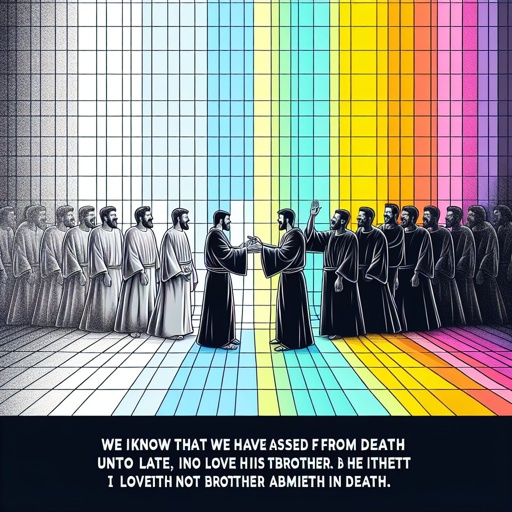
1 John 3:14 - "We know that we have passed from death unto life, because we love the brethren. He that loveth not his brother abideth in death."

"We know that we have passed from death unto life, because we love the brethren. He that loveth not his brother abideth in death." - 1 John 3:14
"We know that we have passed from death unto life, because we love the brethren. He that loveth not his brother abideth in death." - 1 John 3:14

John 3:14

numbers 21:8-9 & John 3:14

1 John 3:1-3

3 John 1:14 - "But I trust I shall shortly see thee, and we shall speak face to face. Peace be to thee. Our friends salute thee. Greet the friends by name."

John 3:3

John 14:16

John 3:3-8

John 14:15-21

1 John 2:14

1 John 2:14

John 14:1-2

John 3:14 - "¶ And as Moses lifted up the serpent in the wilderness, even so must the Son of man be lifted up:"

1 John 3:4 - "Whosoever committeth sin transgresseth also the law: for sin is the transgression of the law."

1 John 3:13 - "Marvel not, my brethren, if the world hate you."

John 3:16

Matthew 3:14 - "But John forbad him, saying, I have need to be baptized of thee, and comest thou to me?"

John 1:3

John 1:3

John 3:16

1 John 3:3 - "And every man that hath this hope in him purifieth himself, even as he is pure."

John 3:16

John 3:16

John 3-16

John 3:16

John 3:16

John 12:3

1 John 3:6 - "Whosoever abideth in him sinneth not: whosoever sinneth hath not seen him, neither known him."