Mutual Submission: A Reflection on 1 Corinthians 7:4
"The wife hath not power of her own body, but the husband: and likewise also the husband hath not power of his own body, but the wife." - 1 Corinthians 7:4
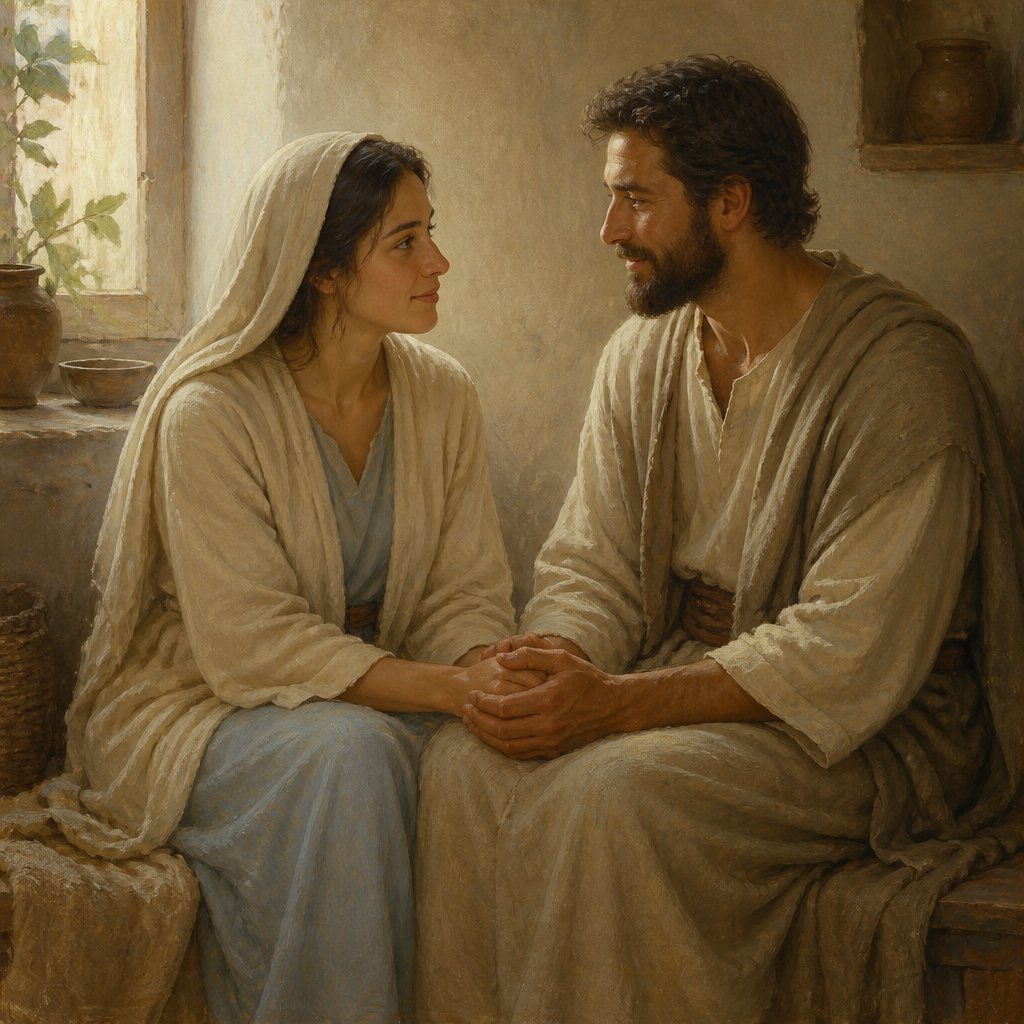
In the intricate dance of marriage, where two lives intertwine to create a harmonious union, the words of the Apostle Paul in 1 Corinthians 7:4 ring with profound truth: "The wife hath not power of her own body, but the husband: and likewise also the husband hath not power of his own body, but the wife." At first glance, this verse might evoke traditional views regarding marital dynamics; however, upon deeper reflection, it reveals profound insights into mutual submission and selflessness, laying a foundation for a thriving, God-honoring marriage.
To comprehend the depths of this verse, we must consider the cultural context in which Paul was writing. In the Greco-Roman world, women often had limited rights in marriage; their bodies were viewed as property. Yet, Paul’s words were revolutionary, calling for an egalitarian approach within a relationship. Both spouses, he argues, ought to recognize that their bodies belong not solely to themselves but to each other. This radical shift from ownership to shared stewardship invites both husband and wife into a sacred covenant that transcends selfish desires and instead emphasizes the importance of loving and serving one another.
The idea that neither person holds authority over their own body can be unsettling, yet it propels us toward genuine reconciliation and understanding. It fosters a deep sense of trust that becomes crucial in intimate relationships. By letting go of the notion of individual 'ownership,' couples can create a safe space in which both partners feel valued, regardless of the power dynamics that society often imposes. This attitude of selflessness is essential for cultivating love that is patient, kind, and devoid of arrogance—a love that reflects the heart of Christ.
Mutual submission does not suggest inequality, but rather a shared responsibility toward each other’s needs and desires. It necessitates a constant willingness to prioritize the well-being of one's spouse above one’s own. This goes beyond physical intimacy; it influences emotional, spiritual, and financial partnership. Paul’s reminder carries with it a call to compassion and a commitment to ongoing service within the marriage.
Furthermore, this principle can be a profound reflection of our relationship with Christ. Ephesians 5:21 encourages believers to submit to one another out of reverence for Christ. When we grasp the beauty of sacrificial love in our marriages, we gain a deeper understanding of the ultimate sacrifice made for us at the cross. Jesus submitted Himself to the Father’s will and gave His body for our salvation. As we model our relationships on His example, we mirror that divine love back into the world.
In our modern society, where individualism often reigns supreme and self-empowerment is lauded, the call to mutual submission can feel countercultural. Yet, embracing this principle enhances genuine intimacy. It draws us closer to our spouses emotionally and spiritually. When both partners strive to ensure the other's fulfillment and comfort, marriages can flourish in grace and understanding.
For those who may find themselves struggling with this concept, it can help to start small. Practice listening to each other's desires without defensiveness. Build habits of serving each other in ways that may seem minor but accumulate to show care. This daily choice to prioritize your partner echoes the heart of 1 Corinthians 7:4.
In conclusion, as we meditate on the words of Paul, let us adopt this mindset of mutual participation in each other's lives. Let us embrace the beauty of a defined partnership where love transcends boundaries and cultivates a deep bond—reflecting the character of Christ to ourselves, our families, and our communities. May we strive for marriages that honor God, built on mutual submission, love, and the recognition that together, as husband and wife, we are stronger, more unified, and more capable of weathering the storms of life.
Want to reflect more on 1 Corinthians 7:4?
Continue your spiritual journey with Bible Chat — an AI-powered tool for exploring God's Word through conversation. Ask questions, discover connections, and deepen your understanding.
Get Our Apps


1 Corinthians 7:4 Artwork

1 Corinthians 7:4 - "The wife hath not power of her own body, but the husband: and likewise also the husband hath not power of his own body, but the wife."
"The wife hath not power of her own body, but the husband: and likewise also the husband hath not power of his own body, but the wife." - 1 Corinthians 7:4

1 Corinthians 13:4-7

1 Corinthians 13:4-7

1 Corinthians 13:4-7

1 Corinthians 13:4-7

Corinthians 13:4-7

1 Corinthians 13:4-7 - "4 Love is patient, love is kind. It does not envy, it does not boast, it is not proud. 5 It does not dishonor others, it is not self-seeking, it is not easily angered, it keeps no record of wrongs. 6 Love does not delight in evil but rejoices with the truth. 7 It always protects, always trusts, always hopes, always perseveres."

1 Corinthians 4:20

1 Corinthians 4:20

"4 Love is patient, love is kind. It does not envy, it does not boast, it is not proud. 5 It does not dishonor others, it is not self-seeking, it is not easily angered, it keeps no record of wrongs. 6 Love does not delight in evil but rejoices with the truth. 7 It always protects, always trusts, always hopes, always perseveres." - 1 Corinthians 13:4-7

1 Corinthians 4:20

1 Corinthians 4:20

1 Corinthians 13:4-6

1 Corinthians 13:4-6

1 Corinthians 13:4-6

1 Corinthians 13:4-6

1 Corinthians 13:4-6

1 Corinthians 13:4-6

1 Corinthians 13:4-6

1 Corinthians 13:4-6

1 Corinthians 4:7 - "For who maketh thee to differ from another? and what hast thou that thou didst not receive? now if thou didst receive it, why dost thou glory, as if thou hadst not received it?"

2 Corinthians 4:7 - "But we have this treasure in earthen vessels, that the excellency of the power may be of God, and not of us."

1 Corinthians 4:1-2

1 Corinthians 7:6 - "But I speak this by permission, and not of commandment."

1 Corinthians 4:20 - "For the kingdom of God is not in word, but in power."

1 Corinthians 15:7 - "After that, he was seen of James; then of all the apostles."

1 Corinthians 7:23 - "Ye are bought with a price; be not ye the servants of men."

1 Corinthians 9:4 - "Have we not power to eat and to drink?"

2 Corinthians 7:4 - "Great is my boldness of speech toward you, great is my glorying of you: I am filled with comfort, I am exceeding joyful in all our tribulation."