The Sacred Bond of Marriage: Liberty in Christ
"The wife is bound by the law as long as her husband liveth; but if her husband be dead, she is at liberty to be married to whom she will; only in the Lord." - 1 Corinthians 7:39
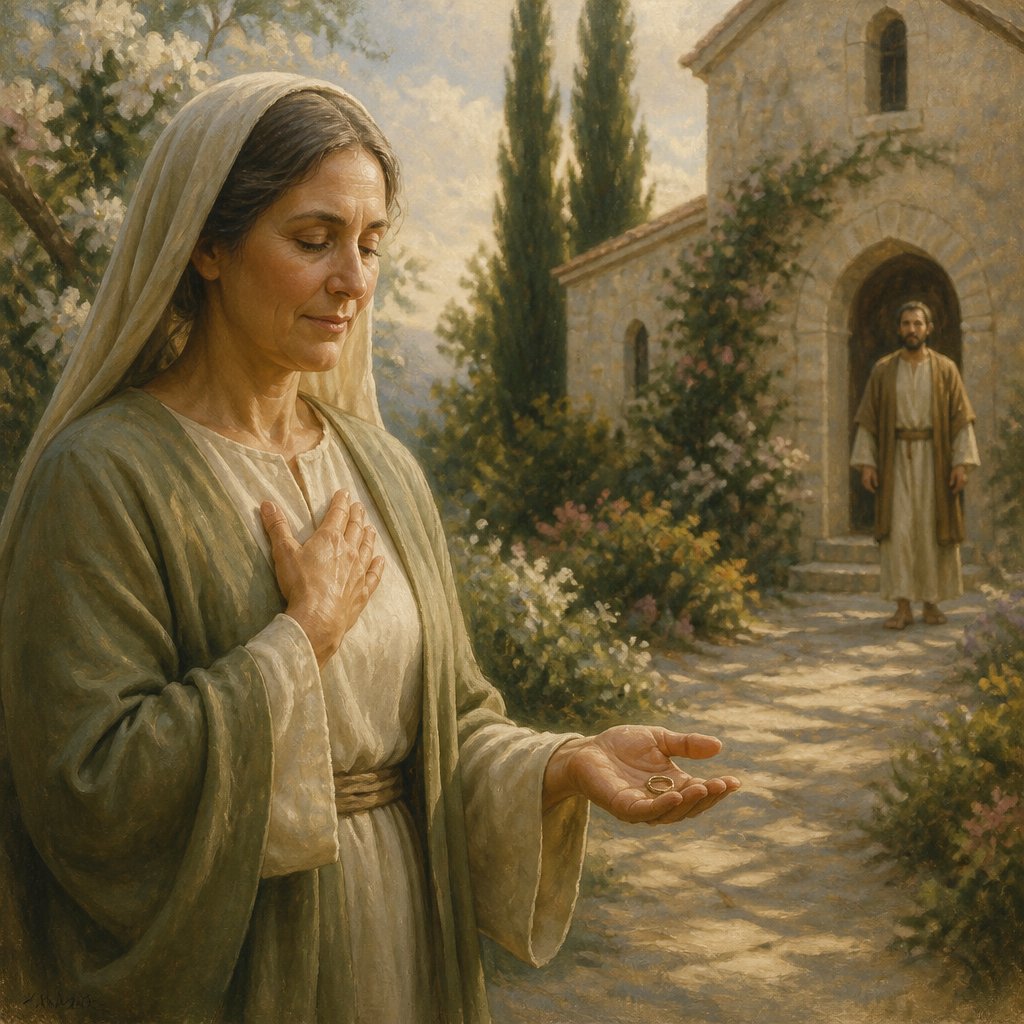
In 1 Corinthians 7:39, Paul articulates a profound truth about the sanctity of marriage and the liberty afforded to those who have endured loss. The verse states, "The wife is bound by the law as long as her husband liveth; but if her husband be dead, she is at liberty to be married to whom she will; only in the Lord." This scripture is rich in theological and practical implications for understanding the marriage covenant, grief, and the freedom we possess as followers of Christ.
The context of Paul’s teaching in 1 Corinthians addresses various aspects of life and relationships within the early church, providing guidance for believers living in a complex cultural landscape. Paul’s assertion that a wife is bound to her husband as long as he lives highlights the seriousness of the marriage covenant. The term "bound by the law" suggests that marriage is not merely a social contract, but rather a sacred institution ordained by God. Genesis 2:24 reinforces this notion, where it is stated that a man shall leave his father and mother and be joined unto his wife, becoming one flesh. This oneness signifies a deep spiritual and emotional connection that is meant to last a lifetime.
As we reflect on this, we must also recognize that the duration of marriage in earthly terms does not extend beyond this life; therefore, death alters the status of the surviving spouse. Paul acknowledges the painful reality of widowhood and, in doing so, provides an essential message of hope. When a husband dies, the wife is no longer bound to that covenant. She is granted liberty—to marry again if that is her desire. However, Paul wisely includes a stipulation: "only in the Lord."
What does it mean to marry "only in the Lord"? This phrase is brimming with significance, reminding the believer that any subsequent marriage must be aligned with the values and teachings of Christ. In other words, a widow is encouraged to seek a partner who shares in her faith, values, and devotion to God. This is not merely a suggestion but a safeguard against the challenges that often arise in a marriage where there is a disparity in belief. 2 Corinthians 6:14 warns us against being unequally yoked, emphasizing the importance of spiritual compatibility.
For many widows and widowers, the journey of facing loss can be overwhelming, filled with sorrow and questions about the future. The liberty specified in this verse is a gentle reminder that while mourning is essential, it is also important to realize that God has a future filled with hope and purpose for us, even in our grief. The phrase "at liberty to be married to whom she will" illustrates God’s grace and provision. His plans are not to harm us but to give us a future and a hope (Jeremiah 29:11).
Moreover, Paul’s words encourage those who grieve the loss of a spouse to heal and to not lose sight of the joy that can still come through an abundant life in Christ. The widow’s journey is one of reflection, grace, and renewal. It is natural to seek companionship; however, pursuing a relationship that honors God is vital in ensuring future joy and fulfillment.
In conclusion, 1 Corinthians 7:39 calls us to acknowledge the sanctity of marriage while simultaneously affirming the hope found in the freedom we possess in Christ. God’s design for marriage is rich and layered; it is a divine reflection of Christ’s unyielding love for the church. As we navigate the complexities of relationships, let us embrace the freedom God offers, always ensuring that our steps are guided by faith. For those who have experienced loss, may you find comfort in knowing that your future is still bright, and with God’s guidance, you can step into new beginnings, married "only in the Lord," reflecting His love in your new journey.
Want to reflect more on 1 Corinthians 7:39?
Continue your spiritual journey with Bible Chat — an AI-powered tool for exploring God's Word through conversation. Ask questions, discover connections, and deepen your understanding.
Get Our Apps


1 Corinthians 7:39 Artwork

1 Corinthians 7:39 - "The wife is bound by the law as long as her husband liveth; but if her husband be dead, she is at liberty to be married to whom she will; only in the Lord."
"The wife is bound by the law as long as her husband liveth; but if her husband be dead, she is at liberty to be married to whom she will; only in the Lord." - 1 Corinthians 7:39

1 Corinthians 14:39-40

1 Corinthians 14:39 - "Wherefore, brethren, covet to prophesy, and forbid not to speak with tongues."

1 Chronicles 7:39 - "And the sons of Ulla; Arah, and Haniel, and Rezia."

1 Corinthians 15:39 - "All flesh is not the same flesh: but there is one kind of flesh of men, another flesh of beasts, another of fishes, and another of birds."

"Wherefore, brethren, covet to prophesy, and forbid not to speak with tongues." - 1 Corinthians 14:39

1 Corinthians 7:6 - "But I speak this by permission, and not of commandment."

1 Corinthians 13:4-7

1 Corinthians 13:4-7

1 Corinthians 13:4-7

1 Corinthians 13:4-7

"And the sons of Ulla; Arah, and Haniel, and Rezia." - 1 Chronicles 7:39

1 Corinthians 15:7 - "After that, he was seen of James; then of all the apostles."

1 Corinthians 7:23 - "Ye are bought with a price; be not ye the servants of men."

John 7:37-39

John 7:37-39

1 Corinthians 7:19 - "Circumcision is nothing, and uncircumcision is nothing, but the keeping of the commandments of God."

1 Corinthians 7:31 - "And they that use this world, as not abusing it: for the fashion of this world passeth away."

1 Corinthians 1:7 - "So that ye come behind in no gift; waiting for the coming of our Lord Jesus Christ:"

1 Corinthians 12:7 - "But the manifestation of the Spirit is given to every man to profit withal."

1 Corinthians 7:1 - "Now concerning the things whereof ye wrote unto me: It is good for a man not to touch a woman."

1 Corinthians 7:20 - "Let every man abide in the same calling wherein he was called."

1 Corinthians 7:9 - "But if they cannot contain, let them marry: for it is better to marry than to burn."

1 Corinthians 7:30 - "And they that weep, as though they wept not; and they that rejoice, as though they rejoiced not; and they that buy, as though they possessed not;"

1 Corinthians 7:24 - "Brethren, let every man, wherein he is called, therein abide with God."

1 Corinthians 7:8 - "I say therefore to the unmarried and widows, It is good for them if they abide even as I."

1 Corinthians 15:38-39 - "But God gives it a body as he has determined, and to each kind of seed he gives its own body. Not all flesh is the same: People have one kind of flesh, animals have another, birds another and fish another."

1 Corinthians 7:26 - "I suppose therefore that this is good for the present distress, I say, that it is good for a man so to be."

1 Corinthians 7:33 - "But he that is married careth for the things that are of the world, how he may please his wife."