Freedom in Servitude: Understanding Our Identity in Christ
"For he that is called in the Lord, being a servant, is the Lord's freeman: likewise also he that is called, being free, is Christ's servant." - 1 Corinthians 7:22
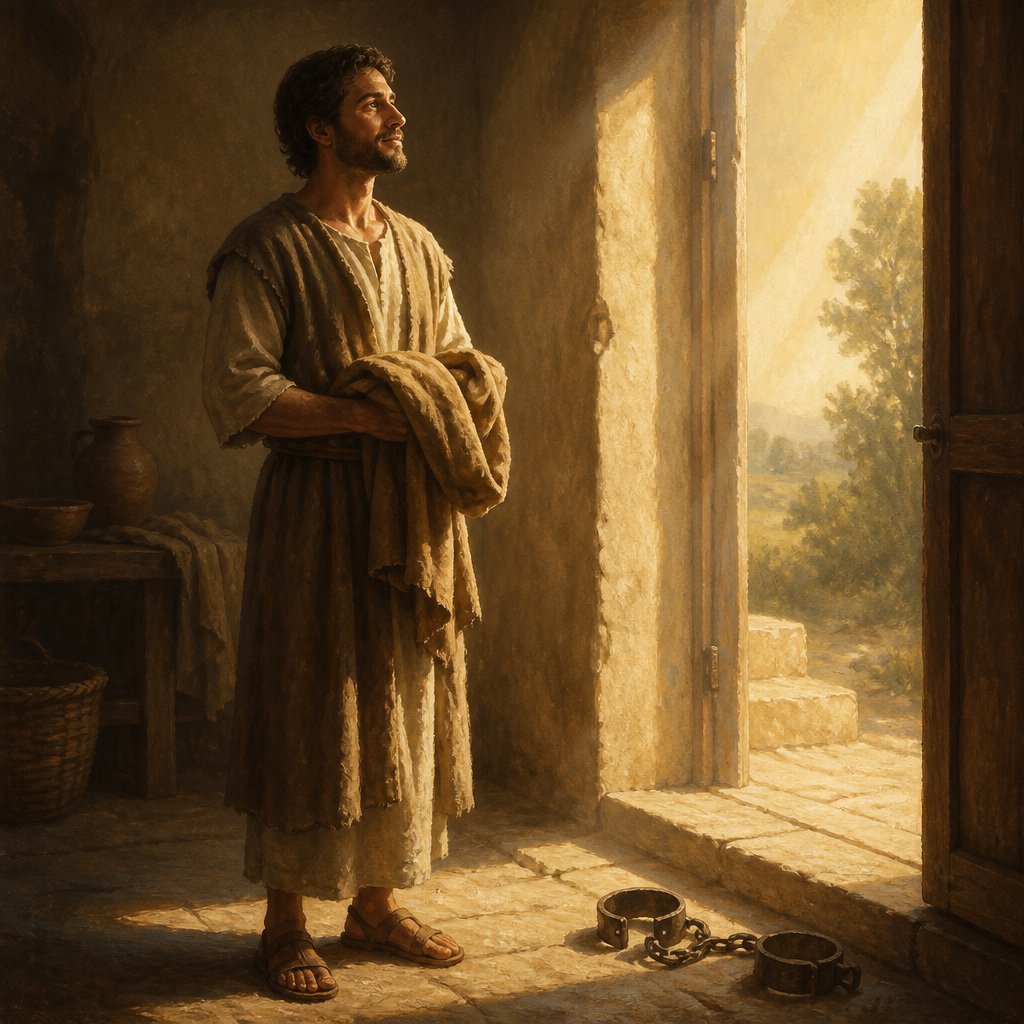
The Apostle Paul, in his first letter to the Corinthians, addresses a critical understanding of our spiritual identity and the nature of true freedom. The verse, 1 Corinthians 7:22, states: "For he that is called in the Lord, being a servant, is the Lord's freeman: likewise also he that is called, being free, is Christ's servant." This profound statement requires us to delve deeper into the paradox of freedom through servitude, and how our calling in Christ redefines our status in the world.
In the Roman context, where Paul was writing, the social hierarchy was stark and stratified. Slavery was commonplace, and many of the believers in Corinth may have been either slaves or masters, navigating their spiritual lives amidst societal constraints. Paul, however, takes a radical stance that flips worldly wisdom on its head. He asserts that those who are servants, when called by the Lord, are henceforth considered to be free. In what seems like a contradiction, Paul reveals the truth of the Gospel: our earthly status does not determine our spiritual worth.
To be called "in the Lord" signifies a divine invitation that transcends all earthly limitations. When we come to faith in Jesus Christ, regardless of our previous condition—be it social, economic, or relational—we enter into a new reality. The KJV phrase "the Lord's freeman" indicates that a servant's true identity is rooted in their relationship with Christ. This changes everything: our value and dignity are derived not from our societal position, but from being chosen and loved by God. As Romans 8:1 declares, "There is therefore now no condemnation to them which are in Christ Jesus."
Paul further extends this thought to those who are free in the world. He asserts that such individuals are no less than Christ’s servants. This concept challenges the notion that freedom equates to autonomy or having power over others. Instead, freedom, in the context of Christ, involves submission to His Lordship. True freedom is surrendering our will to follow Him and serve His purposes. Conducting our lives in service to others reflects the character of Christ and the essence of His Kingdom, which is about love, sacrifice, and service.
Considering our identity in Christ compels us to think differently about our roles in the world. As believers, whether we find ourselves in a position of power or in a place of subservience, we adopt the position of servant leaders. Our primary calling is to emulate Jesus, who exemplified perfect servitude. Mark 10:45 tells us, "For even the Son of man came not to be ministered unto, but to minister, and to give his life a ransom for many." Following His example, we are called to serve, reflecting His love and grace to those around us.
The societal labels we might carry—whether servant or free, rich or poor—cannot confine our spiritual identity. When we put on Christ, we dismantle the barriers created by these roles, paving the way to unity in the body of Christ. Galatians 3:28 reinforces this viewpoint: "There is neither Jew nor Greek, there is neither bond nor free, there is neither male nor female: for ye are all one in Christ Jesus."
In practical terms, what does it mean for us today to be both free and servants? It means we seek to uplift others rather than elevate ourselves. It requires that we serve with humility and grace, even in the most mundane tasks. It also encourages us to view our workplaces, homes, and communities as places where we can express Christ's love through action. With every act of service, we declare that our freedom does not detract from our call to serve; rather, it enhances it. It is in serving others that we find the truest expression of our freedom in Christ.
In closing, let us embrace our identity as the Lord's freeman and Christ's servant. May we navigate the world armed with the knowledge that we belong to Him—freed by His grace, called to a higher purpose, and empowered to serve in love.
Want to reflect more on 1 Corinthians 7:22?
Continue your spiritual journey with Bible Chat — an AI-powered tool for exploring God's Word through conversation. Ask questions, discover connections, and deepen your understanding.
Get Our Apps


1 Corinthians 7:22 Artwork
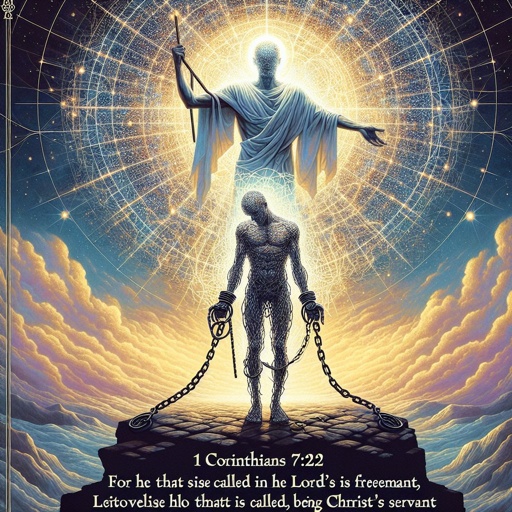
1 Corinthians 7:22 - "For he that is called in the Lord, being a servant, is the Lord's freeman: likewise also he that is called, being free, is Christ's servant."
"For he that is called in the Lord, being a servant, is the Lord's freeman: likewise also he that is called, being free, is Christ's servant." - 1 Corinthians 7:22

1 Corinthians 1:22 - "For the Jews require a sign, and the Greeks seek after wisdom:"

1 Corinthians 12:12-22

1 Corinthians 7:6 - "But I speak this by permission, and not of commandment."

1 Corinthians 13:4-7

1 Corinthians 10:22 - "Do we provoke the Lord to jealousy? are we stronger than he?"

1 Corinthians 13:4-7

1 Corinthians 13:4-7

1 Corinthians 13:4-7

1 Corinthians 16:22 - "If any man love not the Lord Jesus Christ, let him be Anathema Maranatha."

2 Corinthians 1:22 - "Who hath also sealed us, and given the earnest of the Spirit in our hearts."

1 Corinthians 15:22 - "For as in Adam all die, even so in Christ shall all be made alive."

1 Corinthians 15:7 - "After that, he was seen of James; then of all the apostles."

1 Corinthians 7:23 - "Ye are bought with a price; be not ye the servants of men."

1 Corinthians 12:22 - "Nay, much more those members of the body, which seem to be more feeble, are necessary:"

1 Corinthians 7:19 - "Circumcision is nothing, and uncircumcision is nothing, but the keeping of the commandments of God."

1 Corinthians 7:31 - "And they that use this world, as not abusing it: for the fashion of this world passeth away."

1 Corinthians 1:7 - "So that ye come behind in no gift; waiting for the coming of our Lord Jesus Christ:"

1 Corinthians 12:7 - "But the manifestation of the Spirit is given to every man to profit withal."

1 Corinthians 3:22 - "Whether Paul, or Apollos, or Cephas, or the world, or life, or death, or things present, or things to come; all are your's;"

1 Corinthians 7:1 - "Now concerning the things whereof ye wrote unto me: It is good for a man not to touch a woman."
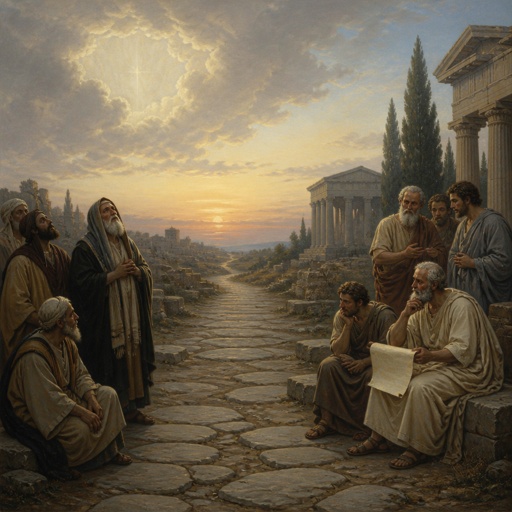
"For the Jews require a sign, and the Greeks seek after wisdom:" - 1 Corinthians 1:22

1 Corinthians 7:20 - "Let every man abide in the same calling wherein he was called."

1 Corinthians 7:9 - "But if they cannot contain, let them marry: for it is better to marry than to burn."

1 Corinthians 7:30 - "And they that weep, as though they wept not; and they that rejoice, as though they rejoiced not; and they that buy, as though they possessed not;"

1 Corinthians 14:22 - "Wherefore tongues are for a sign, not to them that believe, but to them that believe not: but prophesying serveth not for them that believe not, but for them which believe."

1 Corinthians 7:24 - "Brethren, let every man, wherein he is called, therein abide with God."

1 Corinthians 7:8 - "I say therefore to the unmarried and widows, It is good for them if they abide even as I."

1 Corinthians 7:26 - "I suppose therefore that this is good for the present distress, I say, that it is good for a man so to be."