Righteous Judgment Among the Saints
"1 Dare any of you, having a matter against another, go to law before the unjust, and not before the saints? 2 Do ye not know that the saints shall judge the world? and if the world shall be judged by you, are ye unworthy to judge the smallest matters? 3 Know ye not that we shall judge angels? how much more things that pertain to this life? 4 If then ye have judgments of things pertaining to this life, set them to judge who are least esteemed in the church. 5 I speak to your shame. Is it so, that there is not a wise man among you? no, not one that shall be able to judge between his brethren? 6 But brother goeth to law with brother, and that before the unbelievers. 7 Now therefore there is utterly a fault among you, because ye go to law one with another. Why do ye not rather take wrong? why do ye not rather suffer yourselves to be defrauded? 8 Nay, ye do wrong, and defraud, and that your brethren." - 1 Corinthians 6:1-8
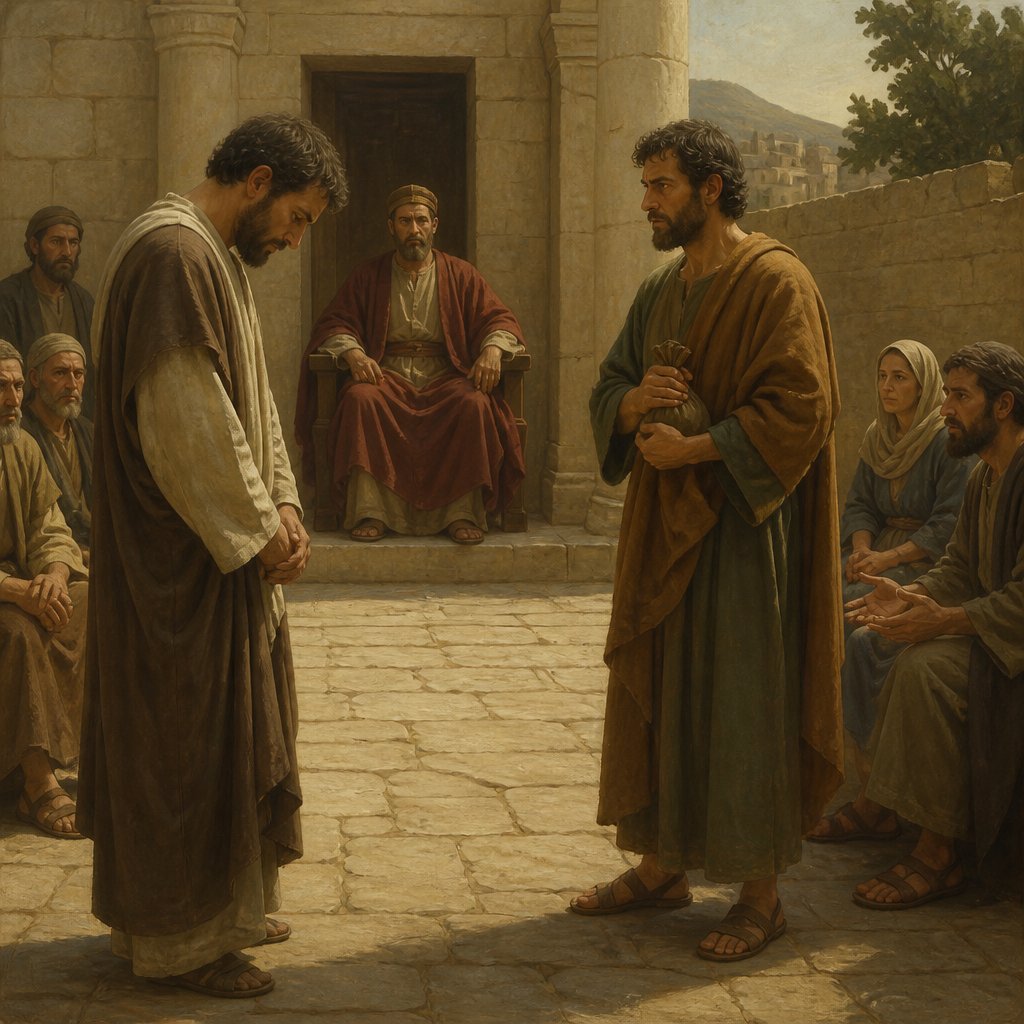
In the heart of Paul’s epistle to the Corinthians, specifically in 1 Corinthians 6:1-8, we encounter a sobering reminder of the principles of justice and community that should govern our interactions as believers. The Apostle Paul poses a critical question to the Corinthian church that resonates throughout generations: "Dare any of you, having a matter against another, go to law before the unjust, and not before the saints?" (1 Corinthians 6:1).
This text calls us to reflect on the nature of our disputes and the mechanisms we choose to resolve them. In a society enamored with litigation, where legal battles often eclipse personal relationships, Paul challenges us to consider the implications of seeking worldly courts to adjudicate matters among brothers and sisters in Christ.
Paul emphasizes an important truth in verse 2: "Do ye not know that the saints shall judge the world? and if the world shall be judged by you, are ye unworthy to judge the smallest matters?" Here, he elevates the identity of the saints from mere congregants to judges entrusted with divine wisdom. It is a striking reminder that as followers of Christ, we are not just passive participants in this world; we are co-heirs with Him, entrusted with the authority to discern right from wrong, not only on a grand cosmic scale but also in our day-to-day interactions.
Yet, Paul expresses disappointment with the church’s failure to embody this calling. "If then ye have judgments of things pertaining to this life, set them to judge who are least esteemed in the church" (1 Corinthians 6:4). The implication here is that even the most humble among us, those we may consider unwise or less significant, are more than capable of resolving disputes when guided by the Holy Spirit. This further emphasizes that the wisdom of God transcends worldly standards and knowledge. God’s way of handling disputes is vastly different from that of the secular world, which often prioritizes victory over resolution.
In verses 7 and 8, Paul poses a fundamentally challenging question, urging them to consider the higher road: “Why do ye not rather take wrong? why do ye not rather suffer yourselves to be defrauded?” (1 Corinthians 6:7). This is an invitation to embrace humility and sacrifice for the sake of unity in the Body of Christ. Through this, Paul’s admonition surfaces the oft-overlooked virtues of grace, forgiveness, and the valuing of relationships over personal gain.
Embodying these principles often feels counterintuitive. In a world where self-assertion is worshipped, taking the fall or letting go of a grievance can feel weak. However, the essence of the Gospel calls us to set aside our self-interest for the glory of God and the love of our brethren. Imagine the transformative power this approach would wield within our communities if we chose to prioritize reconciliation over retribution, compassion over competition.
Furthermore, Paul reminds us that disputes among believers reflect poorly not just on our relationships, but on God’s reputation. When we engage in conflicts and legal battles before non-believers, we risk undermining our testimony and the illusive, grace-filled character we are meant to portray. "But brother goeth to law with brother, and that before the unbelievers" (1 Corinthians 6:6). We are called to show the world a different way, grounded in love and grounded in Christ.
So how do we apply this lesson in our daily lives? Firstly, we must approach our disagreements with a mindset of humility and a willingness to resolve conflict in an edifying way. Secondly, we ought to seek counsel from fellow believers in our community, recognizing the importance of collective wisdom. And lastly, we must continually remind ourselves of the greater mission at hand: to reflect Christ in every interaction, fostering a community that embodies the peace and justice of God.
As we ponder Paul’s words, let us embrace the responsibility we have as saints. Let us strive to be peacemakers, reflecting a Christ-like spirit in how we handle our disputes. Dare we take the high road, not seeking our vindication, but rather allowing God to be glorified in how we love one another?
Want to reflect more on 1 Corinthians 6:1-8?
Continue your spiritual journey with Bible Chat — an AI-powered tool for exploring God's Word through conversation. Ask questions, discover connections, and deepen your understanding.
Get Our Apps


1 Corinthians 6:1-8 Artwork
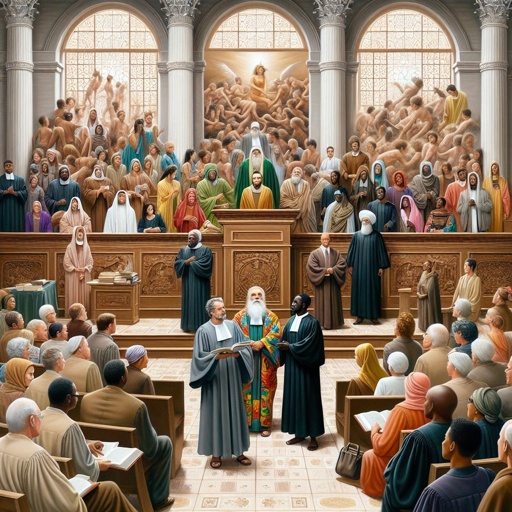
1 Corinthians 6:1-8 - "Dare any of you, having a matter against another, go to law before the unrighteous, and not before the saints? Do you not know that the saints will judge the world? And if the world will be judged by you, are you unworthy to judge the smallest matters? Do you not know that we shall judge angels? How much more, things that pertain to this life? If then you have judgments concerning things pertaining to this life, do you appoint those who are least esteemed by the church to judge? I say this to your shame. Is it so, that there is not a wise man among you, not even one, who will be able to judge between his brethren? But brother goes to law against brother, and that before unbelievers! Now therefore, it is already an utter failure for you that you go to law against one another. Why do you not rather accept wrong? Why do you not rather let yourselves be cheated? No, you yourselves do wrong and cheat, and you do these things to your brethren!"
"Dare any of you, having a matter against another, go to law before the unrighteous, and not before the saints? Do you not know that the saints will judge the world? And if the world will be judged by you, are you unworthy to judge the smallest matters? Do you not know that we shall judge angels? How much more, things that pertain to this life? If then you have judgments concerning things pertaining to this life, do you appoint those who are least esteemed by the church to judge? I say this to your shame. Is it so, that there is not a wise man among you, not even one, who will be able to judge between his brethren? But brother goes to law against brother, and that before unbelievers! Now therefore, it is already an utter failure for you that you go to law against one another. Why do you not rather accept wrong? Why do you not rather let yourselves be cheated? No, you yourselves do wrong and cheat, and you do these things to your brethren!" - 1 Corinthians 6:1-8

1 Corinthians 6:8 - "Nay, ye do wrong, and defraud, and that your brethren."

1 Corinthians 6:1 - "Dare any of you, having a matter against another, go to law before the unjust, and not before the saints?"

"Nay, ye do wrong, and defraud, and that your brethren." - 1 Corinthians 6:8

1 Corinthians 1:6 - "Even as the testimony of Christ was confirmed in you:"

1 Corinthians 8:6 - "But to us there is but one God, the Father, of whom are all things, and we in him; and one Lord Jesus Christ, by whom are all things, and we by him."

1 Corinthians 13:4-6

1 Corinthians 13:4-6

1 Corinthians 13:4-6

1 Corinthians 13:4-6

1 Corinthians 13:4-6

1 Corinthians 13:4-6

1 Corinthians 13:4-6

1 Corinthians 13:4-6

1 Corinthians 6:6 - "But brother goeth to law with brother, and that before the unbelievers."

1 Corinthians 6:19

1 Corinthians 6:19

1 Corinthians 6:19

1 Corinthians 6:19

1 Corinthians 6:19

1 Corinthians 6:19

1 Corinthians 11:8 - "For the man is not of the woman; but the woman of the man."

1 Corinthians 16:8 - "But I will tarry at Ephesus until Pentecost."

1 Corinthians 7:6 - "But I speak this by permission, and not of commandment."

1 Corinthians 13:6 - "Rejoiceth not in iniquity, but rejoiceth in the truth;"

1 Corinthians 15:8-11

1 Corinthians 6:19-20

1 Corinthians 6:19-20

1 Corinthians 6:19-20