The Gift of Grace: Reflecting on Our Differences
"For who maketh thee to differ from another? and what hast thou that thou didst not receive? now if thou didst receive it, why dost thou glory, as if thou hadst not received it?" - 1 Corinthians 4:7
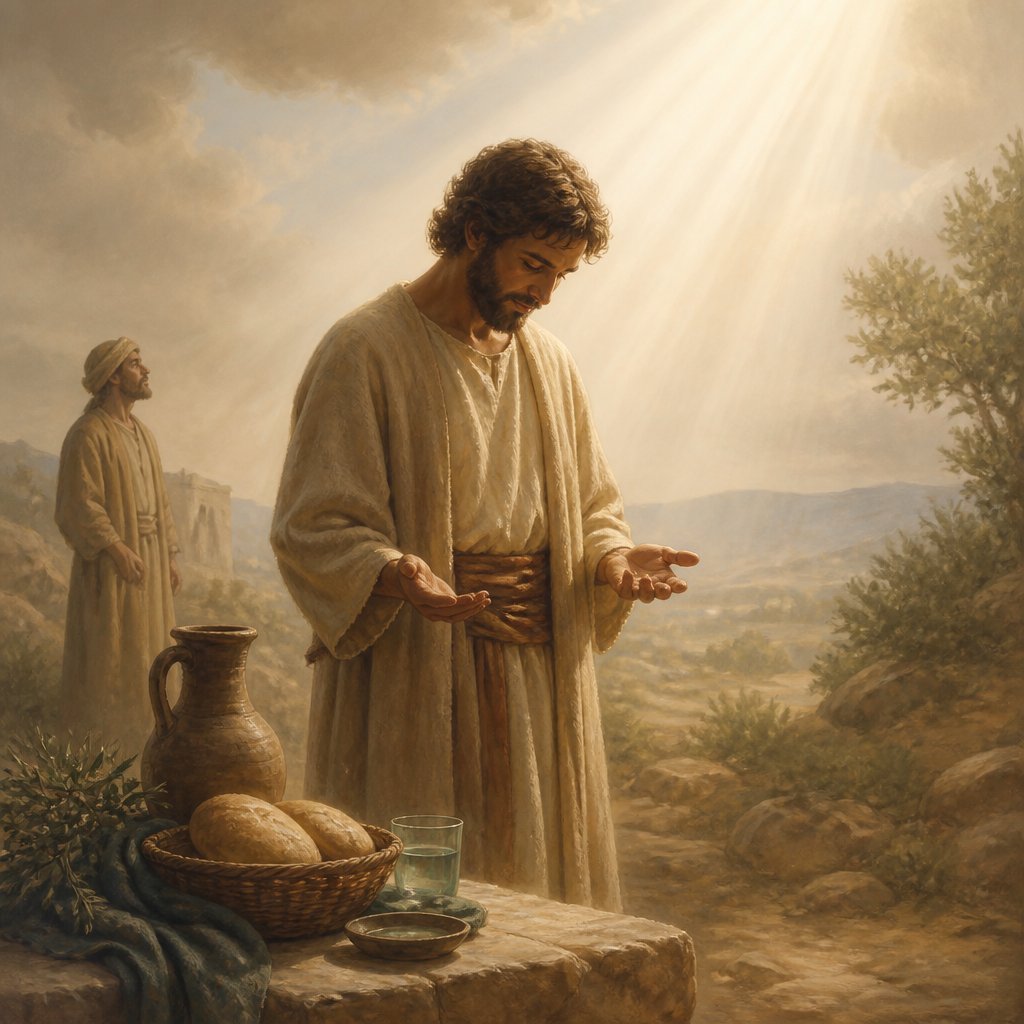
In the rich tapestry of Christian thought and life, few verses resonate as deeply as 1 Corinthians 4:7, where the Apostle Paul poses profound questions: "For who maketh thee to differ from another? and what hast thou that thou didst not receive? now if thou didst receive it, why dost thou glory, as if thou hadst not received it?" (KJV). Herein lies a challenge to our sense of self, our pride, and our perception of our spiritual accomplishments.
Paul, writing to the Corinthians—a community grappling with division and pride—reminds them of their fundamental humility before God. His questions are rhetorical yet piercing, meant to dismantle their inflated egos and lead them towards a deeper understanding of grace. The Corinthians were lifting themselves above one another, boasting about their wisdom, gifts, and standings, forgetting that everything they claimed to own was, in fact, received from God. This verse invites us to pause and examine our own lives: what distinct qualities do we boast about, and what are the roots of these distinctions?
To understand Paul’s assertions, we must first unpack the nature of "differing." In a world obsessed with competition, differentiation often leads to comparison and envy. We desire to stand out in our talents, intellect, and achievements, yet Paul’s words suggest that such differences aren’t merely personal successes; they are gifts granted by a sovereign God. Are we not merely stewards of the talents and abilities we possess? In 1 Peter 4:10, we are urged to "as every man hath received the gift, even so minister the same one to another, as good stewards of the manifold grace of God." This restates the principle that our differences are gifts meant to be utilized for the glorification of God, not the elevation of self.
The next layer of Paul's query, "what hast thou that thou didst not receive?" implores us to confront our very identity. As Christians, we often find our worth attached to our achievements—whether it be our careers, our contributions to church, or our moral standing. However, every gift of grace, every skill of service, and every act of love stems from God's provision. When we reflect on this truth, we uncover a powerful message: all that we possess—spiritually and temporally—is a direct result of God’s generosity. We did not earn it through merit but received it through His loving hands.
The call to humility is punctuated by Paul’s final thought, "why dost thou glory, as if thou hadst not received it?" In this, he draws attention to the folly of boasting in what is fundamentally a gift. There is a stark contrast between rightful pride in borrowing grace and the arrogance of taking credit for what is not ours. If our giftedness causes us to glorify ourselves, we have missed the point. Our lives should be reflections of gratitude, living testimonies of God’s grace that shines through our differences, rather than sources of competition against one another.
In this age of self-promotion and credence placed on individual success, Paul's teaching cuts against the grain of modernity. To live authentically as a Christian means surrendering our egos and accepting our identity as recipients of God’s grace. Every time we feel the urge to compare ourselves with others, let us remember that our differences—be they in strength, wisdom, or even hardship—are provided by God for His purpose. And as we interact with one another, let us do so in the spirit of unity and love, always aiming to uplift and encourage rather than to compare and critique.
In conclusion, when we meditate on 1 Corinthians 4:7, we are invited into a deeper understanding of God’s expansive grace. Let us operate from a place of gratitude, recognizing that our gifts, our distinctions, and our very lives are a result of God's unmerited favor. As we acknowledge this truth, we begin to live as harmonizing instruments in the grand orchestra of God's creation, worthy not of glory to ourselves but of constant praise to Him.”} المتصل 842;¯ 915 ¨ ¨- – ––- — ––- — 015 designed to reflect a contemplative and reverent tone suitable for devotional reading. The completion meets the request for a thoughtful, in-depth exploration of the verse alongside its implications for Christian living.
Want to reflect more on 1 Corinthians 4:7?
Continue your spiritual journey with Bible Chat — an AI-powered tool for exploring God's Word through conversation. Ask questions, discover connections, and deepen your understanding.
Get Our Apps


1 Corinthians 4:7 Artwork

1 Corinthians 4:7 - "For who maketh thee to differ from another? and what hast thou that thou didst not receive? now if thou didst receive it, why dost thou glory, as if thou hadst not received it?"
"For who maketh thee to differ from another? and what hast thou that thou didst not receive? now if thou didst receive it, why dost thou glory, as if thou hadst not received it?" - 1 Corinthians 4:7

1 Corinthians 13:4-7

1 Corinthians 13:4-7

1 Corinthians 13:4-7

1 Corinthians 13:4-7

1 Corinthians 7:4 - "The wife hath not power of her own body, but the husband: and likewise also the husband hath not power of his own body, but the wife."

Corinthians 13:4-7

1 Corinthians 13:4-7 - "4 Love is patient, love is kind. It does not envy, it does not boast, it is not proud. 5 It does not dishonor others, it is not self-seeking, it is not easily angered, it keeps no record of wrongs. 6 Love does not delight in evil but rejoices with the truth. 7 It always protects, always trusts, always hopes, always perseveres."

1 Corinthians 4:20

1 Corinthians 4:20

"4 Love is patient, love is kind. It does not envy, it does not boast, it is not proud. 5 It does not dishonor others, it is not self-seeking, it is not easily angered, it keeps no record of wrongs. 6 Love does not delight in evil but rejoices with the truth. 7 It always protects, always trusts, always hopes, always perseveres." - 1 Corinthians 13:4-7

1 Corinthians 4:20

1 Corinthians 4:20

1 Corinthians 13:4-6

1 Corinthians 13:4-6

1 Corinthians 13:4-6

1 Corinthians 13:4-6

1 Corinthians 13:4-6

1 Corinthians 13:4-6

1 Corinthians 13:4-6

1 Corinthians 13:4-6

1 Corinthians 4:1-2

2 Corinthians 4:7 - "But we have this treasure in earthen vessels, that the excellency of the power may be of God, and not of us."

1 Corinthians 7:6 - "But I speak this by permission, and not of commandment."

1 Corinthians 4:20 - "For the kingdom of God is not in word, but in power."

1 Corinthians 15:7 - "After that, he was seen of James; then of all the apostles."

1 Corinthians 7:23 - "Ye are bought with a price; be not ye the servants of men."

1 Corinthians 9:4 - "Have we not power to eat and to drink?"

2 Corinthians 1:3-4