The Sacred Silence of Worship
"But if there be no interpreter, let him keep silence in the church; and let him speak to himself, and to God." - 1 Corinthians 14:28
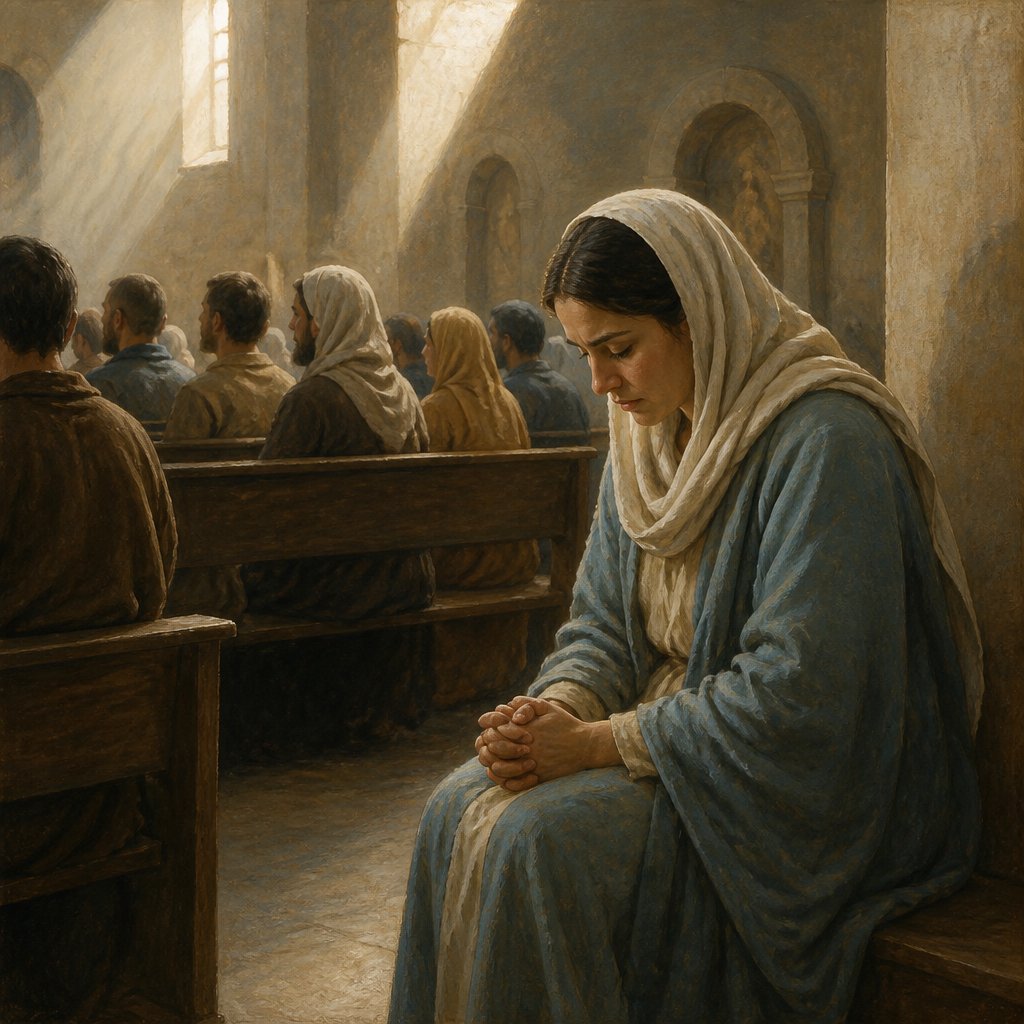
In the midst of congregational worship, where praises and prayers ascend like fragrant incense to the heavens, the Apostle Paul addresses a crucial aspect of spiritual expression in his first letter to the Corinthians: "But if there be no interpreter, let him keep silence in the church; and let him speak to himself, and to God" (1 Corinthians 14:28, KJV). This passage invites us to contemplate the significance of silence in worship, the nature of communication with God, and the importance of orderliness in the church.
At first glance, the directive to keep silence may seem contrary to the exuberance often associated with worship. However, Paul, who passionately advocated for the gifts of the Holy Spirit, emphasizes the need for clarity and edification in the assembly. The church is not merely a place for individual expressions of faith; it is a community where believers gather to build one another up in love and truth. In Corinth, where the potential for chaos was palpable due to the clamor of various spiritual gifts, Paul sought to restore an atmosphere of reverence and understanding.
Here, we see the heart of a father gently guiding his children toward maturity. The instructions provided are rooted not in suppression but in the sacredness of worship. When he speaks of silence, Paul is not dismissing the need for individuals to express their spiritual experiences; rather, he highlights the need for those experiences to be communicated in a manner that benefits the whole body of Christ. If there is no interpreter for the foreign tongue, the message intended for edification becomes unintelligible, and the church loses its harmony. In essence, Paul calls for a divine order—one that allows God’s voice to be clearly heard amidst the symphony of worship.
In our own worship experiences, how often do we pause to reflect on what it truly means to communicate with God? Silence can be an incredibly powerful spiritual discipline. It allows us to listen to the still, small voice of the Lord. When we set aside the clamor of our own thoughts and the distractions of the world, we create a space where God can speak. In those moments of quiet reflection, we engage not only in speaking to ourselves but in fostering an intimate dialogue with our Creator. Paul’s directive invites us into this vital communion with God, emphasizing that our personal relationship with Him must be cultivated through both our spoken words and moments of contemplative silence.
Additionally, it is essential to understand that silence does not denote inactivity. Spiritually, silence is often where the richest revelations occur. When we allow ourselves to remain silent before God, we open our hearts to receive His wisdom, guidance, and love. Like the psalmist who declares, "Be still, and know that I am God" (Psalm 46:10, KJV), we find that true stillness enables us to recognize His presence and sovereignty over our lives.
Let us also recognize that this silence is a reflection of respect and reverence—both for God and for one another in the body of Christ. When believers come together in worship, we are called to maintain a posture that reflects not just our individual spirituality but also our collective witness as His Church. Our silence can speak volumes in a world filled with noise. It serves as a testament to the divine order God desires within our worship, where each voice has its place, and where silence is honored as a form of seeking.
In conclusion, as we engage with this scripture, let us embrace the teaching of silence in our worship, recognizing it as sacred and necessary for growth, understanding, and communion with God. May we seek to express our spiritual gifts not for mere display but for the building up of the church, always ready to listen and discern the voice of God amidst the stillness.
Want to reflect more on 1 Corinthians 14:28?
Continue your spiritual journey with Bible Chat — an AI-powered tool for exploring God's Word through conversation. Ask questions, discover connections, and deepen your understanding.
Get Our Apps


1 Corinthians 14:28 Artwork

1 Corinthians 14:28 - "But if there be no interpreter, let him keep silence in the church; and let him speak to himself, and to God."
"But if there be no interpreter, let him keep silence in the church; and let him speak to himself, and to God." - 1 Corinthians 14:28

1 Corinthians 14:1

1 corinthians 14:1

1 Corinthians 14:36

1 Corinthians 14:37

1 Corinthians 14:36

1 Corinthians 14:26-33

1 Corinthians 14:36-40

1 Corinthians 14:36-37

1 Corinthians 14:39-40

1 Corinthians 14:14 - "For if I pray in an unknown tongue, my spirit prayeth, but my understanding is unfruitful."

1 Corinthians 12:14 - "For the body is not one member, but many."

1 Corinthians 14:32 - "And the spirits of the prophets are subject to the prophets."

1 Corinthians 1:28 - "And base things of the world, and things which are despised, hath God chosen, yea, and things which are not, to bring to nought things that are:"

1 Corinthians 11:28 - "But let a man examine himself, and so let him eat of that bread, and drink of that cup."

1 Corinthians 14:40 - "Let all things be done decently and in order."

1 Corinthians 16:14 - "Let all your things be done with charity."

1 Corinthians 1:14 - "I thank God that I baptized none of you, but Crispus and Gaius;"

1 Corinthians 14:38 - "But if any man be ignorant, let him be ignorant."

1 Corinthians 14:1 - "Follow after charity, and desire spiritual gifts, but rather that ye may prophesy."

1 Corinthians 14:17 - "For thou verily givest thanks well, but the other is not edified."

1 Corinthians 14:33 - "For God is not the author of confusion, but of peace, as in all churches of the saints."

1 Corinthians 10:14 - "Wherefore, my dearly beloved, flee from idolatry."

1 Corinthians 14:39 - "Wherefore, brethren, covet to prophesy, and forbid not to speak with tongues."

1 Corinthians 14:3 - "But he that prophesieth speaketh unto men to edification, and exhortation, and comfort."

1 Corinthians 14:29 - "Let the prophets speak two or three, and let the other judge."

1 Corinthians 1:28-29 - "God chose what is low and despised in the world, even things that are not, to bring to nothing things that are, so that no human being might boast in the presence of God."

1 Corinthians 14:20 - "Brethren, be not children in understanding: howbeit in malice be ye children, but in understanding be men."

1 Corinthians 14:8 - "For if the trumpet give an uncertain sound, who shall prepare himself to the battle?"