Feasting with Reverence: The Seriousness of Communion
"Wherefore whosoever shall eat this bread, and drink this cup of the Lord, unworthily, shall be guilty of the body and blood of the Lord." - 1 Corinthians 11:27
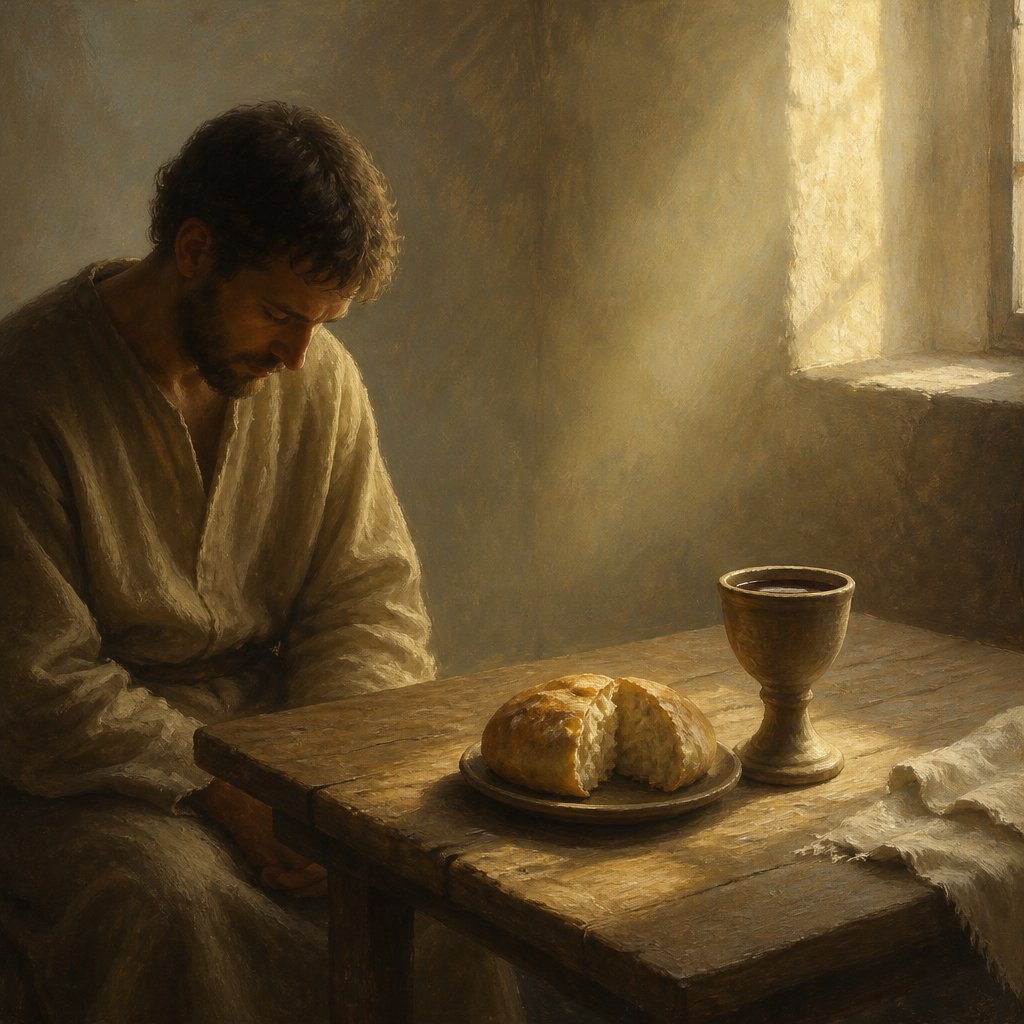
In 1 Corinthians 11:27, we are presented with a solemn warning: "Wherefore whosoever shall eat this bread, and drink this cup of the Lord, unworthily, shall be guilty of the body and blood of the Lord." This verse captures the profound significance that the act of communion holds within the Christian faith. It forces us to examine not only our actions but our hearts and intentions as we approach the sacred table of the Lord.
The context surrounding this admonition is essential. The Apostle Paul addresses the Corinthian church, a community rife with division and the misuse of communal meals, particularly the observance of the Lord’s Supper. Many in the church were partaking in this holy act without recognizing its meaning or the seriousness of their participation. Paul reminds them of the sacredness of the ritual as a remembrance of Christ's sacrifice, urging them to approach it with solemnity rather than flippancy.
First, we must understand the nature of communion itself. In the breaking of bread and the drinking of the cup, we celebrate the ultimate sacrifice of Jesus Christ — his body broken and his blood spilled for our salvation. This act is not merely a ritual; it encapsulates the very crux of our faith: redemption through Christ. When we partake in communion, we are making a declaration of faith, a proclamation of Christ’s death until he returns (1 Corinthians 11:26). Therefore, to partake unworthily is to undermine the depth of this declaration and relationship with Christ.
This brings us to the concept of worthiness. Paul does not suggest that we must be without sin to approach the table; indeed, if this were the case, no one could partake. Rather, he challenges us to reflect on our heart's condition and our relationship with God and others. Are we harboring unconfessed sin? Have we allowed bitterness, pride, or division to linger in our hearts? Communion offers the perfect moment for self-examination. Each time we approach the table, we should not only remember Christ’s sacrifice but also repent of any offense we may hold against God and neighbor.
Moreover, Paul states that to partake in an unworthy manner is to be guilty of the body and blood of the Lord. This is a staggering charge and serves as a profound reminder of the weight of our participation. To do so cavalierly is tantamount to disregarding the significance of Christ’s suffering and the price paid for our sin. It reflects an attitude that trivializes what was meant to be holy, innovative in the act of worship, and personal with Christ. In light of this, we must come with intent: to honor Christ’s sacrifice and the fellowship of believers.
When preparing for communion, consider the words of David in Psalm 139:23-24: "Search me, O God, and know my heart: try me, and know my thoughts: and see if there be any wicked way in me, and lead me in the way everlasting." This should be our prayerful attitude as we approach the Lord’s table. Allow God to illuminate any areas within us that require repentance and healing. This process is not meant to invoke fear but rather to cultivate a deeper appreciation for the grace and mercy extended to us through Christ.
As we partake in the bread and the cup, let us do so reverently, understanding the gravity of the moment. May we eat and drink not in a manner fitting for the casual or the indifferent but in a spirit of worship, gratitude, and somber remembrance for the love that led Christ to the cross. In this way, we honor not just the act of communion, but the One it represents — our Lord and Savior, Jesus Christ.
Want to reflect more on 1 Corinthians 11:27?
Continue your spiritual journey with Bible Chat — an AI-powered tool for exploring God's Word through conversation. Ask questions, discover connections, and deepen your understanding.
Get Our Apps


1 Corinthians 11:27 Artwork

1 Corinthians 11:27 - "Wherefore whosoever shall eat this bread, and drink this cup of the Lord, unworthily, shall be guilty of the body and blood of the Lord."
"Wherefore whosoever shall eat this bread, and drink this cup of the Lord, unworthily, shall be guilty of the body and blood of the Lord." - 1 Corinthians 11:27

1 Corinthians 9:25-27

1 Corinthians 9:25-27

1 Corinthians 9:25-27

1 Corinthians 9:25-27

2 Corinthians 11:27 - "In weariness and painfulness, in watchings often, in hunger and thirst, in fastings often, in cold and nakedness."

1 Corinthians 12:27

1 Corinthians 12:27 - "Now ye are the body of Christ, and members in particular."

1 Corinthians 11:26-29

1 Corinthians 11:26-29

1 Corinthians 11:8 - "For the man is not of the woman; but the woman of the man."

1 Corinthians 11:1 - "Be ye followers of me, even as I also am of Christ."

1 Corinthians 11:11 - "Nevertheless neither is the man without the woman, neither the woman without the man, in the Lord."

1 Corinthians 15:8-11

1 Chronicles 11:27 - "Shammoth the Harorite, Helez the Pelonite,"

1 Corinthians 14:27 - "If any man speak in an unknown tongue, let it be by two, or at the most by three, and that by course; and let one interpret."

1 Corinthians 11:9 - "Neither was the man created for the woman; but the woman for the man."

1 Corinthians 11:31 - "For if we would judge ourselves, we should not be judged."

1 Corinthians 1:27 - "But God hath chosen the foolish things of the world to confound the wise; and God hath chosen the weak things of the world to confound the things which are mighty;"

1 Corinthians 7:27 - "Art thou bound unto a wife? seek not to be loosed. Art thou loosed from a wife? seek not a wife."

"In weariness and painfulness, in watchings often, in hunger and thirst, in fastings often, in cold and nakedness." - 2 Corinthians 11:27

1 Corinthians 11:30 - "For this cause many are weak and sickly among you, and many sleep."

1 Corinthians 11:13 - "Judge in yourselves: is it comely that a woman pray unto God uncovered?"

"Now ye are the body of Christ, and members in particular." - 1 Corinthians 12:27

1 Corinthians 11:10 - "For this cause ought the woman to have power on her head because of the angels."

1 Corinthians 11:20 - "When ye come together therefore into one place, this is not to eat the Lord's supper."

1 Corinthians 1:11 - "For it hath been declared unto me of you, my brethren, by them which are of the house of Chloe, that there are contentions among you."

1 Corinthians 11:32 - "But when we are judged, we are chastened of the Lord, that we should not be condemned with the world."

1 Corinthians 11:16 - "But if any man seem to be contentious, we have no such custom, neither the churches of God."