Legacy of Faith: The Generational Impact of Eshek
"And the sons of Eshek his brother were, Ulam his firstborn, Jehush the second, and Eliphelet the third." - 1 Chronicles 8:39
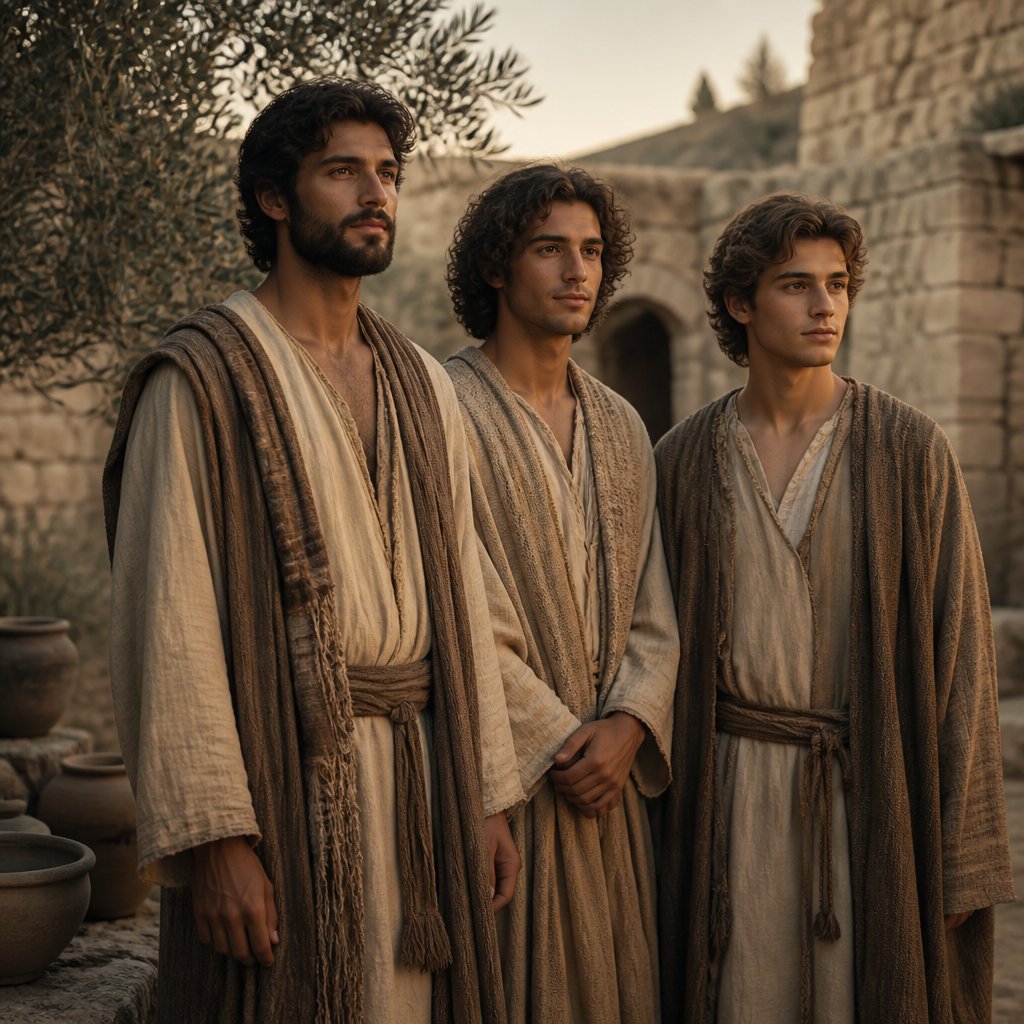
As we delve into the genealogical records found in 1 Chronicles, we come across a seemingly simple verse that includes a family lineage of Eshek: “And the sons of Eshek his brother were, Ulam his firstborn, Jehush the second, and Eliphelet the third.” (1 Chronicles 8:39 KJV). At first glance, this verse may appear to be mere data collection, a list of names without much significance. However, layered within its simplicity lies profound truths about legacy, identity, and our relationship with God.
1. **The Importance of Legacy**: In biblical times, lineage mattered immensely. It signified inheritance, honor, and the continuation of family names and promises made by God. Eshek, whose name means "demand or request", had brothers whose names were never just arbitrary. Each of his sons—Ulam, Jehush, and Eliphelet—represented potential destinies and the commitment to a shared legacy. For us today, this verse serves as a reminder to consider the legacy we are creating for future generations. What will our children and grandchildren inherit from us? How do our lives reflect the faith and values we wish to pass on? Let us live intentionally, knowing our actions today can influence countless lives tomorrow.
2. **Identity in Family**: Ulam, the firstborn, would have been seen as the leader of the family, holding the responsibility of carrying forward their legacy. This evokes thought concerning our roles within our families. Each name and position within a family dynamic holds significance. Whether we are the eldest or the youngest, our identities are shaped by those connections. We are often nicknamed by our familial roles: daughter, son, sister, or brother. As Christians, we also have the ultimate identity as children of God. Our acceptance of Christ makes us part of a larger spiritual family, one that transcends earthly ties—how comforting to know we share in the legacy of faith passed down through generations.
3. **Recognizing Individuality**: The individuality of each son must not be overlooked. Ulam, Jehush, and Eliphelet were differently gifted and called, yet their names came together to tell a broader story. In our lives, God also calls each of us uniquely; we must embrace our distinct qualities while also contributing to the greater narrative of His Kingdom. Ulam, which means “the one who brings safety,” reminds us that God assigns roles to individuals that serve not just ourselves but also our communities. In our daily endeavors, we can strive to find what role we play in the church and the world, asking ourselves, "How can my gifts contribute to the safety and health of my family or community?"
4. **God’s Faithfulness in Generations**: This verse connects us to the theme of God’s faithfulness throughout generations. The act of remembering familial ties encourages us to reflect on God’s promises made to our forefathers. The Old Testament consistently reveals how God honors covenants across lineages—from Abraham to David to the children of Israel. This genealogical record reaffirms that God’s purpose spans beyond our individual lives; He is active through generations. This keeps us grounded in hope. Even when circumstances seem bleak, we can trust in God’s faithful hand guiding us and our families, just as He did for Eshek and his descendants.
5. **Practical Action**: As we contemplate Eshek’s lineage, it becomes crucial to respond. One practical way to honor our legacy is to invest in the next generation—be it our children, nieces, nephews, or mentees. Sharing our faith stories, Biblical truths, and wisdom can plant seeds that grow into a deep-rooted faith, much like that of Eshek’s sons. Let us pray for divine opportunities to cultivate these relationships, ensuring the legacy of faith endures.
In conclusion, while 1 Chronicles 8:39 appears simple at first glance, it is a reminder of the significance of our legacies, original purposes, and the overarching faithfulness of God through generations. As we read through names and family lines, we must not overlook the depth of their stories and the lessons we can extract for our lives today.
Want to reflect more on 1 Chronicles 8:39?
Continue your spiritual journey with Bible Chat — an AI-powered tool for exploring God's Word through conversation. Ask questions, discover connections, and deepen your understanding.
Get Our Apps


1 Chronicles 8:39 Artwork

1 Chronicles 8:39 - "And the sons of Eshek his brother were, Ulam his firstborn, Jehush the second, and Eliphelet the third."
"And the sons of Eshek his brother were, Ulam his firstborn, Jehush the second, and Eliphelet the third." - 1 Chronicles 8:39

1 Chronicles 1:39 - "And the sons of Lotan; Hori, and Homam: and Timna was Lotan's sister."

1 Chronicles 7:39 - "And the sons of Ulla; Arah, and Haniel, and Rezia."

1 Chronicles 2:39 - "And Azariah begat Helez, and Helez begat Eleasah,"

1 Chronicles 11:39 - "Zelek the Ammonite, Naharai the Berothite, the armourbearer of Joab the son of Zeruiah,"

1 Chronicles 12:39 - "And there they were with David three days, eating and drinking: for their brethren had prepared for them."

1 Chronicles 16:39 - "And Zadok the priest, and his brethren the priests, before the tabernacle of the LORD in the high place that was at Gibeon,"

1 Chronicles 4:39 - "¶ And they went to the entrance of Gedor, even unto the east side of the valley, to seek pasture for their flocks."

"And the sons of Ulla; Arah, and Haniel, and Rezia." - 1 Chronicles 7:39

"And the sons of Lotan; Hori, and Homam: and Timna was Lotan's sister." - 1 Chronicles 1:39

1 Chronicles 6:39 - "And his brother Asaph, who stood on his right hand, even Asaph the son of Berachiah, the son of Shimea,"

1 Chronicles 9:39 - "And Ner begat Kish; and Kish begat Saul; and Saul begat Jonathan, and Malchi-shua, and Abinadab, and Esh-baal."

"And Azariah begat Helez, and Helez begat Eleasah," - 1 Chronicles 2:39

"Zelek the Ammonite, Naharai the Berothite, the armourbearer of Joab the son of Zeruiah," - 1 Chronicles 11:39

1 Chronicles 1:8 - "¶ The sons of Ham; Cush, and Mizraim, Put, and Canaan."

1 Chronicles 8:31 - "And Gedor, and Ahio, and Zacher."

1 Chronicles 8:20 - "And Elienai, and Zilthai, and Eliel,"

1 Chronicles 8:19 - "And Jakim, and Zichri, and Zabdi,"

1 Chronicles 8:24 - "And Hananiah, and Elam, and Antothijah,"

1 chronicles 12:8

1 Kings 22:39 - "Now the rest of the acts of Ahab, and all that he did, and the ivory house which he made, and all the cities that he built, are they not written in the book of the chronicles of the kings of Israel?"

1 Chronicles 8:2 - "Nohah the fourth, and Rapha the fifth."

1 Chronicles 8:5 - "And Gera, and Shephuphan, and Huram."

1 Chronicles 8:26 - "And Shamsherai, and Shehariah, and Athaliah,"

1 Chronicles 8:22 - "And Ishpan, and Heber, and Eliel,"

1 Chronicles 8:14 - "And Ahio, Shashak, and Jeremoth,"

1 Chronicles 2:8 - "And the sons of Ethan; Azariah."

1 Chronicles 8:23 - "And Abdon, and Zichri, and Hanan,"

1 Chronicles 8:4 - "And Abishua, and Naaman, and Ahoah,"