The Sacred Role of Priesthood: A Call to Holiness and Service
"¶ But Aaron and his sons offered upon the altar of the burnt offering, and on the altar of incense, and were appointed for all the work of the place most holy, and to make an atonement for Israel, according to all that Moses the servant of God had commanded." - 1 Chronicles 6:49
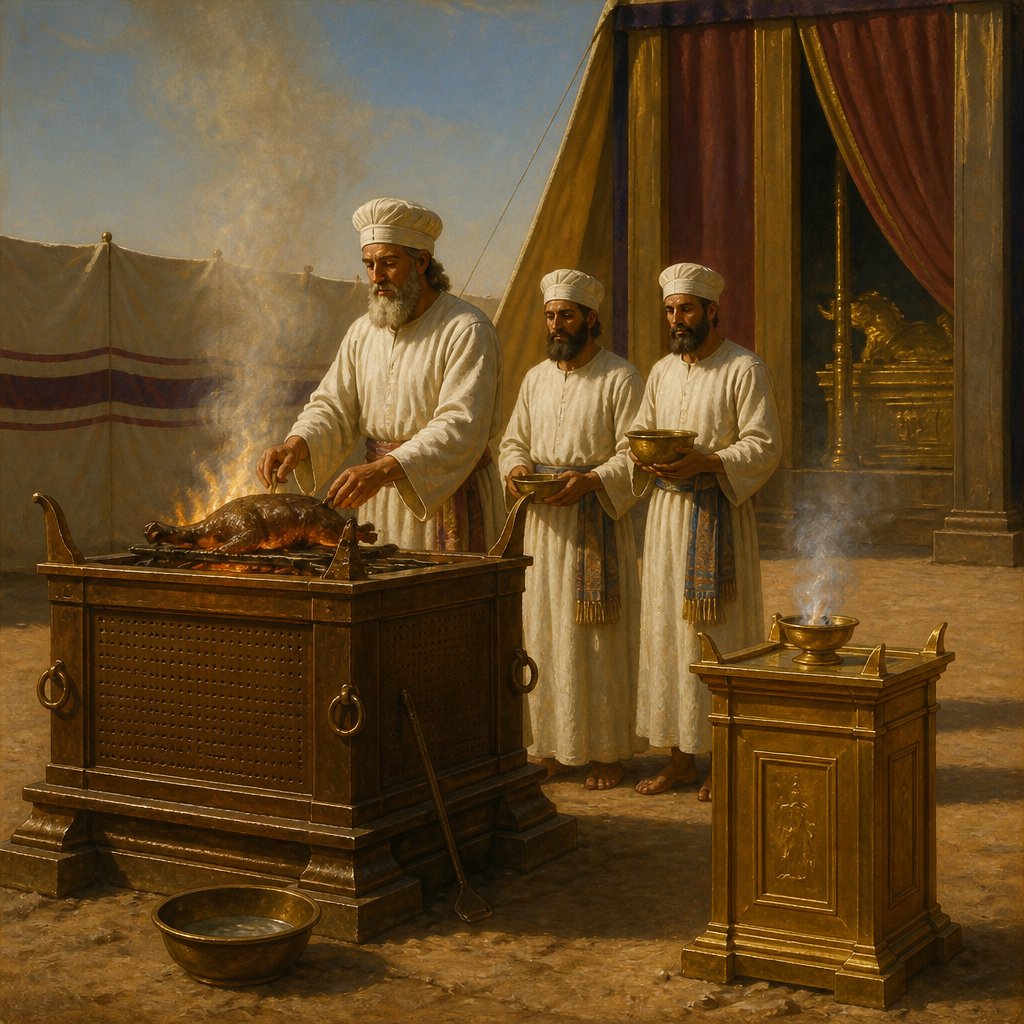
In the bustling world we live in today, one can easily overlook the significance of spiritual roles that were carefully orchestrated in biblical times. 1 Chronicles 6:49 presents a pivotal moment in Israel’s history concerning the priesthood: "But Aaron and his sons offered upon the altar of the burnt offering, and on the altar of incense, and were appointed for all the work of the place most holy, and to make an atonement for Israel, according to all that Moses the servant of God had commanded." This verse encapsulates not only the duties of the priests but also highlights the gravity of their calling and the implications for us as believers today.
First, let us consider the importance of the altar in the Jewish tradition. The altar of burnt offering, where sacrifices were made, served as a place of atonement and, importantly, communion with God. The act of offering on the altar represents surrender and devotion, demonstrating the lengths to which the people of Israel had to go to approach a holy God. In the New Testament, Jesus becomes our ultimate sacrifice—a perfect offering who opened the way for us to enter the most holy place (Hebrews 10:19-22).
Aaron and his sons were specially chosen to perform these sacred duties, implying that the role of a priest is not merely a matter of ritual but a deeply responsible vocation. They were tasked with managing the sacred space—the Tabernacle and later the Temple—where God’s presence was believed to dwell. Their appointment was not arbitrary; it was divinely initiated and entrusted by God through Moses, which reflects the importance of obedience in spiritual leadership. Every action taken within that space was a matter of critical importance, symbolizing the very relationship between God and Israel.
In understanding the priestly role, we must also recognize the concept of atonement, which involves making reparations for wrongdoing. The priest's responsibilities included seeking atonement for the people of Israel, underscoring a unique intercessory position. Just as Aaron and his sons offered sacrifices to atone for the sins of the people, we too are called to intercede for others. 1 Peter 2:9 reminds us that we are a royal priesthood, called to declare the praises of Him who called us out of darkness into His wonderful light.
There’s a profound call to holiness embedded in this verse. Priests were required to maintain ceremonial cleanliness and moral integrity to properly serve in the presence of God. In a similar vein, as New Testament believers, we are called to live in holiness and righteousness. Romans 12:1 urges us to present our bodies as living sacrifices, holy and pleasing to God—a spiritual act of worship. Our lives become our altar; our everyday actions, our offerings.
Furthermore, we see the attribution of responsibility in this passage. Aaron’s sons were appointed not just to offer sacrifices but were also mandated to perform all tasks in the most holy place. This calls attention to the fullness of our responsibilities as Christians. We are not just called to worship on Sundays but to worship in every aspect of our lives. Every act of kindness, every integrity-filled transaction, and each moment of choice becomes a reflection of our devotion to God.
As we meditate on 1 Chronicles 6:49, we are reminded that our service to God is rooted in our identity as His chosen people. It challenges us to reflect on what it means to serve meaningfully in our communities, to take up the mantle of priesthood by living lives that seek to atone and intercede. It calls us to embrace holiness—not as an abstract idea but as a lived reality. Let us embrace the sacredness of our calling, offering ourselves wholly to the One who is perfecting us day by day, enabling us to shine light into dark places, standing in the gap to bring others closer to Christ.
Want to reflect more on 1 Chronicles 6:49?
Continue your spiritual journey with Bible Chat — an AI-powered tool for exploring God's Word through conversation. Ask questions, discover connections, and deepen your understanding.
Get Our Apps


1 Chronicles 6:49 Artwork
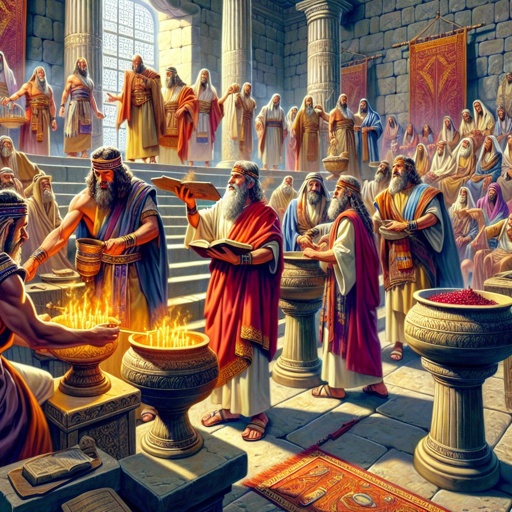
1 Chronicles 6:49 - "¶ But Aaron and his sons offered upon the altar of the burnt offering, and on the altar of incense, and were appointed for all the work of the place most holy, and to make an atonement for Israel, according to all that Moses the servant of God had commanded."
"¶ But Aaron and his sons offered upon the altar of the burnt offering, and on the altar of incense, and were appointed for all the work of the place most holy, and to make an atonement for Israel, according to all that Moses the servant of God had commanded." - 1 Chronicles 6:49
1 Chronicles 1:49 - "And when Shaul was dead, Baal-hanan the son of Achbor reigned in his stead."
1 Chronicles 2:49 - "She bare also Shaaph the father of Madmannah, Sheva the father of Machbenah, and the father of Gibea: and the daughter of Caleb was Achsa."
"And when Shaul was dead, Baal-hanan the son of Achbor reigned in his stead." - 1 Chronicles 1:49

1 Chronicles 6:6 - "And Uzzi begat Zerahiah, and Zerahiah begat Meraioth,"

1 Chronicles 1:6 - "And the sons of Gomer; Ashchenaz, and Riphath, and Togarmah."

1 Chronicles 6:1 - "The sons of Levi; Gershon, Kohath, and Merari."

Psalms 49:6 - "They that trust in their wealth, and boast themselves in the multitude of their riches;"

1 Chronicles 14:6 - "And Nogah, and Nepheg, and Japhia,"

John 6:49 - "Your fathers did eat manna in the wilderness, and are dead."

1 Chronicles 3:6 - "Ibhar also, and Elishama, and Eliphelet,"

1 Chronicles 6:25 - "And the sons of Elkanah; Amasai, and Ahimoth."

1 Chronicles 6:16 - "¶ The sons of Levi; Gershom, Kohath, and Merari."

1 Chronicles 6:17 - "And these be the names of the sons of Gershom; Libni, and Shimei."

1 Chronicles 6:28 - "And the sons of Samuel; the firstborn Vashni, and Abiah."

Jeremiah 49:6 - "And afterward I will bring again the captivity of the children of Ammon, saith the LORD."
Psalm 49

1 Chronicles 6:58 - "And Hilen with her suburbs, Debir with her suburbs,"

1 Chronicles 6:12 - "And Ahitub begat Zadok, and Zadok begat Shallum,"

1 Chronicles 6:45 - "The son of Hashabiah, the son of Amaziah, the son of Hilkiah,"

1 Chronicles 6:11 - "And Azariah begat Amariah, and Amariah begat Ahitub,"

1 Chronicles 6:14 - "And Azariah begat Seraiah, and Seraiah begat Jehozadak,"

1 Chronicles 7:6 - "¶ The sons of Benjamin; Bela, and Becher, and Jediael, three."

1 Chronicles 6:53 - "Zadok his son, Ahimaaz his son."

1 Chronicles 6:5 - "And Abishua begat Bukki, and Bukki begat Uzzi,"

1 Chronicles 6:9 - "And Ahimaaz begat Azariah, and Azariah begat Johanan,"

1 Chronicles 6:41 - "The son of Ethni, the son of Zerah, the son of Adaiah,"

1 Chronicles 6:40 - "The son of Michael, the son of Baaseiah, the son of Malchiah,"

1 Chronicles 12:6 - "Elkanah, and Jesiah, and Azareel, and Joezer, and Jashobeam, the Korhites,"