Transcending Captivity: A Reflection on 1 Chronicles 5:6
"Beerah his son, whom Tilgath-pilneser king of Assyria carried away captive: he was prince of the Reubenites." - 1 Chronicles 5:6
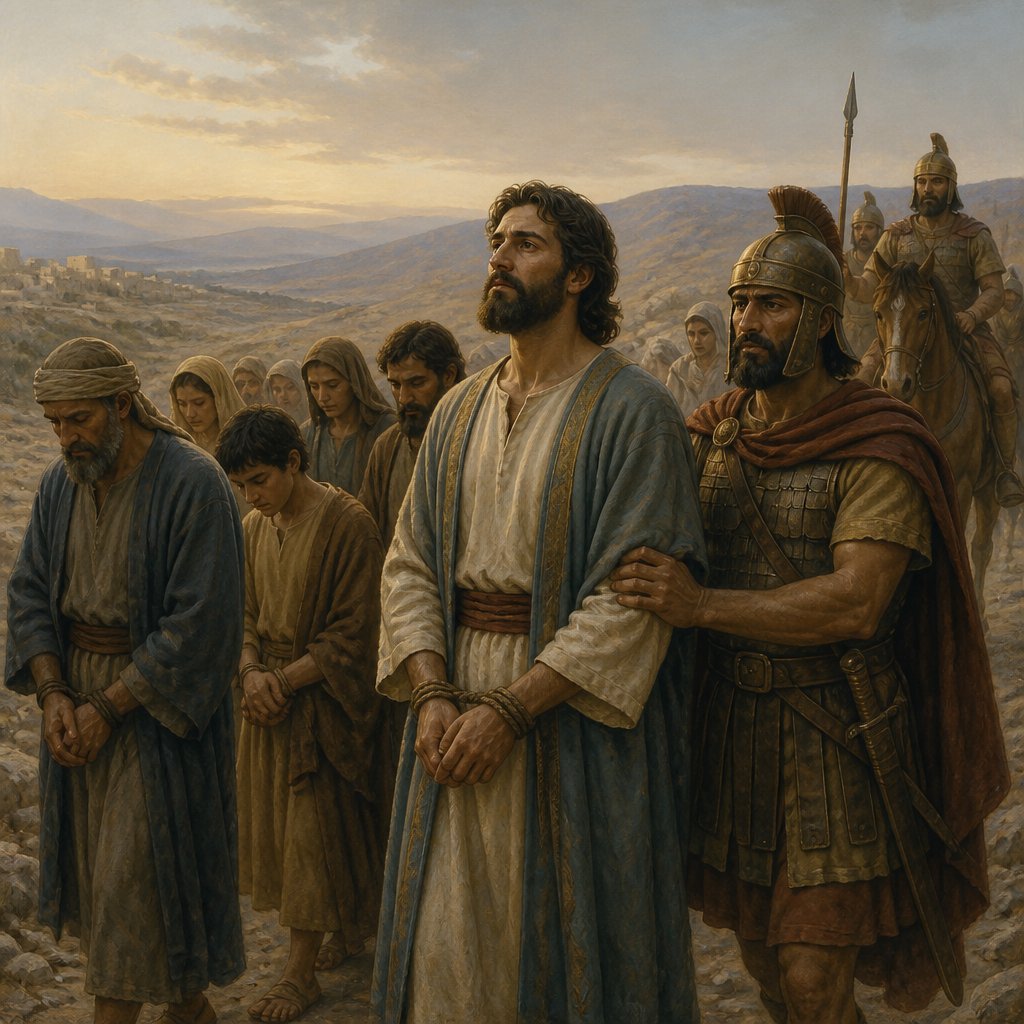
In the depth of first Chronicles 5:6, we find a historical reference that invites profound contemplation about God's sovereignty in our lives. The verse reads: "Beerah his son, whom Tilgath-pilneser king of Assyria carried away captive: he was prince of the Reubenites." This tells a story not only of loss but also of identity, leadership, and the often overlooked sovereignty of God even in our most challenging circumstances.
To fully grasp the implications of this verse, it is essential to contextualize the broader narrative. The tribe of Reuben was the firstborn of Jacob, given a place of honor among his brothers. However, due to various reasons, including insatiable desire and subsequent failing, Reuben’s tribe eventually lost prominence. This consequence of rebellion and division ultimately played into the hands of conquerors like Tilgath-pilneser, king of Assyria. His actions led to the captivity of Beerah, the son of the Reubenite prince, which symbolized a deep and painful reality—captivity is sometimes the destiny of great leaders and lineages.
As we reflect on this, we must consider how captivity manifests in our lives today. What are the things that hold us captive? Perhaps it’s sin, negative thought patterns, toxic relationships, or circumstances that we feel are out of our control. Like Beerah, we may find ourselves stripped of our position or honor amidst a world rife with chaos and distraction. But in our moments of desperation and hopelessness, we can draw strength and encouragement from the assurance that God is sovereign.
The name Tilgath-pilneser is a reminder of worldly power and might, symbolic of the forces that may seem overwhelmingly powerful in our lives. It urges us to consider how God measures the might of earthly kings against His own unchallengeable authority. No matter how strong or unavoidable our captors may seem, they are always under the watchful eye of God who holds the ultimate authority over all nations and peoples.
In the text, Beerah is described as 'prince of the Reubenites.' This title highlights his leadership role—it signifies authority, guidance, and a divine calling. Even amidst captivity, his identity remained intact as a prince. This encourages us to remember that our identities in Christ cannot be taken away by life's circumstances or the 'kings' that seek to capture us. 1 Peter 2:9 reminds us that we are a chosen generation, a royal priesthood, a holy nation. Like Beerah, we are called to rise above our current situations.
Furthermore, the account of Beerah urges us to reflect on generational implications. Captivity can extend beyond personal suffering to affect families, communities, and faith legacies. The losses faced by one generation can echo into the future. Ephesians 6:4 calls us to, "bring them up in the nurture and admonition of the Lord," suggesting that even when faced with captivity, we can still impart resilience and strength to subsequent generations. Whatever trials we endure should lead us to instill faith, hope, and an understanding of God's sovereignty to those who come after us.
In closing, 1 Chronicles 5:6 offers a glimpse into a world where individuals grapple with power, leadership, identity, and captivity. As we find ourselves struggling at times, we can take comfort in knowing that no situation is beyond God's control. Captivity is not the end of the story. It can be a turning point where God reveals His plans and purposes in our lives. Let us meditate on the sovereignty of God, seek our identity in Him and remember that He is always at work, transforming our captivity into a testimony of His greatness.
Want to reflect more on 1 Chronicles 5:6?
Continue your spiritual journey with Bible Chat — an AI-powered tool for exploring God's Word through conversation. Ask questions, discover connections, and deepen your understanding.
Get Our Apps


1 Chronicles 5:6 Artwork

1 Chronicles 5:6 - "Beerah his son, whom Tilgath-pilneser king of Assyria carried away captive: he was prince of the Reubenites."
"Beerah his son, whom Tilgath-pilneser king of Assyria carried away captive: he was prince of the Reubenites." - 1 Chronicles 5:6

1 Chronicles 6:5 - "And Abishua begat Bukki, and Bukki begat Uzzi,"
"And Abishua begat Bukki, and Bukki begat Uzzi," - 1 Chronicles 6:5

1 Chronicles 6:6 - "And Uzzi begat Zerahiah, and Zerahiah begat Meraioth,"

1 Chronicles 5:5 - "Micah his son, Reaia his son, Baal his son,"

1 Chronicles 1:6 - "And the sons of Gomer; Ashchenaz, and Riphath, and Togarmah."

1 Chronicles 6:1 - "The sons of Levi; Gershon, Kohath, and Merari."

1 Chronicles 8:5 - "And Gera, and Shephuphan, and Huram."

1 Chronicles 14:5 - "And Ibhar, and Elishua, and Elpalet,"

1 Chronicles 14:6 - "And Nogah, and Nepheg, and Japhia,"

Isaiah 6:1-5

Isaiah 6:1-5

Isaiah 6:1-5

Isaiah 6:1-5

1 Chronicles 2:5 - "The sons of Pharez; Hezron, and Hamul."

1 Chronicles 5:19 - "And they made war with the Hagarites, with Jetur, and Nephish, and Nodab."

1 Chronicles 3:6 - "Ibhar also, and Elishama, and Eliphelet,"

1 Chronicles 6:25 - "And the sons of Elkanah; Amasai, and Ahimoth."

1 Chronicles 5:4 - "The sons of Joel; Shemaiah his son, Gog his son, Shimei his son,"

1 Chronicles 1:5 - "¶ The sons of Japheth; Gomer, and Magog, and Madai, and Javan, and Tubal, and Meshech, and Tiras."

1 Chronicles 6:16 - "¶ The sons of Levi; Gershom, Kohath, and Merari."

1 Chronicles 6:17 - "And these be the names of the sons of Gershom; Libni, and Shimei."

1 Chronicles 9:5 - "And of the Shilonites; Asaiah the firstborn, and his sons."

1 Chronicles 6:28 - "And the sons of Samuel; the firstborn Vashni, and Abiah."

1 Chronicles 12:5 - "Eluzai, and Jerimoth, and Bealiah, and Shemariah, and Shephatiah the Haruphite,"

1 Chronicles 6:14 - "And Azariah begat Seraiah, and Seraiah begat Jehozadak,"

1 Chronicles 6:58 - "And Hilen with her suburbs, Debir with her suburbs,"

1 Chronicles 6:12 - "And Ahitub begat Zadok, and Zadok begat Shallum,"

1 Chronicles 7:6 - "¶ The sons of Benjamin; Bela, and Becher, and Jediael, three."