The Sovereign Choice: Understanding God's Plan in 1 Chronicles 5:2
"For Judah prevailed above his brethren, and of him came the chief ruler; but the birthright was Joseph's:)" - 1 Chronicles 5:2
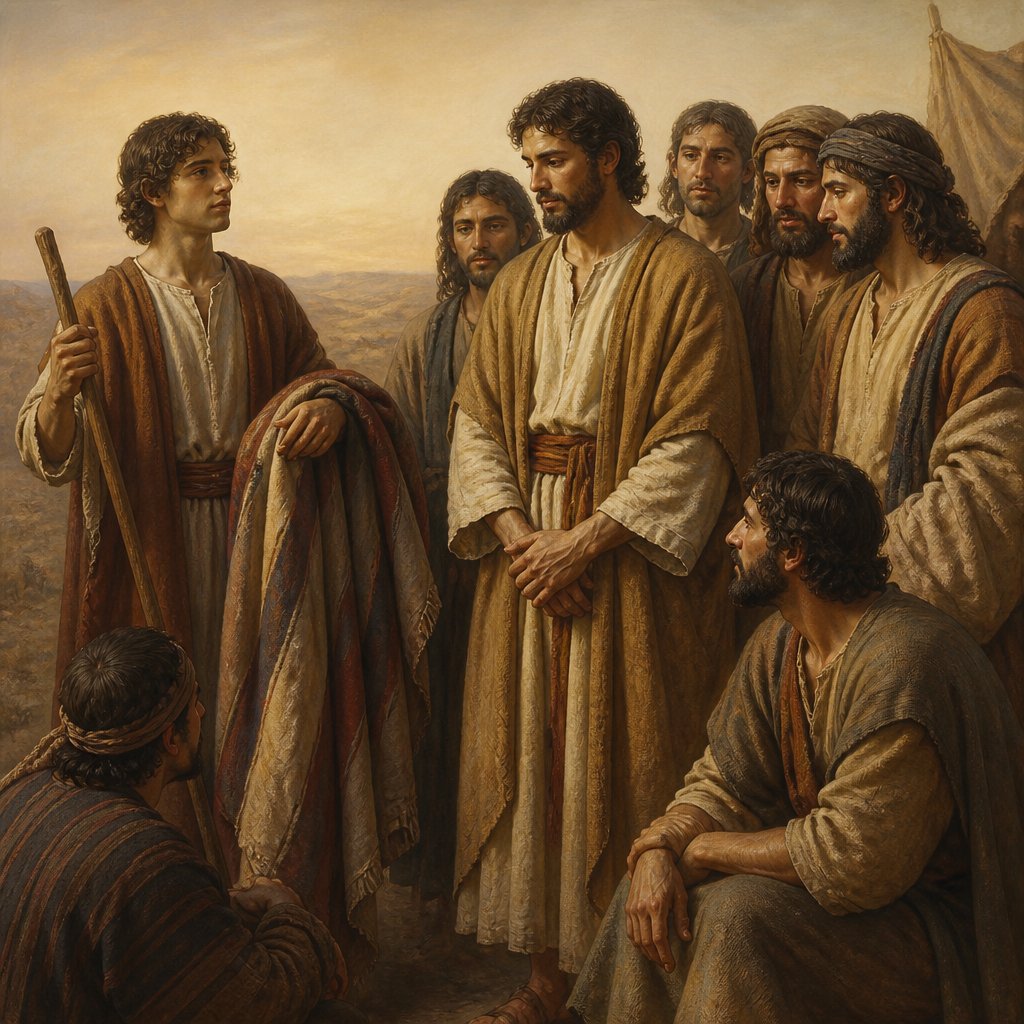
In the intricate tapestry of the Old Testament, numerous characters serve pivotal roles in God’s unfolding narrative. Among them, the tribes of Israel each bear their distinct significance, often intertwined with themes of leadership, legacy, and divine appointment. One such verse that captures the essence of these themes is 1 Chronicles 5:2, which states, "For Judah prevailed above his brethren, and of him came the chief ruler; but the birthright was Joseph's."
This verse presents a fascinating paradox: it acknowledges Judah's supremacy in leadership yet recognizes Joseph's right to the birthright, the position that traditionally entailed honor and blessing. To unpack this scripture fully, we must delve into the context of both Judah and Joseph, exploring the depths of what it means for God to work through human choices and circumstances.
**Judah’s Prevailing Role**
Judah’s prominence in Israel’s history cannot be overstated. He emerged as a leader among his brothers, a role intricately woven into the providence of God. The phrase "Judah prevailed above his brethren" signifies not only his victory but also foreshadows the lineage of the Messiah, as Jesus Christ would later come from the tribe of Judah. The fact that "of him came the chief ruler" highlights God’s sovereign choice in establishing leadership within the tribe.
Judah’s life is a testament to redemption. Initially marked by moral failures, he transformed through experiences that cultivated his character. This transition reflects the quintessential biblical theme that God does not choose the perfect but instead refines imperfect vessels for His purposes. As we reflect on Judah’s journey, we are reminded that our failures do not disqualify us from God’s plan; rather, they can refine us if we respond to the Lord’s calling and work towards integrity.
**Joseph’s Birthright**
In contrast, we find Joseph, whose narrative is rich with dreams and divine purpose. The birthright, which typically bestowed authority and a double portion of inheritance, belonged to him. Joseph’s life showcases a different journey—one filled with trials of jealousy, betrayal, and eventual rise to power in Egypt. While his brothers sought to undermine him, God used every injustice and hardship to position Joseph to save not only his family but also many nations during a time of famine.
The duality of Joseph’s birthright and Judah’s leadership invites us to consider how God orchestrates His plans beyond human understanding. The verse illustrates a divine wisdom that allows for overlapping destinies; Joseph’s birthright is secured even as Judah rises to lead.
**God’s Divine Order**
This brings us to a profound understanding of God’s ways. 1 Chronicles 5:2 is more than a historical account; it reflects the intricate balance of God’s sovereignty. He often operates outside the cultural expectations of birth order and social status. In God’s kingdom economy, the greatest shall be served, and leaders are often chosen from the least expected places. This theme resonates throughout scripture where God calls the shepherds, the stutterers, and the outcasts to fulfill His purposes.
As believers, we can take comfort in knowing that our positions—whether they reflect leadership or humility—are orchestrated by Him. Just as He bestowed leadership upon Judah while preserving Joseph’s rightful inheritance, He places us where we need to be to fulfill His mission.
In practical terms, this scripture invites us to examine our hearts and our circumstances. Are we striving for leadership in our own lives, perhaps applying competition where God has a divine order? Are we humbled in our servitude, recognizing that God’s plans involve far more than our immediate understanding?
Ultimately, 1 Chronicles 5:2 reminds us of the significance of both Judah and Joseph in God’s overarching narrative. It encourages us to trust in His eternal wisdom, recognizing that every person has a part to play in His divine plan. As you meditate on this scripture, may you find peace in accepting God’s sovereignty in your life and calling, knowing that, however He has positioned you, it is for His glory.
Want to reflect more on 1 Chronicles 5:2?
Continue your spiritual journey with Bible Chat — an AI-powered tool for exploring God's Word through conversation. Ask questions, discover connections, and deepen your understanding.
Get Our Apps


1 Chronicles 5:2 Artwork

1 Chronicles 5:2 - "For Judah prevailed above his brethren, and of him came the chief ruler; but the birthright was Joseph's:)"
"For Judah prevailed above his brethren, and of him came the chief ruler; but the birthright was Joseph's:)" - 1 Chronicles 5:2

1 Chronicles 2:5 - "The sons of Pharez; Hezron, and Hamul."

"The sons of Pharez; Hezron, and Hamul." - 1 Chronicles 2:5

2 Chronicles 1:5 - "Moreover the brasen altar, that Bezaleel the son of Uri, the son of Hur, had made, he put before the tabernacle of the LORD: and Solomon and the congregation sought unto it."

1 Chronicles 5:5 - "Micah his son, Reaia his son, Baal his son,"

1 Chronicles 8:5 - "And Gera, and Shephuphan, and Huram."

1 Chronicles 14:5 - "And Ibhar, and Elishua, and Elpalet,"

1 Chronicles 5:19 - "And they made war with the Hagarites, with Jetur, and Nephish, and Nodab."

2 Chronicles 2:5 - "And the house which I build is great: for great is our God above all gods."

1 Chronicles 5:4 - "The sons of Joel; Shemaiah his son, Gog his son, Shimei his son,"

1 Chronicles 1:5 - "¶ The sons of Japheth; Gomer, and Magog, and Madai, and Javan, and Tubal, and Meshech, and Tiras."

2 Chronicles 11:5 - "¶ And Rehoboam dwelt in Jerusalem, and built cities for defence in Judah."

1 Chronicles 9:5 - "And of the Shilonites; Asaiah the firstborn, and his sons."

2 Chronicles 5:5 - "And they brought up the ark, and the tabernacle of the congregation, and all the holy vessels that were in the tabernacle, these did the priests and the Levites bring up."

1 Chronicles 12:5 - "Eluzai, and Jerimoth, and Bealiah, and Shemariah, and Shephatiah the Haruphite,"

2 Chronicles 5:4 - "And all the elders of Israel came; and the Levites took up the ark."

1 Chronicles 6:5 - "And Abishua begat Bukki, and Bukki begat Uzzi,"

1 Chronicles 5:15 - "Ahi the son of Abdiel, the son of Guni, chief of the house of their fathers."

1 Chronicles 5:12 - "Joel the chief, and Shapham the next, and Jaanai, and Shaphat in Bashan."

2 Chronicles 34:5 - "And he burnt the bones of the priests upon their altars, and cleansed Judah and Jerusalem."

1 Chronicles 1:2 - "Kenan, Mahalaleel, Jered,"
2 Chronicles 5:1 - "Thus all the work that Solomon made for the house of the LORD was finished: and Solomon brought in all the things that David his father had dedicated; and the silver, and the gold, and all the instruments, put he among the treasures of the house of God."

2 Chronicles 20:5 - "¶ And Jehoshaphat stood in the congregation of Judah and Jerusalem, in the house of the LORD, before the new court,"

2 Chronicles 33:5 - "And he built altars for all the host of heaven in the two courts of the house of the LORD."

1 Chronicles 15:5 - "Of the sons of Kohath; Uriel the chief, and his brethren an hundred and twenty:"

1 Chronicles 4:5 - "¶ And Ashur the father of Tekoa had two wives, Helah and Naarah."

2 Chronicles 19:5 - "¶ And he set judges in the land throughout all the fenced cities of Judah, city by city,"

1 Chronicles 5:11 - "¶ And the children of Gad dwelt over against them, in the land of Bashan unto Salchah:"

Micah 5:2-5