Bashan's Blessing: Dwelling in God’s Promises
"¶ And the children of Gad dwelt over against them, in the land of Bashan unto Salchah:" - 1 Chronicles 5:11
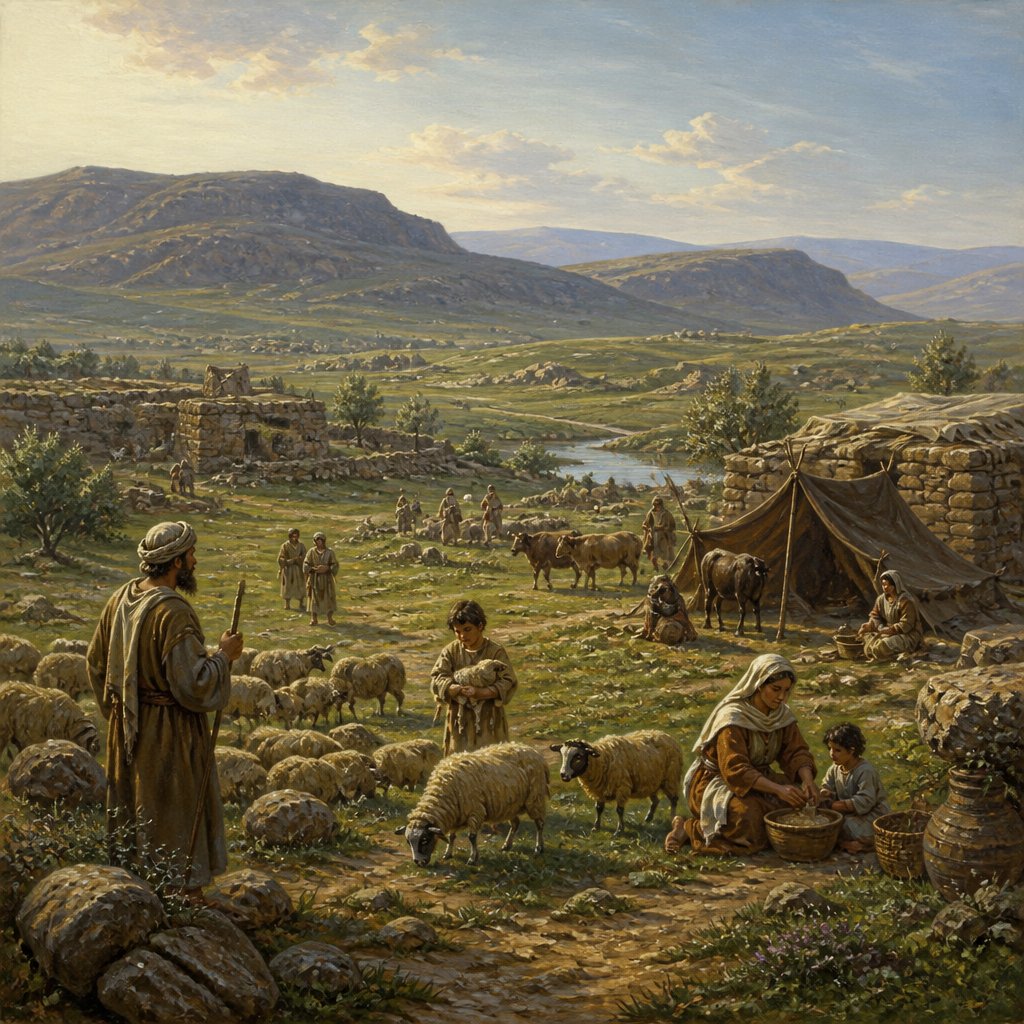
As we turn to 1 Chronicles 5:11, we find a striking piece of historical narrative nestled within the chronicles of Israel’s tribes: "And the children of Gad dwelt over against them, in the land of Bashan unto Salchah" (KJV). This statement may initially seem like a simple geographical notation, yet it is laden with profound spiritual truths and applications for our lives today.
The children of Gad were one of the tribes of Israel that chose to dwell on the eastern side of the Jordan River, specifically in the fertile region of Bashan. Bashan was renowned for its rich pastures and strength, its bulls and its majestic oaks. This land was a place of abundance but also of challenges, as they were positioned across from stronger foes. The choice of Gad to settle in Bashan speaks to the themes of identity, belonging, and faith in God’s providence.
**Understanding the Context**
To appreciate the significance of Gad’s settlement in Bashan, we must first understand the context. The Israelites had been wandering in the desert, and when they finally approached the Promised Land, they had to make important decisions about where to dwell. Gad and Reuben, along with half the tribe of Manasseh, were offered the land east of the Jordan. They loved the land's riches, and their request was granted by Moses. However, this decision also meant risks and consequences, particularly in regard to their commitment to protecting their fellow Israelites in the battles ahead. It serves as a reminder that our choices, though seemingly aligned with our immediate desires, often carry lifelong implications.
In the spirit of dwelling, it is compelling to note that the 'land of Bashan' can symbolize the places where we find comfort, security, and even abundance. However, we must ask ourselves whether we are dwelling there as a place of spiritual refuge or if we risk settling away from the community of God’s people. Gad's initial comfort came at a price. Security in the land of Bashan did not absolve them from the collective responsibility of their brothers across the Jordan.
**A Place of Challenge and Abundance**
Bashan, though fruitful and bountiful, was also a land filled with giants, as depicted later in Scripture. This juxtaposition serves as a spiritual allegory for our own lives. Many of us experience our own ‘Bashans’—places of prosperity, peace, and abundance—yet we must remain vigilant of the challenges and adversities that exist within those spaces. It calls us to a more profound reality: our blessings must be handled with care and courage. We should not stay ensconced in comfort but rise to the challenges and opportunities to serve and protect our communities and loved ones.
**Faithful Commitment**
When we dwell in our own ‘Bashan,’ we need to replicate Gad’s eventual commitment. After establishing themselves in the lush lands, the children of Gad still chose to support their brothers in the battles for the Promised Land. This signifies the call we have as believers: to remember that our faith is not a solitary journey. We are called to support one another, to stand shoulder to shoulder in times of trouble, whether within our families, our churches, or our wider communities. Just as the warriors of Gad fought fiercely when called, we must be prepared to defend and uplift one another in the spiritual battles we face daily.
**Conclusion: The Abiding Presence of God**
The phrase "dwelt over against them" indicates a unique divine positioning, a reminder that though we may have our areas of influence and blessings, we are still engaged in a broader kingdom purpose. God desires for us to dwell confidently in our blessings while remaining active participants in the mission of love and service. In every ‘Bashan’ experience, may we remember that God's abiding presence empowers us to overcome challenges, to offer our gifts, and to contribute to the well-being of others.
As we embrace this verse, let us ask ourselves: Where is God calling me to dwell? Am I in a comfortable place, yet turning a blind eye to the collective needs around me? May our dwelling in abundance be a springboard for deeper commitment to God and to one another in Christ.
Want to reflect more on 1 Chronicles 5:11?
Continue your spiritual journey with Bible Chat — an AI-powered tool for exploring God's Word through conversation. Ask questions, discover connections, and deepen your understanding.
Get Our Apps


1 Chronicles 5:11 Artwork

1 Chronicles 5:11 - "¶ And the children of Gad dwelt over against them, in the land of Bashan unto Salchah:"
"¶ And the children of Gad dwelt over against them, in the land of Bashan unto Salchah:" - 1 Chronicles 5:11

1 Chronicles 11:5 - "And the inhabitants of Jebus said to David, Thou shalt not come hither. Nevertheless David took the castle of Zion, which is the city of David."

2 Chronicles 11:5 - "¶ And Rehoboam dwelt in Jerusalem, and built cities for defence in Judah."

1 Chronicles 5:5 - "Micah his son, Reaia his son, Baal his son,"

1 Chronicles 1:11 - "And Mizraim begat Ludim, and Anamim, and Lehabim, and Naphtuhim,"
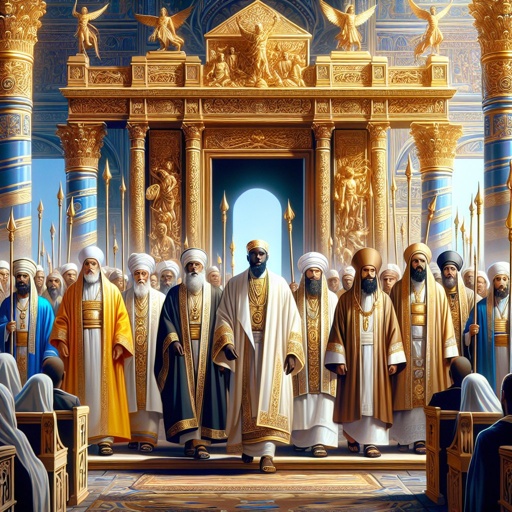
2 Chronicles 5:11 - "¶ And it came to pass, when the priests were come out of the holy place: (for all the priests that were present were sanctified, and did not then wait by course:"

1 Chronicles 11:29 - "Sibbecai the Hushathite, Ilai the Ahohite,"

1 Chronicles 12:11 - "Attai the sixth, Eliel the seventh,"

1 Chronicles 24:11 - "The ninth to Jeshua, the tenth to Shecaniah,"

1 Chronicles 11:40 - "Ira the Ithrite, Gareb the Ithrite,"

1 Chronicles 11:27 - "Shammoth the Harorite, Helez the Pelonite,"

1 Chronicles 11:36 - "Hepher the Mecherathite, Ahijah the Pelonite,"

1 Chronicles 8:5 - "And Gera, and Shephuphan, and Huram."

1 Chronicles 14:5 - "And Ibhar, and Elishua, and Elpalet,"

1 Chronicles 11:47 - "Eliel, and Obed, and Jasiel the Mesobaite."

1 Chronicles 11:33 - "Azmaveth the Baharumite, Eliahba the Shaalbonite,"

1 Chronicles 8:11 - "And of Hushim he begat Abitub, and Elpaal."

1 Chronicles 11:43 - "Hanan the son of Maachah, and Joshaphat the Mithnite,"

1 Chronicles 2:5 - "The sons of Pharez; Hezron, and Hamul."

1 Chronicles 11:32 - "Hurai of the brooks of Gaash, Abiel the Arbathite,"

1 Chronicles 11:41 - "Uriah the Hittite, Zabad the son of Ahlai,"

1 Chronicles 11:37 - "Hezro the Carmelite, Naarai the son of Ezbai,"

1 Chronicles 5:19 - "And they made war with the Hagarites, with Jetur, and Nephish, and Nodab."

1 Kings 11:1-5

1 Chronicles 5:4 - "The sons of Joel; Shemaiah his son, Gog his son, Shimei his son,"

1 Chronicles 6:11 - "And Azariah begat Amariah, and Amariah begat Ahitub,"

1 Chronicles 11:30 - "Maharai the Netophathite, Heled the son of Baanah the Netophathite,"

1 Chronicles 2:11 - "And Nahshon begat Salma, and Salma begat Boaz,"

1 Chronicles 1:5 - "¶ The sons of Japheth; Gomer, and Magog, and Madai, and Javan, and Tubal, and Meshech, and Tiras."