The Legacy of Faith: A Study on God's Promises Through Generations
"And these were born unto him in Jerusalem; Shimea, and Shobab, and Nathan, and Solomon, four, of Bath-shua the daughter of Ammiel:" - 1 Chronicles 3:5
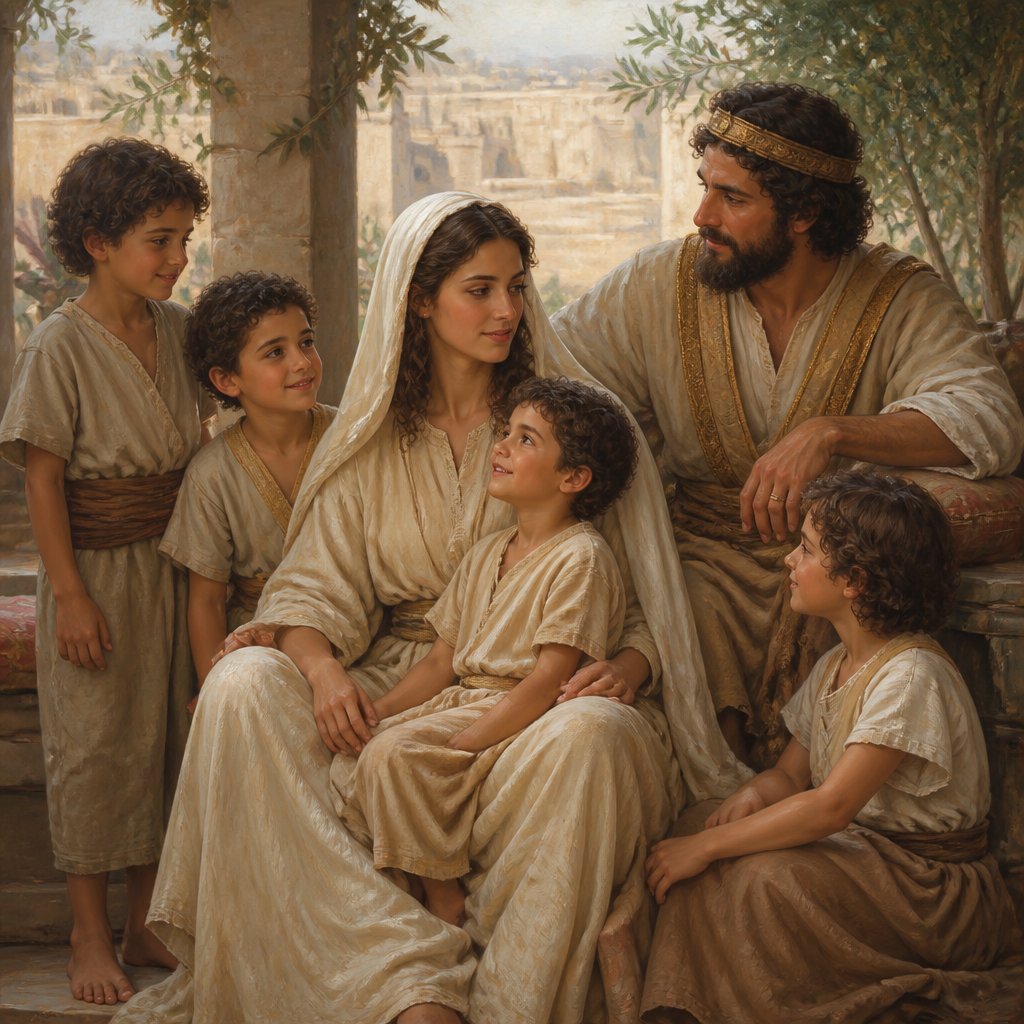
As we delve into 1 Chronicles 3:5, which states, "And these were born unto him in Jerusalem; Shimea, and Shobab, and Nathan, and Solomon, four, of Bath-shua the daughter of Ammiel," we encounter not merely a list of names, but a profound testament to God's unwavering faithfulness and the unfolding of His divine plan through generations.
The context of this verse is crucial. It sits in the genealogical record of David, the shepherd boy turned king, highlighting the significance of lineage in the biblical narrative. Each name mentioned represents a distinct thread in the tapestry of God's redemptive history. Notably, the mention of Bath-shua, also known as Bathsheba, brings to light the complexities of human relationships intertwined with divine purpose.
Solomon, perhaps the most well-known of David's sons, emerges from this lineage as a monumental figure in the Scriptures. He would become the king renowned for his wisdom and wealth, building the first temple in Jerusalem, considered a cornerstone of Jewish faith. Yet, in contemplating Solomon's ascent, we must recognize the journey—a journey marked by both triumph and failure, underpinned by the irrevocable grace of God. David’s relationship with Bathsheba is a vivid reminder that God can work through our mistakes, bringing forth blessings from brokenness.
In exploring the names Shimea, Shobab, and Nathan, we realize each represents not just individuals but pivotal roles in the continuum of faith. Shimea, meaning 'God has heard,' reminds us of God's attentive ear to our prayers. Shobab, translated as 'a returner,' reflects on repentance and restoration—echoes of how God desires His people to turn back to Him. Nathan, whose name means 'he gave,' represents the gifts bestowed upon us by God, including revelation and prophecy, as he would later confront David about his sins.
These names illumine the path of legacy and responsibility. They call us to reflect on the spiritual inheritance we are cultivating within our own families. What legacy are we passing on to the next generation? Are we instilling values inspired by Scripture? Are we teaching our children to walk in wisdom and understanding, as Solomon did?
The apostle Paul poignantly advises in 2 Timothy 1:5, "When I call to remembrance the unfeigned faith that is in thee, which dwelt first in thy grandmother Lois, and thy mother Eunice; and I am persuaded that in thee also." This echoes the generational transmission of faith evident in the lineage of David. Our faith is often a beacon, lighting the way for those who will come after us. Just as David's sons were influenced by their father's relationship with the Lord, we too influence our children through our actions, words, and the integrity of our lives.
Moreover, we consider the geographical significance of Jerusalem, the holy city where these sons were born and where God's presence dwelled among His people. As we reflect on this, let us ponder the importance of 'place' in our spiritual journey. Where do we nurture our faith? Where do we cultivate our families? Are we building altars of worship and prayer in our homes, establishing a stronghold of faith in the cities and communities we inhabit?
In conclusion, the names in 1 Chronicles 3:5 invite us to introspect on our legacies. God continues to work written stories through our lives, often through the most unexpected circumstances. He calls us to be aware that our lives are not our own; they are part of a grand narrative crafted by His sovereignty.
May we commit today to nurturing a legacy of faith, characterized by repentance, wisdom, and a deep relationship with God, ensuring that like David, our lives produce the fruits of His promises for generations to come. Let us cherish the powerful reminder that our lineage is not solely about blood, but about faith and the significant impact of living righteously in the eyes of God.
Want to reflect more on 1 Chronicles 3:5?
Continue your spiritual journey with Bible Chat — an AI-powered tool for exploring God's Word through conversation. Ask questions, discover connections, and deepen your understanding.
Get Our Apps


1 Chronicles 3:5 Artwork

1 Chronicles 3:5 - "And these were born unto him in Jerusalem; Shimea, and Shobab, and Nathan, and Solomon, four, of Bath-shua the daughter of Ammiel:"
"And these were born unto him in Jerusalem; Shimea, and Shobab, and Nathan, and Solomon, four, of Bath-shua the daughter of Ammiel:" - 1 Chronicles 3:5

1 Chronicles 5:3 - "The sons, I say, of Reuben the firstborn of Israel were, Hanoch, and Pallu, Hezron, and Carmi."

2 Chronicles 3:5 - "And the greater house he cieled with fir tree, which he overlaid with fine gold, and set thereon palm trees and chains."

1 Chronicles 3:7 - "And Nogah, and Nepheg, and Japhia,"

1 Chronicles 3:6 - "Ibhar also, and Elishama, and Eliphelet,"

1 Chronicles 3:14 - "Amon his son, Josiah his son."

1 Chronicles 1:3 - "Henoch, Methuselah, Lamech,"

1 Chronicles 3:8 - "And Elishama, and Eliada, and Eliphelet, nine."

1 Chronicles 3:12 - "Amaziah his son, Azariah his son, Jotham his son,"

1 Chronicles 5:5 - "Micah his son, Reaia his son, Baal his son,"
"The sons, I say, of Reuben the firstborn of Israel were, Hanoch, and Pallu, Hezron, and Carmi." - 1 Chronicles 5:3

1 Chronicles 8:5 - "And Gera, and Shephuphan, and Huram."

1 Chronicles 14:5 - "And Ibhar, and Elishua, and Elpalet,"

1 Chronicles 3:18 - "Malchiram also, and Pedaiah, and Shenazar, Jecamiah, Hoshama, and Nedabiah."

1 Chronicles 3:16 - "And the sons of Jehoiakim: Jeconiah his son, Zedekiah his son."

"Amon his son, Josiah his son." - 1 Chronicles 3:14

1 Chronicles 3:20 - "And Hashubah, and Ohel, and Berechiah, and Hasadiah, Jushab-hesed, five."

1 Chronicles 3:17 - "¶ And the sons of Jeconiah; Assir, Salathiel his son,"

1 Chronicles 2:5 - "The sons of Pharez; Hezron, and Hamul."

1 Chronicles 3:3 - "The fifth, Shephatiah of Abital: the sixth, Ithream by Eglah his wife."

1 Chronicles 3:11 - "Joram his son, Ahaziah his son, Joash his son,"

1 Chronicles 3:13 - "Ahaz his son, Hezekiah his son, Manasseh his son,"

2 Chronicles 5:3 - "Wherefore all the men of Israel assembled themselves unto the king in the feast which was in the seventh month."

"And Elishama, and Eliada, and Eliphelet, nine." - 1 Chronicles 3:8

"And Nogah, and Nepheg, and Japhia," - 1 Chronicles 3:7

1 Chronicles 1:5 - "¶ The sons of Japheth; Gomer, and Magog, and Madai, and Javan, and Tubal, and Meshech, and Tiras."

"Ibhar also, and Elishama, and Eliphelet," - 1 Chronicles 3:6

1 Chronicles 9:5 - "And of the Shilonites; Asaiah the firstborn, and his sons."

1 Chronicles 3:23 - "And the sons of Neariah; Elioenai, and Hezekiah, and Azrikam, three."