Legacy of Faith: Lessons from Caleb’s Lineage
"¶ These were the sons of Caleb the son of Hur, the firstborn of Ephratah; Shobal the father of Kirjath-jearim," - 1 Chronicles 2:50
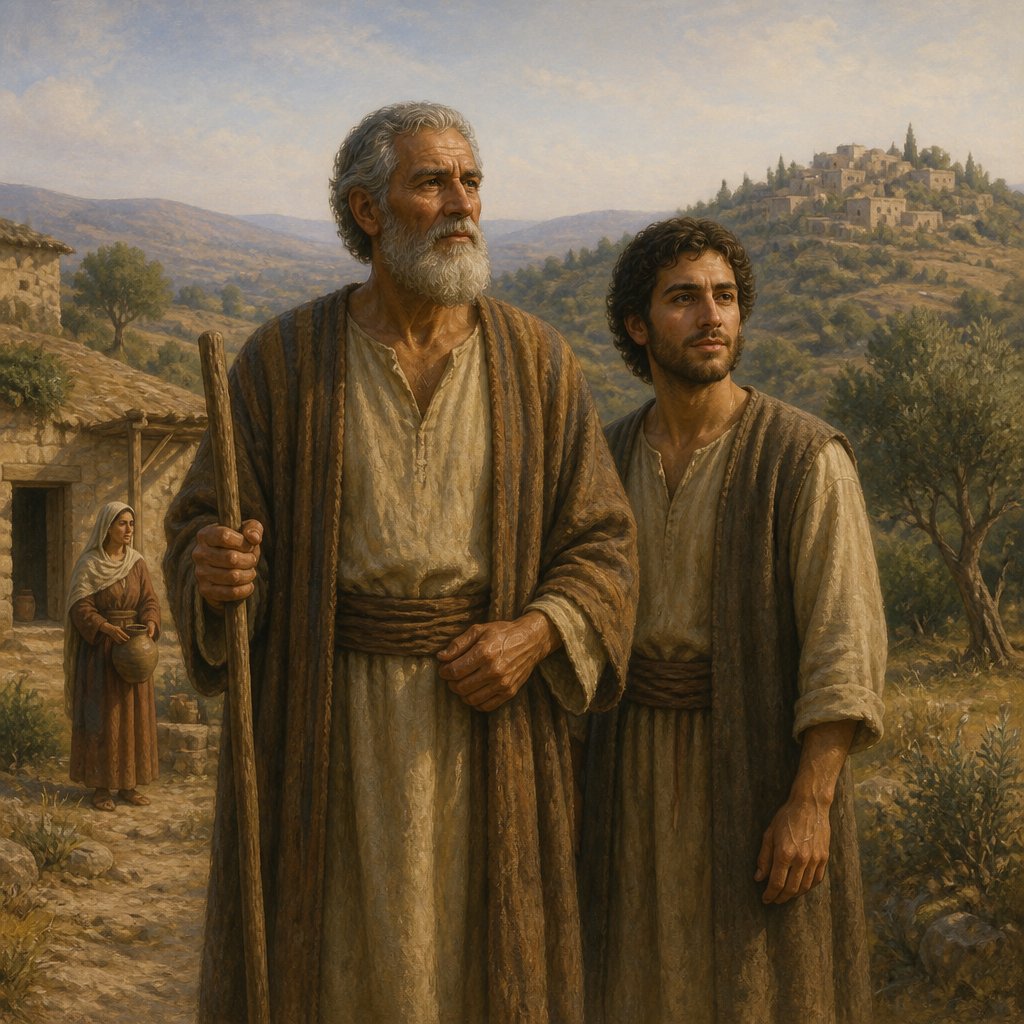
As we delve into the genealogy recorded in 1 Chronicles 2:50, we encounter the names and lineage of a remarkable family rooted in faith and history. The verse reads: "These were the sons of Caleb the son of Hur, the firstborn of Ephratah; Shobal the father of Kirjath-jearim." On the surface, this might seem a simple record of ancestry, but within it lies a profound story of faithfulness, inheritance, and divine purpose.
Caleb, a character we vividly remember from the wilderness wanderings, was one of the faithful spies sent to survey the land of Canaan. His declaration in Joshua 14:12, "Give me this mountain," exemplifies a believer's courage and unwavering trust in God’s promises. His journey from slavery in Egypt to the brink of the Promised Land is a testament to God's faithfulness and a reminder of the legacies we build through our choices.
The significance of Caleb’s mention in this genealogy invites us to consider our own legacies. What will our descendants inherit from us? The choices we make today ripple into future generations, shaping their faith, values, and understanding of God's character. Caleb’s name is associated not just with physical conquest, but with spiritual tenacity. He dared to stand firm against the negative reports of the ten other spies (Numbers 13:30) because he understood the might and faithfulness of God.
This realization beckons us to ask ourselves: Are we instilling this kind of faith in our children and communities? In an age where doubt and cynicism frequently overshadow belief, the story of Caleb resounds with encouragement to choose faith over fear. This choice crafts a legacy that can influence not just our immediate families but extend to our friends, colleagues, and neighbors as well.
The mention of Shobal, Caleb’s son, as the father of Kirjath-jearim, adds yet another layer. Kirjath-jearim, meaning "the city of woods," was a significant place in Israel’s history. From this, we can infer how the faithful lineage of Caleb bore fruit through physical establishment in the land—Shobal became the father of a city. The faithfulness of Caleb initiated a legacy that resulted in tangible, lasting influence, thus reinforcing the idea that our faith can have practical outcomes that establish communities in God’s name.
This genealogy is not merely an accounting of names but an invitation for us to examine how we can lay down roots of faith, just as Caleb did. Every existing legacy was once a seed of faith planted by someone believing in God’s promises. Each act of worship in our homes, each prayer nurtured for our loved ones, and each testimony shared will grow and shape the spiritual landscape around us.
Furthermore, our efforts can open doors to future blessings that we may never see ourselves. Caleb's spirit of boldness and longing for God’s promises encouraged an entire generation and, indeed, set the stage for future generations’ victories. This calls us to spread His word and live out our faith audibly and visibly, even if it feels a solitary journey sometimes.
As we reflect on Caleb’s lineage in 1 Chronicles 2:50, let us be reminded to own our faith, to speak out boldly for God’s promises, and to instill these values in those who will come after us. Let our lives be a testament to the legacy we desire to leave, filled with courageous faith that transforms not just ourselves but the world around us. May we endeavor to echo Caleb’s sentiment: Give us this land, and with it, build a legacy grounded in faith and boldly rooted in the promise of God.
Want to reflect more on 1 Chronicles 2:50?
Continue your spiritual journey with Bible Chat — an AI-powered tool for exploring God's Word through conversation. Ask questions, discover connections, and deepen your understanding.
Get Our Apps


1 Chronicles 2:50 Artwork
1 Chronicles 2:50 - "¶ These were the sons of Caleb the son of Hur, the firstborn of Ephratah; Shobal the father of Kirjath-jearim,"
"¶ These were the sons of Caleb the son of Hur, the firstborn of Ephratah; Shobal the father of Kirjath-jearim," - 1 Chronicles 2:50
1 Chronicles 6:50 - "And these are the sons of Aaron; Eleazar his son, Phinehas his son, Abishua his son,"
1 Chronicles 1:50 - "And when Baal-hanan was dead, Hadad reigned in his stead: and the name of his city was Pai; and his wife's name was Mehetabel, the daughter of Matred, the daughter of Mezahab."
"And these are the sons of Aaron; Eleazar his son, Phinehas his son, Abishua his son," - 1 Chronicles 6:50

1 Chronicles 2:48 - "Maachah, Caleb's concubine, bare Sheber, and Tirhanah."

Luke 7:50

Luke 7:50

1 Chronicles 2:8 - "And the sons of Ethan; Azariah."

1 Chronicles 2:15 - "Ozem the sixth, David the seventh:"

1 Chronicles 2:14 - "Nethaneel the fourth, Raddai the fifth,"

1 Chronicles 2:38 - "And Obed begat Jehu, and Jehu begat Azariah,"

1 Chronicles 2:41 - "And Shallum begat Jekamiah, and Jekamiah begat Elishama."

1 Chronicles 2:36 - "And Attai begat Nathan, and Nathan begat Zabad,"

1 Chronicles 2:11 - "And Nahshon begat Salma, and Salma begat Boaz,"

1 Chronicles 2:39 - "And Azariah begat Helez, and Helez begat Eleasah,"

1 Chronicles 2:5 - "The sons of Pharez; Hezron, and Hamul."

1 Chronicles 1:2 - "Kenan, Mahalaleel, Jered,"

1 Chronicles 2:2 - "Dan, Joseph, and Benjamin, Naphtali, Gad, and Asher."

1 Chronicles 2:20 - "And Hur begat Uri, and Uri begat Bezaleel."

1 Chronicles 2:40 - "And Eleasah begat Sisamai, and Sisamai begat Shallum,"

1 Chronicles 2:37 - "And Zabad begat Ephlal, and Ephlal begat Obed,"

1 Chronicles 2:12 - "And Boaz begat Obed, and Obed begat Jesse,"

"And the sons of Ethan; Azariah." - 1 Chronicles 2:8

"Nethaneel the fourth, Raddai the fifth," - 1 Chronicles 2:14

Psalms 50:2 - "Out of Zion, the perfection of beauty, God hath shined."

Luke 2:50 - "And they understood not the saying which he spake unto them."

Numbers 1:50 -53

Numbers 1:50 -53

Numbers 1:50 -53