The Legacy of Hebron: Understanding Our Spiritual Ancestry
"And the sons of Hebron; Korah, and Tappuah, and Rekem, and Shema." - 1 Chronicles 2:43
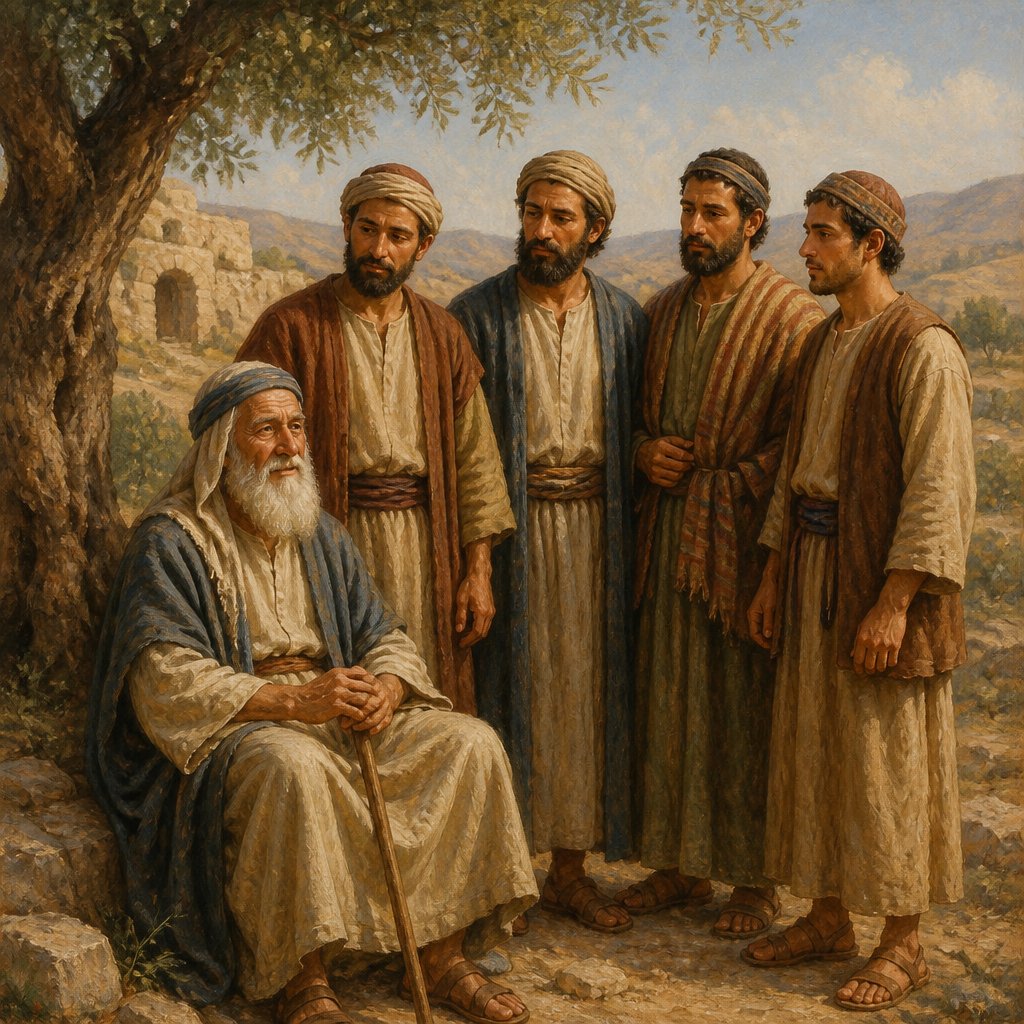
As we journey through the pages of the Bible, particularly in the genealogies found in 1 Chronicles, we are often met with lists of names that might seem repetitive or even insignificant at first glance. Yet, within these passages lies a profound truth about our identity in Christ and the importance of remembering our spiritual heritage. In 1 Chronicles 2:43, we come across the names of the sons of Hebron: "And the sons of Hebron; Korah, and Tappuah, and Rekem, and Shema."
To contextualize this verse, we examine the significance of Hebron. Hebron was not just a city in Judah; it was a place that carried rich history and spiritual symbolism. The name itself means 'association' or 'fellowship.' It was here that King David reigned for seven years before his rule spread over all Israel, and it was a place of deep ties to Abraham, who first built an altar here (Genesis 13:18). Therefore, Hebron stands as a reminder of God's covenantal faithfulness and the deep roots from which God's promises grow.
The sons of Hebron – Korah, Tappuah, Rekem, and Shema – symbolize distinct characteristics that can enlighten our understanding of our own spiritual lineage. Each name can serve as a stepping stone for us to reflect on our spiritual journey.
**Korah** is perhaps the most notable name in this group, as it resonates with both glory and caution. The Korahites, descendants of Korah, were known for their roles in worship and were appointed as gatekeepers in the temple (1 Chronicles 9:19). However, the name also serves as a warning; Korah led a rebellion against Moses and Aaron, ultimately facing divine judgment (Numbers 16). This duality in Korah's legacy speaks to us today: the importance of honoring God's authority and our role in His Kingdom while recognizing the consequences when we act against it. As we meditate on Korah, let us ask ourselves, how are we serving God in our lives? Are we as devoted as the Korahites in worship, yet cautious to maintain an attitude of humility and submission?
Next, we look at **Tappuah**, which means 'the place of apples' or 'fragrance.' This name evokes the idea of spiritual fruitfulness and the beauty of lives lived in alignment with God's purpose. In the New Testament, John 15:5 reminds us, "I am the vine, ye are the branches: He that abideth in me, and I in him, the same bringeth forth much fruit: for without me ye can do nothing." As a descendant of Hebron, we are called not only to bear fruit but also to be a sweet-smelling aroma to those around us. Is our life reflecting the fragrance of Christ?
**Rekem** and **Shema** may not have as vivid a biblical account attached to their names, yet their inclusion signifies the value of every person in God's family. It reminds us that each believer, no matter how obscure or unrecognized, plays a significant role in the greater narrative of faith. In a world that often values fame and recognition, we can take comfort in knowing that our contributions, however small, are precious in God's eyes.
In conclusion, examining the sons of Hebron invites us to look inward at our spiritual roots and outward to our community of believers. Just as the lineage of Hebron connects us to significant patriarchs, so too does our spiritual ancestry link us to a rich legacy of faith. Whether we are like Korah, called to serve in significant, impactful ways, or like Rekem and Shema, quietly contributing to our church family, we all have a vital part in God's Kingdom.
May we embrace our spiritual heritage with gratitude and responsibility, recognizing that each name, each person, carries the weight of God's purpose in our lives. Let us reflect on our role within this beautiful tapestry that God is weaving throughout history, ensuring that like the sons of Hebron, we leave a lasting legacy for those who follow after us.
Want to reflect more on 1 Chronicles 2:43?
Continue your spiritual journey with Bible Chat — an AI-powered tool for exploring God's Word through conversation. Ask questions, discover connections, and deepen your understanding.
Get Our Apps


1 Chronicles 2:43 Artwork

1 Chronicles 2:43 - "And the sons of Hebron; Korah, and Tappuah, and Rekem, and Shema."

"And the sons of Hebron; Korah, and Tappuah, and Rekem, and Shema." - 1 Chronicles 2:43

1 Chronicles 11:43 - "Hanan the son of Maachah, and Joshaphat the Mithnite,"

1 Chronicles 6:43 - "The son of Jahath, the son of Gershom, the son of Levi."

1 Chronicles 4:43 - "And they smote the rest of the Amalekites that were escaped, and dwelt there unto this day."

Isaiah 43:2

1 Chronicles 9:43 - "And Moza begat Binea; and Rephaiah his son, Eleasah his son, Azel his son."

1 Chronicles 16:43 - "And all the people departed every man to his house: and David returned to bless his house."

"Hanan the son of Maachah, and Joshaphat the Mithnite," - 1 Chronicles 11:43

1 Chronicles 1:43 - "¶ Now these are the kings that reigned in the land of Edom before any king reigned over the children of Israel; Bela the son of Beor: and the name of his city was Dinhabah."

"The son of Jahath, the son of Gershom, the son of Levi." - 1 Chronicles 6:43

"And they smote the rest of the Amalekites that were escaped, and dwelt there unto this day." - 1 Chronicles 4:43

1 Kings 2:43 - "Why then hast thou not kept the oath of the LORD, and the commandment that I have charged thee with?"

1 Chronicles 2:48 - "Maachah, Caleb's concubine, bare Sheber, and Tirhanah."

1 Chronicles 2:8 - "And the sons of Ethan; Azariah."

1 Chronicles 2:15 - "Ozem the sixth, David the seventh:"

1 Chronicles 2:14 - "Nethaneel the fourth, Raddai the fifth,"

1 Chronicles 2:38 - "And Obed begat Jehu, and Jehu begat Azariah,"

1 Chronicles 2:41 - "And Shallum begat Jekamiah, and Jekamiah begat Elishama."

1 Chronicles 2:36 - "And Attai begat Nathan, and Nathan begat Zabad,"

1 Chronicles 2:11 - "And Nahshon begat Salma, and Salma begat Boaz,"

1 Chronicles 2:39 - "And Azariah begat Helez, and Helez begat Eleasah,"

1 Chronicles 2:5 - "The sons of Pharez; Hezron, and Hamul."
"And Moza begat Binea; and Rephaiah his son, Eleasah his son, Azel his son." - 1 Chronicles 9:43
"And all the people departed every man to his house: and David returned to bless his house." - 1 Chronicles 16:43

1 Chronicles 1:2 - "Kenan, Mahalaleel, Jered,"

1 Chronicles 2:2 - "Dan, Joseph, and Benjamin, Naphtali, Gad, and Asher."

1 Chronicles 2:20 - "And Hur begat Uri, and Uri begat Bezaleel."

1 Chronicles 2:40 - "And Eleasah begat Sisamai, and Sisamai begat Shallum,"

1 Chronicles 2:37 - "And Zabad begat Ephlal, and Ephlal begat Obed,"