Legacy of Faithfulness: A Reflection on 1 Chronicles 2:42
"¶ Now the sons of Caleb the brother of Jerahmeel were, Mesha his firstborn, which was the father of Ziph; and the sons of Mareshah the father of Hebron." - 1 Chronicles 2:42
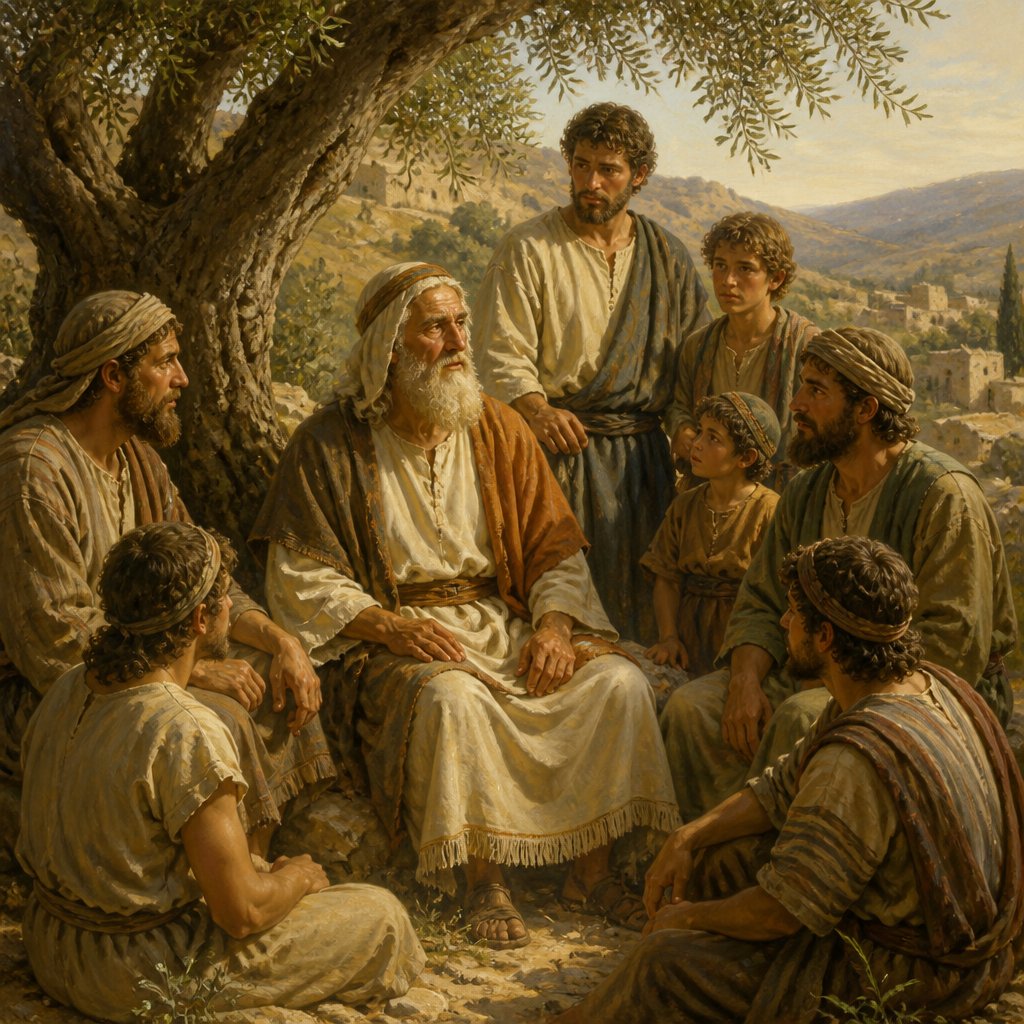
In the often-neglected passages of genealogies found within Scripture, including 1 Chronicles 2:42, we encounter the profound truth of legacy and lineage. The verse states, "Now the sons of Caleb the brother of Jerahmeel were, Mesha his firstborn, which was the father of Ziph; and the sons of Mareshah the father of Hebron." At first glance, this listing may seem trivial, an unremarkable record of names that hold little significance for our modern lives. However, a more profound examination unveils layers of meaning that speak to our spiritual walk today.
Caleb, the son of Jephunneh, is a figure emblematic of faith and courage. His story is interwoven within the narrative of Israel’s conquest of Canaan, as he was one of the spies who brought back a positive report about the Promised Land. Caleb’s faithfulness to God’s promise was rewarded, allowing his descendants to inherit the land that he so boldly sought. This legacy of belief is of utmost importance. As we read about Caleb and his lineage, we are reminded that our faith is not isolated; it has implications for the generations that come after us.
The names listed in 1 Chronicles provide us with a glimpse into the continuation of Caleb's legacy. We see his firstborn son, Mesha, who becomes the father of Ziph. Each name signifies not just a person, but the passing down of values, beliefs, and an inheritance rooted in faith. In the biblical context, a name often reflects character or destiny. Ziph means "scent" or "fragrance," suggesting that Mesha's lineage should carry the sweet aroma of faith passed on from Caleb. This lineage implicates a rich heritage that honors God and demonstrates faith amid challenges.
Mesha’s connection to Ziph leads to a deeper inquiry about the nature of our own spiritual offspring. What legacy are we leaving in our wake? Each interaction we have, each teaching moment with children, family, or friends, plants seeds that will either flourish or falter. Are we ensuring that the fragrance of faith is on our lips and evident in our lives? In a world that often promotes self-sufficiency and individualism, we must hold tightly to the truth that we are part of a larger family of believers, a cloud of witnesses (Hebrews 12:1) whose faith can bolster and uplift one another.
Additionally, the mention of Mareshah as the father of Hebron provides a link to another important city within Israel, a place known as the city of refuge. This highlights the role that generations play in leading others to safe havens, both physically and spiritually. Just as Caleb’s family contributed to the establishment of cities of refuge, our families can serve as harbors for those seeking safety in faith. This emphasizes our responsibility to guide our children (and those in our sphere) toward Christ, our ultimate refuge and strength.
In our lives, we may not always see the immediate fruit of our labor in teaching, mentoring, and nurturing faith in others. Yet, let us hold onto the promise that God’s work is generational. Just as Caleb’s faith led to the blessing found within his lineage, we too must carry that torch of faith forward. Every prayer offered, every testimony shared, and every act of love sown into the lives of those around us contributes to the inheritance we leave behind.
In conclusion, as we reflect on 1 Chronicles 2:42, let us strive to embody the spirit of Caleb, eulogizing our faith through intentional relationships that uplift and instill confidence in God’s promises. May our lives, like the names listed in this verse, be a testament to the God we serve and the legacy we wish to pass on. Let us be vigilant in prayer, asking God to help us be faithful stewards of the faith we cherish, ensuring that our descendants inherit not just land and name, but a life steeped in the grace and love of Christ.
Want to reflect more on 1 Chronicles 2:42?
Continue your spiritual journey with Bible Chat — an AI-powered tool for exploring God's Word through conversation. Ask questions, discover connections, and deepen your understanding.
Get Our Apps


1 Chronicles 2:42 Artwork

1 Chronicles 2:42 - "¶ Now the sons of Caleb the brother of Jerahmeel were, Mesha his firstborn, which was the father of Ziph; and the sons of Mareshah the father of Hebron."
"¶ Now the sons of Caleb the brother of Jerahmeel were, Mesha his firstborn, which was the father of Ziph; and the sons of Mareshah the father of Hebron." - 1 Chronicles 2:42

1 Chronicles 1:42 - "The sons of Ezer; Bilhan, and Zavan, and Jakan. The sons of Dishan; Uz, and Aran."

1 Chronicles 6:42 - "The son of Ethan, the son of Zimmah, the son of Shimei,"

1 Chronicles 11:42 - "Adina the son of Shiza the Reubenite, a captain of the Reubenites, and thirty with him,"

1 Chronicles 9:42 - "And Ahaz begat Jarah; and Jarah begat Alemeth, and Azmaveth, and Zimri; and Zimri begat Moza;"

2 Chronicles 6:42 - "O LORD God, turn not away the face of thine anointed: remember the mercies of David thy servant."

Genesis 42:1-2

"The son of Ethan, the son of Zimmah, the son of Shimei," - 1 Chronicles 6:42

1 Chronicles 16:42 - "And with them Heman and Jeduthun with trumpets and cymbals for those that should make a sound, and with musical instruments of God. And the sons of Jeduthun were porters."

"The sons of Ezer; Bilhan, and Zavan, and Jakan. The sons of Dishan; Uz, and Aran." - 1 Chronicles 1:42

1 Chronicles 4:42 - "And some of them, even of the sons of Simeon, five hundred men, went to mount Seir, having for their captains Pelatiah, and Neariah, and Rephaiah, and Uzziel, the sons of Ishi."

"Adina the son of Shiza the Reubenite, a captain of the Reubenites, and thirty with him," - 1 Chronicles 11:42

1 Chronicles 2:48 - "Maachah, Caleb's concubine, bare Sheber, and Tirhanah."

"And Ahaz begat Jarah; and Jarah begat Alemeth, and Azmaveth, and Zimri; and Zimri begat Moza;" - 1 Chronicles 9:42

1 Chronicles 2:8 - "And the sons of Ethan; Azariah."

1 Chronicles 2:15 - "Ozem the sixth, David the seventh:"

1 Chronicles 2:14 - "Nethaneel the fourth, Raddai the fifth,"

1 Chronicles 2:38 - "And Obed begat Jehu, and Jehu begat Azariah,"

1 Chronicles 2:41 - "And Shallum begat Jekamiah, and Jekamiah begat Elishama."

1 Chronicles 2:36 - "And Attai begat Nathan, and Nathan begat Zabad,"

1 Chronicles 2:11 - "And Nahshon begat Salma, and Salma begat Boaz,"

1 Chronicles 2:39 - "And Azariah begat Helez, and Helez begat Eleasah,"

1 Chronicles 2:5 - "The sons of Pharez; Hezron, and Hamul."

1 Chronicles 1:2 - "Kenan, Mahalaleel, Jered,"

1 Chronicles 2:2 - "Dan, Joseph, and Benjamin, Naphtali, Gad, and Asher."

"O LORD God, turn not away the face of thine anointed: remember the mercies of David thy servant." - 2 Chronicles 6:42

1 Chronicles 2:20 - "And Hur begat Uri, and Uri begat Bezaleel."

1 Chronicles 2:40 - "And Eleasah begat Sisamai, and Sisamai begat Shallum,"

1 Chronicles 2:37 - "And Zabad begat Ephlal, and Ephlal begat Obed,"