The Unsung Heroes of Faith: Lessons from Abishur and His Family
"And the name of the wife of Abishur was Abihail, and she bare him Ahban, and Molid." - 1 Chronicles 2:29
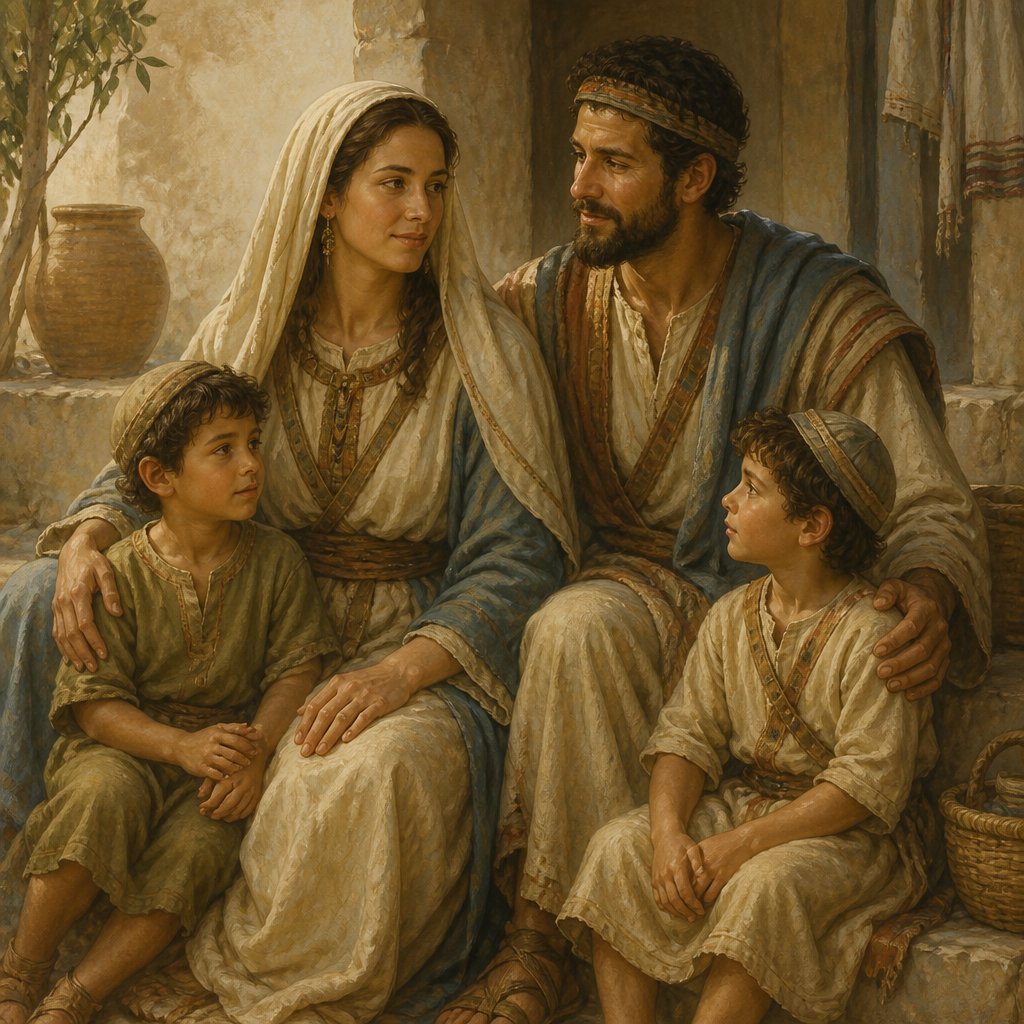
As we delve into the genealogies and accounts found in the book of 1 Chronicles, we often encounter verses that seem to merely list names and relationships. One such verse is 1 Chronicles 2:29, which states, "And the name of the wife of Abishur was Abihail, and she bare him Ahban, and Molid." At first glance, this passage may appear mundane and easily overlooked, but within these names lies a rich tapestry of faith, heritage, and God's unfolding purpose.
The name Abishur means "the father is the wealthy one", and in the ancient context, family names carried vast significance. They were not just identifiers but were symbolic of the legacy, virtue, and lineage of the individual. Abishur’s union with Abihail signifies the foundational role of partnerships in God’s kingdom. Each name in this verse, including that of his wife, serves as a reminder that even those whose stories are less pronounced can be pivotal in God’s divine plan.
In an era when personal validation often hinges on public recognition, these seemingly minor characters exemplify faithfulness in the hidden aspects of life. Abihail, whose name means "my father is strength," represents the strength that comes from a personal relationship with God. Her role in this patriarchal society, as the mother of Ahban and Molid, underscores the importance of women in the biblical narrative. In a culture where women's stories are frequently unrecorded, Abihail's contribution is significant. She bears two sons who are woven into the fabric of Israel's lineage.
This speaks to us today about the value of our unseen contributions. We may not be called to the spotlight, but in our roles – as parents, friends, church members, or community leaders – we play indispensable parts in advancing God’s Kingdom. Just as Abihail nurtured her children, we too are called to invest in the lives of those around us, believing that our efforts, though often invisible, carry eternal weight.
The names of her sons, Ahban and Molid, deserve our reflection as well. Ahban, whose name means "to bring joy", indicates the joy and delight children bring to a family. This brings to light the biblical promise that children are a blessing from the Lord (Psalm 127:3). Molid, which can mean “born” or associated with life, reminds us of the vitality that new life brings to our understanding of faith. As we raise the next generation, we must make a conscious effort to instill in them the values of faith, courage, and dependency on God.
In 1 Chronicles, these genealogies are not just historical facts but are treasures revealing God's faithfulness through every generation. He uses ordinary lives to fulfill extraordinary purposes. While Abishur's name may not be etched in gold on the walls of history, God had a plan for him and his family that would echo through time.
As we consider this verse, we are encouraged to reflect on our family legacies and the spiritual heritage we are building. Whether we are biological parents, mentors, or spiritual guides, we have the opportunity to impart wisdom, encouragement, and the love of Christ to those God places in our lives. Let us not underestimate the power in the names we bear, nor the impact of the lives we lead in our homes and communities.
As we meditate on this passage, let every family member's name be a reminder of God’s purpose. May we commit to be like Abishur and Abihail, nurturing faith in our families, knowing that every act of love and every deed of kindness is known by God and has a purpose in His great design.
In conclusion, let us embrace and celebrate the unsung heroes in our spiritual family narratives, acknowledging their contribution to our faith journey, and commit to being faithful stewards of the legacy we inherit and pass on.
Want to reflect more on 1 Chronicles 2:29?
Continue your spiritual journey with Bible Chat — an AI-powered tool for exploring God's Word through conversation. Ask questions, discover connections, and deepen your understanding.
Get Our Apps


1 Chronicles 2:29 Artwork

1 Chronicles 2:29 - "And the name of the wife of Abishur was Abihail, and she bare him Ahban, and Molid."

"And the name of the wife of Abishur was Abihail, and she bare him Ahban, and Molid." - 1 Chronicles 2:29

1 Chronicles 2:9 - "The sons also of Hezron, that were born unto him; Jerahmeel, and Ram, and Chelubai."
"The sons also of Hezron, that were born unto him; Jerahmeel, and Ram, and Chelubai." - 1 Chronicles 2:9

1 Chronicles 4:29 - "And at Bilhah, and at Ezem, and at Tolad,"

2 Chronicles 29:29 - "And when they had made an end of offering, the king and all that were present with him bowed themselves, and worshipped."

1 Chronicles 1:29 - "¶ These are their generations: The firstborn of Ishmael, Nebaioth; then Kedar, and Adbeel, and Mibsam,"

1 Chronicles 11:29 - "Sibbecai the Hushathite, Ilai the Ahohite,"

2 Chronicles 29:26 - "And the Levites stood with the instruments of David, and the priests with the trumpets."

2 Chronicles 29:1 - "Hezekiah began to reign when he was five and twenty years old, and he reigned nine and twenty years in Jerusalem. And his mother's name was Abijah, the daughter of Zechariah."

1 Chronicles 24:29 - "Concerning Kish: the son of Kish was Jerahmeel."

2 Chronicles 29:13 - "And of the sons of Elizaphan; Shimri, and Jeiel: and of the sons of Asaph; Zechariah, and Mattaniah:"

2 Chronicles 34:29 - "¶ Then the king sent and gathered together all the elders of Judah and Jerusalem."

2 Chronicles 29:14 - "And of the sons of Heman; Jehiel, and Shimei: and of the sons of Jeduthun; Shemaiah, and Uzziel."

2 Chronicles 29:2 - "And he did that which was right in the sight of the LORD, according to all that David his father had done."

2 Chronicles 29:33 - "And the consecrated things were six hundred oxen and three thousand sheep."

2 Chronicles 29:4 - "And he brought in the priests and the Levites, and gathered them together into the east street,"

1 Chronicles 29:29 - "Now the acts of David the king, first and last, behold, they are written in the book of Samuel the seer, and in the book of Nathan the prophet, and in the book of Gad the seer,"

1 Chronicles 29:26 - "¶ Thus David the son of Jesse reigned over all Israel."

1 Chronicles 8:29 - "And at Gibeon dwelt the father of Gibeon; whose wife's name was Maachah:"

2 Chronicles 29:20 - "¶ Then Hezekiah the king rose early, and gathered the rulers of the city, and went up to the house of the LORD."

"And at Bilhah, and at Ezem, and at Tolad," - 1 Chronicles 4:29

2 Chronicles 29:36 - "And Hezekiah rejoiced, and all the people, that God had prepared the people: for the thing was done suddenly."

1 Chronicles 25:29 - "The two and twentieth to Giddalti, he, his sons, and his brethren, were twelve:"

1 Chronicles 16:29 – "Ascribe to the Lord the glory due his name; bring an offering and come before him."

2 Chronicles 29:23 - "And they brought forth the he goats for the sin offering before the king and the congregation; and they laid their hands upon them:"

1 Chronicles 29:13 - "Now therefore, our God, we thank thee, and praise thy glorious name."

1 Chronicles 26:29 - "¶ Of the Izharites, Chenaniah and his sons were for the outward business over Israel, for officers and judges."

2 Chronicles 29:15 - "And they gathered their brethren, and sanctified themselves, and came, according to the commandment of the king, by the words of the LORD, to cleanse the house of the LORD."

2 Chronicles 29:28 - "And all the congregation worshipped, and the singers sang, and the trumpeters sounded: and all this continued until the burnt offering was finished."