Legacy of Faith: Embracing Our Spiritual Heritage
"¶ And Jesse begat his firstborn Eliab, and Abinadab the second, and Shimma the third," - 1 Chronicles 2:13
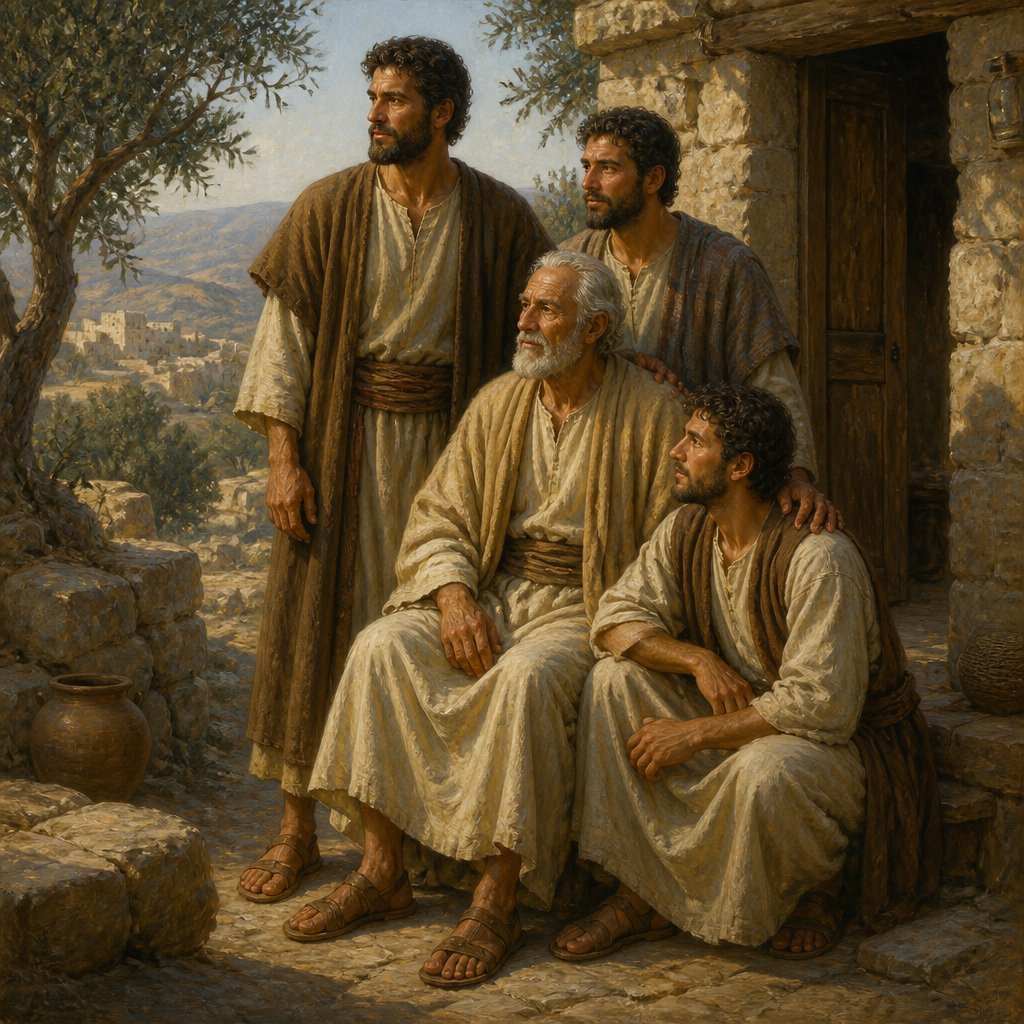
The genealogies of the Bible often present challenges to modern readers. They can seem tedious and filled with unfamiliar names, causing us to overlook their significance. However, every name in Scripture carries a weight of meaning and contributes to the unfolding narrative of God's plan for humanity. Today, we find ourselves in the midst of a genealogy that begins with Jesse, highlighted in 1 Chronicles 2:13: "And Jesse begat his firstborn Eliab, and Abinadab the second, and Shimma the third."
Jesse, the father of David, stands not only as a name in a long list of ancestral proclamations but as the representation of God's enduring promise to His people. His lineage plays a pivotal role in the story of redemption through the Old Testament and up to the New Testament, culminating in the birth of Jesus Christ. Understanding our spiritual heritage is essential for recognizing how we fit into God's story, just like Jesse and his sons.
The firstborn, Eliab, was the one who, according to human standards, appeared to be most suited to inherit leadership due to his age and stature. In 1 Samuel 16, when Samuel came to anoint one of Jesse's sons as the future king of Israel, Eliab initially caught the prophet's eye. The Lord, however, instructed Samuel not to look at his appearance but rather to consider the heart. 1 Samuel 16:7 states, "But the LORD said unto Samuel, Look not on his countenance, or on the height of his stature; because I have refused him: for the LORD seeth not as man seeth; for man looketh on the outward appearance, but the LORD looketh on the heart."
This moment highlights a profound truth about God's selection. His choice reminds us that He values character over charisma. In a world often fixated on external validation, we must hold on to the understanding that our worth is determined not by our position or achievements but by our hearts and our relationship with God. Each of Jesse’s sons had their own unique qualities, but it was David, the youngest and often overlooked, who was anointed king. This teaches us that God has diverse purposes for each of us, regardless of our birth order or current status.
Abinadab, being the second son, represents the idea of progression in our spiritual journeys. Often, we experience development through our spiritual walk similar to siblings. Just as in natural families where siblings learn from each other, we, too, grow in faith alongside fellow believers. Abinadab reminds us that we all have a role to play in advancing God's Kingdom, even if it doesn't align with the expectations of society.
Then there is Shimma, the third son, who also has a part in this sacred lineage. The name Shimma means
Want to reflect more on 1 Chronicles 2:13?
Continue your spiritual journey with Bible Chat — an AI-powered tool for exploring God's Word through conversation. Ask questions, discover connections, and deepen your understanding.
Get Our Apps


1 Chronicles 2:13 Artwork

1 Chronicles 2:13 - "¶ And Jesse begat his firstborn Eliab, and Abinadab the second, and Shimma the third,"
"¶ And Jesse begat his firstborn Eliab, and Abinadab the second, and Shimma the third," - 1 Chronicles 2:13

2 Chronicles 13:1 - "Now in the eighteenth year of king Jeroboam began Abijah to reign over Judah."

2 Chronicles 1:13 - "¶ Then Solomon came from his journey to the high place that was at Gibeon to Jerusalem, from before the tabernacle of the congregation, and reigned over Israel."

2 Chronicles 2:13 - "And now I have sent a cunning man, endued with understanding, of Huram my father's,"

2 Chronicles 6:13

2 chronicles 13:12

1 Chronicles 1:13 - "And Canaan begat Zidon his firstborn, and Heth,"

1 Chronicles 13:1 - "And David consulted with the captains of thousands and hundreds, and with every leader."

1 Chronicles 24:13 - "The thirteenth to Huppah, the fourteenth to Jeshebeab,"

1 Chronicles 12:13 - "Jeremiah the tenth, Machbanai the eleventh."

2 Chronicles 13:13 - "¶ But Jeroboam caused an ambushment to come about behind them: so they were before Judah, and the ambushment was behind them."
"Now in the eighteenth year of king Jeroboam began Abijah to reign over Judah." - 2 Chronicles 13:1

1 Chronicles 6:13 - "And Shallum begat Hilkiah, and Hilkiah begat Azariah,"

2 Chronicles 29:13 - "And of the sons of Elizaphan; Shimri, and Jeiel: and of the sons of Asaph; Zechariah, and Mattaniah:"

1 Chronicles 13:13 - "So David brought not the ark home to himself to the city of David, but carried it aside into the house of Obed-edom the Gittite."

1 Chronicles 2:48 - "Maachah, Caleb's concubine, bare Sheber, and Tirhanah."

2 Chronicles 20:13 - "And all Judah stood before the LORD, with their little ones, their wives, and their children."

2 Chronicles 13:16 - "And the children of Israel fled before Judah: and God delivered them into their hand."

1 Chronicles 4:13 - "And the sons of Kenaz; Othniel, and Seraiah: and the sons of Othniel; Hathath."

1 Chronicles 14:13 - "And the Philistines yet again spread themselves abroad in the valley."

1 Chronicles 2:8 - "And the sons of Ethan; Azariah."

1 Chronicles 2:15 - "Ozem the sixth, David the seventh:"

1 Chronicles 2:14 - "Nethaneel the fourth, Raddai the fifth,"

1 Chronicles 2:38 - "And Obed begat Jehu, and Jehu begat Azariah,"

1 Chronicles 2:41 - "And Shallum begat Jekamiah, and Jekamiah begat Elishama."

1 Chronicles 2:36 - "And Attai begat Nathan, and Nathan begat Zabad,"

1 Chronicles 2:11 - "And Nahshon begat Salma, and Salma begat Boaz,"

1 Chronicles 2:39 - "And Azariah begat Helez, and Helez begat Eleasah,"

"And now I have sent a cunning man, endued with understanding, of Huram my father's," - 2 Chronicles 2:13