The Majesty of Divine Favor: Lessons from Solomon's Reign
"And the LORD magnified Solomon exceedingly in the sight of all Israel, and bestowed upon him such royal majesty as had not been on any king before him in Israel." - 1 Chronicles 29:25
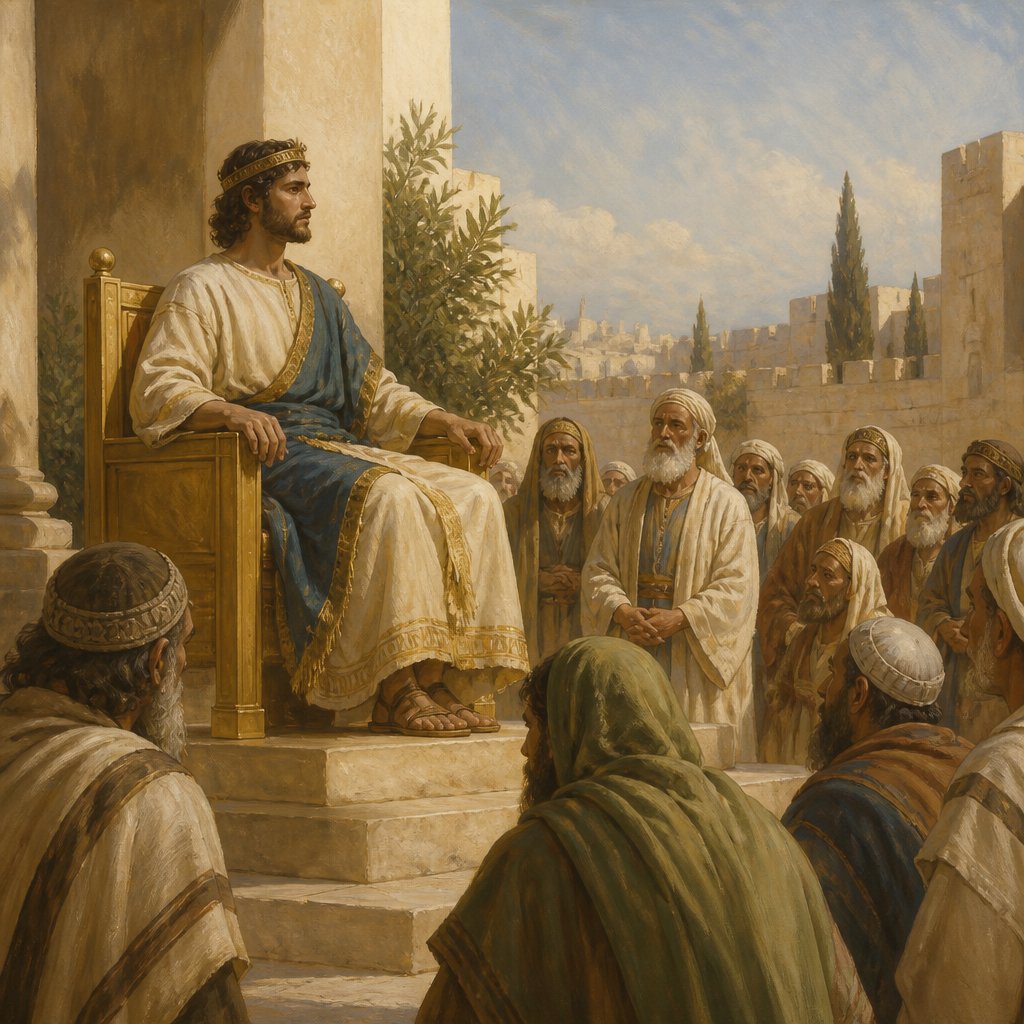
In the Old Testament, the reign of King Solomon stands out as a remarkable period characterized by prosperity, wisdom, and divine favor. The verse from 1 Chronicles 29:25 encapsulates Solomon's unique position as a king endowed with exceptional authority and splendor: "And the LORD magnified Solomon exceedingly in the sight of all Israel, and bestowed upon him such royal majesty as had not been on any king before him in Israel."
To fully grasp the significance of this verse, we must first understand the context of Solomon's ascension to the throne. He was the son of David, a man after God’s own heart, who brought Israel to its zenith in terms of military strength and territorial expansion. Solomon inherited not only a powerful kingdom but also the weighty legacy of his father's actions and decisions. As he took the throne, he faced the monumental task of leading and uniting a diverse nation under God.
The first notable aspect of Solomon's story, highlighted in the verse, is the divine magnification of Solomon’s stature in the eyes of his people. The Lord’s action to "magnify Solomon exceedingly" demonstrates that the favor of God is not just a personal blessing; it can elevate one's influence and authority in the sight of others. This is a critical lesson for us today: when we walk in obedience and seek after God, His favor can propel us into positions of impact, allowing us to shine brightly in our respective circles.
The text also speaks of the "royal majesty" bestowed upon Solomon, suggesting a level of grandeur that had never been seen before in Israel. The majesty referred to here is not merely external splendor or regal displays; it signifies the honor and recognition from both God and the people. True majesty, in a biblical sense, is tied to righteousness, character, and the fulfillment of God’s purposes. Solomon, while blessed with great wealth and wisdom, was called to exercise his rule in accordance with God's laws and to lead the people toward devotion to the One True God.
As we reflect on Solomon’s experience, we should ask ourselves what it means to carry the majesty or glory of God in our own lives. Are we reflecting His light in our interactions with others? Are we leading with integrity and love in the spheres we influence? God’s desire is for us to embody characteristics that display His greatness, regardless of our social status or position. Remember that Solomon’s wisdom and governance were gifts from the Lord, given after he sought God earnestly. In 1 Kings 3:5-14, we find Solomon famously asking for wisdom above all else to govern his people. His request was pleasing to God, who granted him not only wisdom but also wealth and honor. Solomon understood that true strength came from an intimate relationship with God and an acknowledgment of his own limitations.
Moreover, the verse serves as a reminder of the importance of humility in leadership. Solomon’s extraordinary elevation was juxtaposed with the need for him to remain humble before God. It is easy for power and success to lead to pride and self-reliance. However, as believers, we are reminded in Proverbs 16:18 that pride precedes destruction, while humility leads to honor. Solomon’s downfall, as seen later in his life, illustrates the often-silent creep of complacency and the allure of worldly pleasures that can tempt even the wisest among us—a poignant warning that we must remain vigilant.
In conclusion, as we consider the divine favor displayed through Solomon's life, let us earnestly seek that same blessing. We must pursue our relationship with God, asking Him to magnify our lives for His glory. May we strive to exercise the majesty of our calling, reflecting Christ to the world around us, and leading with wisdom and humility. Let us never forget that true greatness comes not from our achievements but from our reliance on and obedience to the Lord.
Want to reflect more on 1 Chronicles 29:25?
Continue your spiritual journey with Bible Chat — an AI-powered tool for exploring God's Word through conversation. Ask questions, discover connections, and deepen your understanding.
Get Our Apps


1 Chronicles 29:25 Artwork

1 Chronicles 29:25 - "And the LORD magnified Solomon exceedingly in the sight of all Israel, and bestowed upon him such royal majesty as had not been on any king before him in Israel."
"And the LORD magnified Solomon exceedingly in the sight of all Israel, and bestowed upon him such royal majesty as had not been on any king before him in Israel." - 1 Chronicles 29:25

1 Chronicles 25:29 - "The two and twentieth to Giddalti, he, his sons, and his brethren, were twelve:"

"The two and twentieth to Giddalti, he, his sons, and his brethren, were twelve:" - 1 Chronicles 25:29

1 Chronicles 1:25 - "Eber, Peleg, Reu,"

1 Chronicles 4:29 - "And at Bilhah, and at Ezem, and at Tolad,"

1 Chronicles 1:29 - "¶ These are their generations: The firstborn of Ishmael, Nebaioth; then Kedar, and Adbeel, and Mibsam,"

1 Chronicles 11:29 - "Sibbecai the Hushathite, Ilai the Ahohite,"

1 Chronicles 25:25 - "The eighteenth to Hanani, he, his sons, and his brethren, were twelve:"

1 Chronicles 24:29 - "Concerning Kish: the son of Kish was Jerahmeel."

2 Chronicles 29:25 - "And he set the Levites in the house of the LORD with cymbals, with psalteries, and with harps, according to the commandment of David, and of Gad the king's seer, and Nathan the prophet: for so was the commandment of the LORD by his prophets."

1 Chronicles 8:25 - "And Iphedeiah, and Penuel, the sons of Shashak;"

1 Chronicles 6:25 - "And the sons of Elkanah; Amasai, and Ahimoth."

1 Chronicles 29:29 - "Now the acts of David the king, first and last, behold, they are written in the book of Samuel the seer, and in the book of Nathan the prophet, and in the book of Gad the seer,"

"Eber, Peleg, Reu," - 1 Chronicles 1:25

1 Chronicles 29:26 - "¶ Thus David the son of Jesse reigned over all Israel."

1 Chronicles 8:29 - "And at Gibeon dwelt the father of Gibeon; whose wife's name was Maachah:"

1 Chronicles 24:25 - "The brother of Michah was Isshiah: of the sons of Isshiah; Zechariah."

1 Chronicles 2:29 - "And the name of the wife of Abishur was Abihail, and she bare him Ahban, and Molid."

"And at Bilhah, and at Ezem, and at Tolad," - 1 Chronicles 4:29

1 Chronicles 16:29 – "Ascribe to the Lord the glory due his name; bring an offering and come before him."

1 Chronicles 29:13 - "Now therefore, our God, we thank thee, and praise thy glorious name."

1 Chronicles 26:29 - "¶ Of the Izharites, Chenaniah and his sons were for the outward business over Israel, for officers and judges."

"Sibbecai the Hushathite, Ilai the Ahohite," - 1 Chronicles 11:29

1 Chronicles 25:22 - "The fifteenth to Jeremoth, he, his sons, and his brethren, were twelve:"

1 Chronicles 25:23 - "The sixteenth to Hananiah, he, his sons, and his brethren, were twelve:"

1 Chronicles 4:25 - "Shallum his son, Mibsam his son, Mishma his son."

1 Chronicles 25:12 - "The fifth to Nethaniah, he, his sons, and his brethren, were twelve:"

1 Chronicles 25:17 - "The tenth to Shimei, he, his sons, and his brethren, were twelve:"

1 Chronicles 25:21 - "The fourteenth to Mattithiah, he, his sons, and his brethren, were twelve:"