The Gift of Gratitude: A Reflection on 1 Chronicles 29:14
"But who am I, and what is my people, that we should be able to offer so willingly after this sort? for all things come of thee, and of thine own have we given thee." - 1 Chronicles 29:14
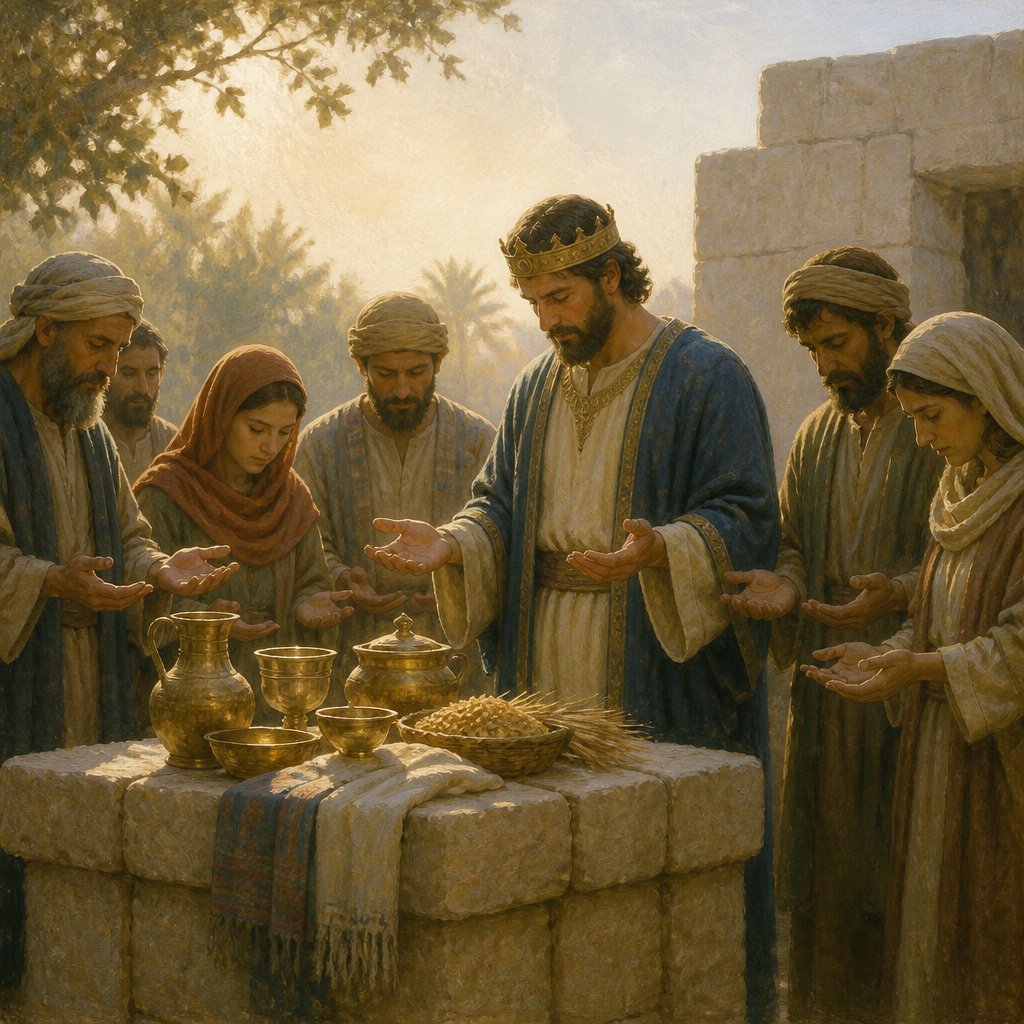
In the face of abundance and magnificent blessings, we often pause to reflect on the source of all we have and are. This contemplation is powerfully encapsulated in the words of King David from 1 Chronicles 29:14: "But who am I, and what is my people, that we should be able to offer so willingly after this sort? for all things come of thee, and of thine own have we given thee."
At first glance, David’s humble inquiry strikes at the core of every worshiper’s heart. His inquiry is not merely rhetorical; it’s a deeply introspective moment that invites us into the realm of divine grace and human gratitude. As King, David had amassed immense wealth and resources through the Lord's favor. Yet, he does not prance around proudly, chest puffed, declaring himself as the greatest benefactor. Instead, he chooses to recognize his identity – a servant of the Most High – and to view the monumental task of creating a temple not just as an act of service but as the fulfillment of a divine promise.
The context of this passage is vital. David is at the culmination of his life’s work, preparing to lead his people in an offering to God for the building of the temple. Before the entire assembly of Israel, he reflects on the generosity of his people and their willingness to give. The majestic goal of constructing a dwelling for the Lord was indeed a monumental task, but it wasn't accomplished by mere human effort. It involved understanding the nature of true stewardship—that everything belongs to God.
David’s humility is the key lesson here. "Who am I?" he asks. This question resonates throughout generations, imploring each of us to ponder our own significance in the grand story of salvation. The greatness of our gifts, whether they be time, talents, or treasure, is minimized in the face of the Creator's greatness. However, our willingness to give can shine brightly as a testimony of our faith. The heart of an offering is not marked solely by its monetary value but by the spirit of giving that springs from understanding His generosity towards us.
With the acknowledgment that "for all things come of thee," David leads us to the understanding of divine ownership. Everything we possess is God's. Our very breath, our relationships, our experiences, and our resources are all gracious gifts originating from Him. It is easy to grow possessive of our possessions, yet when we choose to give, we practice radical gratitude. Giving becomes an act of worship—a response to the goodness and sufficiency of God in our lives.
The phrase "of thine own have we given thee" further underscores the reality that we are merely returning that which was already His. Each time we offer our lives as a living sacrifice, or extend our hands in service, we echo David’s recognition that our offerings are birthed from the bounty He has first bestowed upon us. It conveys an important theological truth—every good thing comes from God, and the act of giving becomes a reflection of our understanding of His generosity.
In our own lives, how often do we strive for more, seeking to be self-made men and women, rather than recognizing the abundant grace that has already been poured into our lives? Let us take a moment today to reflect on this verse. What is it that God has given you? How can you respond to His generosity?
As we engage in acts of giving—be it through service, financial offerings, or simply sharing the love of Christ—we should remember David’s perspective. Our contributions, however small, are significant when given in a spirit of humility and thanksgiving. Let us be known as a people who give willingly, not out of obligation, but out of love and gratitude for the one who first gave so abundantly to us. May our hearts resonate with echoed gratitude, and may we acknowledge with David, "Who am I?" as we stand before our God, forever grateful for His unending grace.
In conclusion, let us allow this passage to transform our understanding of stewardship and generosity. Let gratitude lead the way, recognizing that it is in giving that we find true joy, reflective of the ultimate gift we have received in Christ.
Want to reflect more on 1 Chronicles 29:14?
Continue your spiritual journey with Bible Chat — an AI-powered tool for exploring God's Word through conversation. Ask questions, discover connections, and deepen your understanding.
Get Our Apps


1 Chronicles 29:14 Artwork

1 Chronicles 29:14 - "But who am I, and what is my people, that we should be able to offer so willingly after this sort? for all things come of thee, and of thine own have we given thee."
"But who am I, and what is my people, that we should be able to offer so willingly after this sort? for all things come of thee, and of thine own have we given thee." - 1 Chronicles 29:14

1 Kings 14:29 - "¶ Now the rest of the acts of Rehoboam, and all that he did, are they not written in the book of the chronicles of the kings of Judah?"

2 Chronicles 29:14 - "And of the sons of Heman; Jehiel, and Shimei: and of the sons of Jeduthun; Shemaiah, and Uzziel."

1 Chronicles 4:29 - "And at Bilhah, and at Ezem, and at Tolad,"

1 Chronicles 1:29 - "¶ These are their generations: The firstborn of Ishmael, Nebaioth; then Kedar, and Adbeel, and Mibsam,"

1 Chronicles 11:29 - "Sibbecai the Hushathite, Ilai the Ahohite,"

"¶ Now the rest of the acts of Rehoboam, and all that he did, are they not written in the book of the chronicles of the kings of Judah?" - 1 Kings 14:29

Jeremiah 29: 4-14

Jeremiah 29: 4-14

Jeremiah 29: 4-14

Jeremiah 29: 4-14

Jeremiah 29: 4-14

1 Chronicles 24:29 - "Concerning Kish: the son of Kish was Jerahmeel."

1 Chronicles 29:29 - "Now the acts of David the king, first and last, behold, they are written in the book of Samuel the seer, and in the book of Nathan the prophet, and in the book of Gad the seer,"

1 Chronicles 29:26 - "¶ Thus David the son of Jesse reigned over all Israel."

1 Chronicles 8:29 - "And at Gibeon dwelt the father of Gibeon; whose wife's name was Maachah:"

1 Chronicles 1:14 - "The Jebusite also, and the Amorite, and the Girgashite,"

1 Chronicles 2:29 - "And the name of the wife of Abishur was Abihail, and she bare him Ahban, and Molid."

"And at Bilhah, and at Ezem, and at Tolad," - 1 Chronicles 4:29

"And of the sons of Heman; Jehiel, and Shimei: and of the sons of Jeduthun; Shemaiah, and Uzziel." - 2 Chronicles 29:14

1 Chronicles 25:29 - "The two and twentieth to Giddalti, he, his sons, and his brethren, were twelve:"

1 Corinthians 14:29 - "Let the prophets speak two or three, and let the other judge."

1 Chronicles 14:7 - "And Elishama, and Beeliada, and Eliphalet."

1 Chronicles 14:6 - "And Nogah, and Nepheg, and Japhia,"

1 Chronicles 8:14 - "And Ahio, Shashak, and Jeremoth,"

1 Chronicles 14:5 - "And Ibhar, and Elishua, and Elpalet,"

1 Chronicles 16:29 – "Ascribe to the Lord the glory due his name; bring an offering and come before him."

1 Chronicles 29:13 - "Now therefore, our God, we thank thee, and praise thy glorious name."

1 Chronicles 26:29 - "¶ Of the Izharites, Chenaniah and his sons were for the outward business over Israel, for officers and judges."