The Source of True Wealth and Power
"Both riches and honour come of thee, and thou reignest over all; and in thine hand is power and might; and in thine hand it is to make great, and to give strength unto all." - 1 Chronicles 29:12
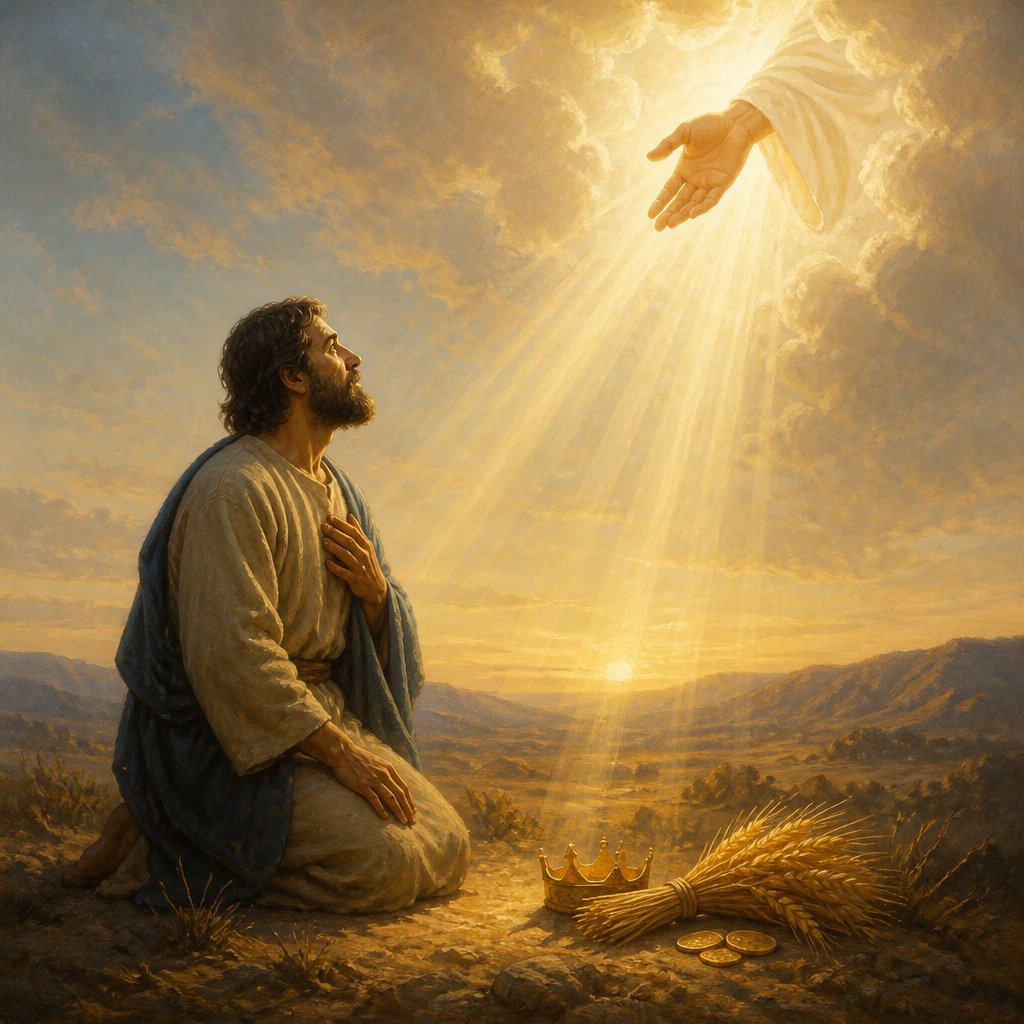
As we reflect on the profound truth encapsulated in 1 Chronicles 29:12, "Both riches and honour come of thee, and thou reignest over all; and in thine hand is power and might; and in thine hand it is to make great, and to give strength unto all," we are drawn into a deeper understanding of our relationship with God as the ultimate source of all that we possess.
This verse, spoken by King David during a moment of heartfelt gratitude as he prepared to dedicate the offerings for the Temple, profoundly reveals the nature of the Almighty God. In this prayer of acknowledgment, David lays bare the divine truth that all riches and honor originate from the Lord. It is a statement of reliance and recognition that transcends mere material possessions. In a world that often equates wealth with status and success, it is crucial to remember that only from God do we receive both physical and spiritual abundance.
As we unpack this scripture, we must first consider the context in which it was delivered. King David, at a pivotal moment in Israel’s history, was about to hand over his plans for the Temple to his son Solomon. His reflection on where true riches and honor come from is not simply to offer a platitude but to instill a sense of humility and dependency on God in his successor and in the people of Israel. David understood that despite his own wealth and power, everything was ultimately a gift from God. This acknowledgment resonates deeply; it challenges us to assess our own understanding of success and wealth within the framework of God’s sovereignty.
The phrase "thou reignest over all" emphasizes the universal authority of God. It highlights the fact that God is not just a deity of a specific region or people but the sovereign ruler over the entire universe. This reign assures us that every act of goodness, every ounce of power, and every moment of honor is instigated and sanctioned by His will. In acknowledging this, we simultaneously lay down our worries and fears, recognizing that nothing is beyond His control. When we affirm that God reigns over all, we cultivate a heart of trust that can weather life’s uncertainties.
Furthermore, David declares that ". . . in thine hand is power and might." This reinforces the idea that all strength derives from God. In a society often obsessed with personal achievement and self-reliance, believers are called to demonstrate a radical shift of thought. Our talents, our influences, and indeed all our endeavors are empowered by the hand of God. When we view our abilities as tools given to us by the Creator, we foster a spirit of humility and gratitude that honors Him, rather than indulges the ego.
Next, the concluding portion of the verse, "and in thine hand it is to make great, and to give strength unto all," invites us to reflect on God’s purpose for our lives. He possesses the ability not just to elevate individuals but to grant strength to entire communities and nations. Here, we find an exhortation; every opportunity to promote goodness, share love, and extend grace in our spheres of influence is an invitation to participate in God’s greatness. We are His instruments, called not to hoard strength or wealth for ourselves but to distribute and enact His power through acts of service.
In practical terms, this verse challenges us to recalibrate our hearts. Are we inviting God into our pursuits and acknowledging His role in our achievements? Are we hoarding our resources or investing them in God's eternal kingdom?
As we meditate on this scripture, let us pray for wisdom to discern how we might better reflect God's glory in our lives. Just as David did, let us offer our gratitude for the riches and strength He provides, and let us commit to utilizing our gifts for His glory, recognizing that in doing so, we truly reflect our Creator. May we live each day fully aware that all we have and all we are comes from Him alone.
Want to reflect more on 1 Chronicles 29:12?
Continue your spiritual journey with Bible Chat — an AI-powered tool for exploring God's Word through conversation. Ask questions, discover connections, and deepen your understanding.
Get Our Apps


1 Chronicles 29:12 Artwork

1 Chronicles 29:12 - "Both riches and honour come of thee, and thou reignest over all; and in thine hand is power and might; and in thine hand it is to make great, and to give strength unto all."
"Both riches and honour come of thee, and thou reignest over all; and in thine hand is power and might; and in thine hand it is to make great, and to give strength unto all." - 1 Chronicles 29:12

1 Chronicles 12:29 - "And of the children of Benjamin, the kindred of Saul, three thousand: for hitherto the greatest part of them had kept the ward of the house of Saul."

1 Chronicles 4:29 - "And at Bilhah, and at Ezem, and at Tolad,"

1 Chronicles 1:29 - "¶ These are their generations: The firstborn of Ishmael, Nebaioth; then Kedar, and Adbeel, and Mibsam,"

1 Chronicles 11:29 - "Sibbecai the Hushathite, Ilai the Ahohite,"

1 Chronicles 24:29 - "Concerning Kish: the son of Kish was Jerahmeel."

1 Chronicles 12:12 - "Johanan the eighth, Elzabad the ninth,"

1 Chronicles 29:29 - "Now the acts of David the king, first and last, behold, they are written in the book of Samuel the seer, and in the book of Nathan the prophet, and in the book of Gad the seer,"

1 Chronicles 29:26 - "¶ Thus David the son of Jesse reigned over all Israel."

1 Chronicles 8:29 - "And at Gibeon dwelt the father of Gibeon; whose wife's name was Maachah:"

1 Chronicles 2:29 - "And the name of the wife of Abishur was Abihail, and she bare him Ahban, and Molid."

"And at Bilhah, and at Ezem, and at Tolad," - 1 Chronicles 4:29
"And of the children of Benjamin, the kindred of Saul, three thousand: for hitherto the greatest part of them had kept the ward of the house of Saul." - 1 Chronicles 12:29

1 Chronicles 25:29 - "The two and twentieth to Giddalti, he, his sons, and his brethren, were twelve:"

1 Chronicles 1:12 - "And Pathrusim, and Casluhim, (of whom came the Philistines,) and Caphthorim."

1 Chronicles 16:29 – "Ascribe to the Lord the glory due his name; bring an offering and come before him."

1 Chronicles 29:13 - "Now therefore, our God, we thank thee, and praise thy glorious name."

1 Chronicles 26:29 - "¶ Of the Izharites, Chenaniah and his sons were for the outward business over Israel, for officers and judges."

1 chronicles 12:8

"Sibbecai the Hushathite, Ilai the Ahohite," - 1 Chronicles 11:29

1 Chronicles 6:29 - "The sons of Merari; Mahli, Libni his son, Shimei his son, Uzza his son,"

1 Kings 14:29 - "¶ Now the rest of the acts of Rehoboam, and all that he did, are they not written in the book of the chronicles of the kings of Judah?"

1 Kings 12:29 - "And he set the one in Beth-el, and the other put he in Dan."

1 Corinthians 12:29 - "Are all apostles? are all prophets? are all teachers? are all workers of miracles?"

1 Chronicles 12:11 - "Attai the sixth, Eliel the seventh,"

1 Chronicles 12:10 - "Mishmannah the fourth, Jeremiah the fifth,"

1 Chronicles 12:13 - "Jeremiah the tenth, Machbanai the eleventh."

1 Chronicles 24:12 - "The eleventh to Eliashib, the twelfth to Jakim,"

1 Chronicles 29:6 - "¶ Then the chief of the fathers and princes of the tribes of Israel, and the captains of thousands and of hundreds, with the rulers of the king's work, offered willingly,"