Valour in Service: The Call of the Hebronites
"And of the Hebronites, Hashabiah and his brethren, men of valour, a thousand and seven hundred, were officers among them of Israel on this side Jordan westward in all the business of the LORD, and in the service of the king." - 1 Chronicles 26:30
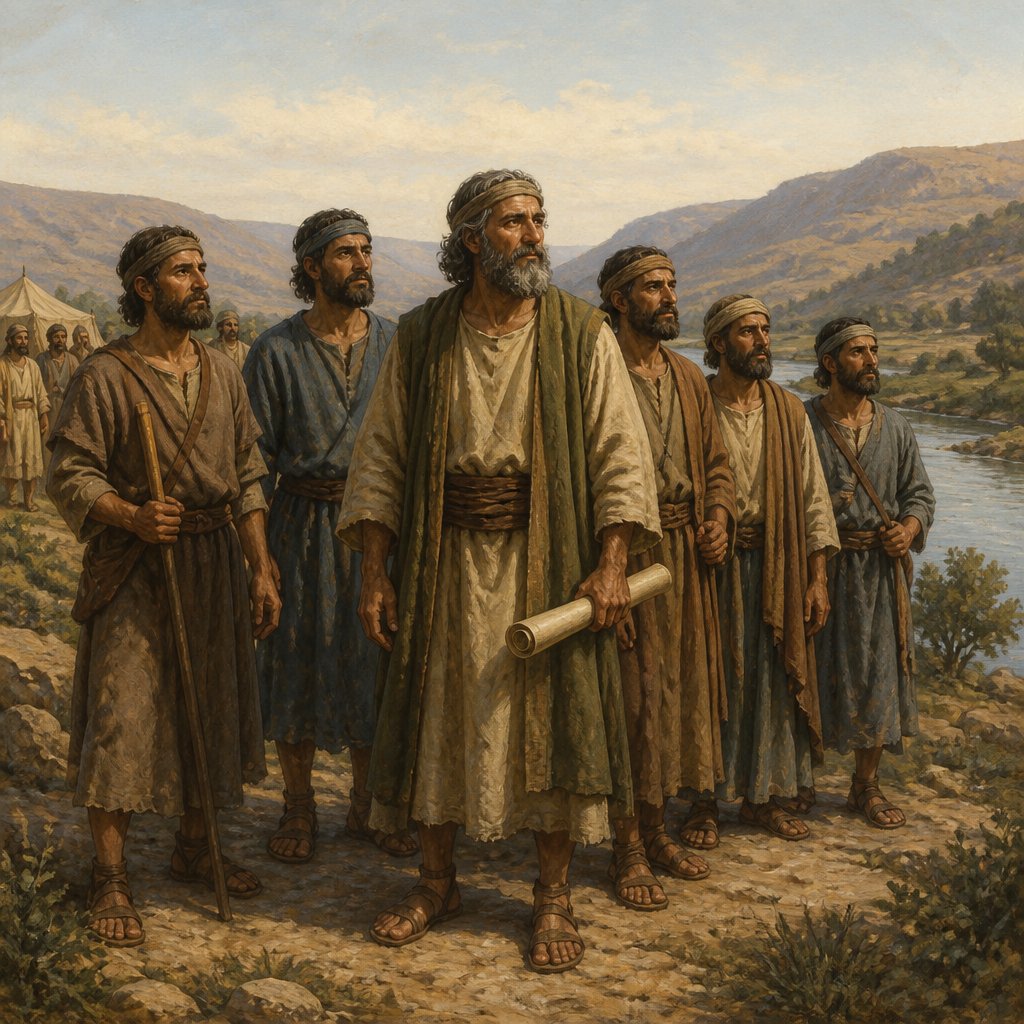
In the book of 1 Chronicles, we are given a glimpse into the organization and responsibilities of the people of Israel after they had entered the Promised Land. One particular verse, 1 Chronicles 26:30, states: "And of the Hebronites, Hashabiah and his brethren, men of valour, a thousand and seven hundred, were officers among them of Israel on this side Jordan westward in all the business of the LORD, and in the service of the king." This verse not only highlights a specific group of individuals — the Hebronites — but also resounds with themes of valor, service, and the intrinsic connection between earthly responsibilities and divine duties.
To understand the significance of this verse, we must first consider who the Hebronites were. They were descendants of Hebron, a figure closely associated with the patriarchs and hailed from the tribe of Levi. This tribe was set apart for the service of God and dedicated to the ways in which they would worship and partake in the sacred duties assigned to them by the Lord. The acknowledgement of Hashabiah and his brethren as "men of valour" is of paramount importance; it reminds us that courage is necessary when undertaking the work of the Lord.
Valour is not simply about physical bravery; it encompasses moral integrity, steadfastness in the face of challenges, and a commitment to serve God and others with dignity and honour. In today’s context, we, too, are called to embody this same valour. For many, being a person of valor might look like standing firm in one's faith amid societal pressures, advocating for justice in places of injustice, or even serving our communities in ways that may confront the norms that are contrary to our Christian beliefs. Hashabiah and his fellow officers embodied this quality as they undertook their duties in service to both God and the King.
There’s an intrinsic relationship between servanthood to God and to authority — one that models a life of humility and commitment. The text emphasizes that their responsibilities were "in all the business of the LORD, and in the service of the king." This shows us that our spiritual duties can and should coexist with our earthly responsibilities. We should never separate our faith from our daily lives; in our jobs, roles in the community, or families, we can serve the Lord while executing our duties with diligence, honesty, and a spirit of excellence.
As members of a society that often prioritizes self-interest over collective responsibility, it is essential to answer the call of servitude with the same fervour as the Hebronites. They were not just fulfilling governmental duties; they were accomplishing a divine task. The work we do, therefore, is sacred because it can bring glory to God. When we realise that we are doing our work as unto the Lord, every act, no matter how mundane or significant, becomes a form of worship.
Moreover, being faithful in smaller forms of service can lead to greater responsibilities. The Lord honours those who demonstrate faithfulness, and Hashabiah's leadership role—along with his brethren—serves as an example that God equips those He calls. This calling has neither diminished nor changed; through our commitments, we are continually being shaped into examples of His love and righteousness.
Finally, 1 Chronicles 26:30 teaches us about community and support. Hashabiah did not serve in isolation; he led alongside his brethren. In a world where individuality reigns, fostering a spirit of collaboration and shared mission is vital. As we serve together in church or community groups, we embody the unity of the body of Christ, demonstrating that we can achieve more collectively than we can alone.
In conclusion, let us be inspired by the example of Hashabiah and his valiant brethren, taking to heart the call to service that resonates from this scripture. May we strive to serve with courage, honour, and dedication, believing that our contributions—no matter how small—play a crucial role in the kingdom of God.
Want to reflect more on 1 Chronicles 26:30?
Continue your spiritual journey with Bible Chat — an AI-powered tool for exploring God's Word through conversation. Ask questions, discover connections, and deepen your understanding.
Get Our Apps


1 Chronicles 26:30 Artwork

1 Chronicles 26:30 - "And of the Hebronites, Hashabiah and his brethren, men of valour, a thousand and seven hundred, were officers among them of Israel on this side Jordan westward in all the business of the LORD, and in the service of the king."
"And of the Hebronites, Hashabiah and his brethren, men of valour, a thousand and seven hundred, were officers among them of Israel on this side Jordan westward in all the business of the LORD, and in the service of the king." - 1 Chronicles 26:30

Exodus 26:30

2 Chronicles 30:26 - "So there was great joy in Jerusalem: for since the time of Solomon the son of David king of Israel there was not the like in Jerusalem."

1 Chronicles 1:30 - "Mishma, and Dumah, Massa, Hadad, and Tema,"

1 Chronicles 1:26 - "Serug, Nahor, Terah,"

1 Chronicles 4:30 - "And at Bethuel, and at Hormah, and at Ziklag,"

1 Chronicles 8:26 - "And Shamsherai, and Shehariah, and Athaliah,"

1 Chronicles 11:30 - "Maharai the Netophathite, Heled the son of Baanah the Netophathite,"

1 Chronicles 9:30 - "And some of the sons of the priests made the ointment of the spices."

1 Chronicles 26:23 - "Of the Amramites, and the Izharites, the Hebronites, and the Uzzielites:"

1 Chronicles 26:1 - "Concerning the divisions of the porters: Of the Korhites was Meshelemiah the son of Kore, of the sons of Asaph."

1 Chronicles 23:30 - "And to stand every morning to thank and praise the LORD, and likewise at even;"

1 Chronicles 7:30 - "The sons of Asher; Imnah, and Isuah, and Ishuai, and Beriah, and Serah their sister."

1 Chronicles 8:30 - "And his firstborn son Abdon, and Zur, and Kish, and Baal, and Nadab,"

1 Chronicles 2:30 - "And the sons of Nadab; Seled, and Appaim: but Seled died without children."

"Serug, Nahor, Terah," - 1 Chronicles 1:26

1 Chronicles 12:26 - "Of the children of Levi four thousand and six hundred."

1 Chronicles 26:3 - "Elam the fifth, Jehohanan the sixth, Elioenai the seventh."

1 Chronicles 26:18 - "At Parbar westward, four at the causeway, and two at Parbar."

1 Chronicles 6:30 - "Shimea his son, Haggiah his son, Asaiah his son."

1 Chronicles 27:30 - "Over the camels also was Obil the Ishmaelite: and over the asses was Jehdeiah the Meronothite:"

"And at Bethuel, and at Hormah, and at Ziklag," - 1 Chronicles 4:30

1 Chronicles 26:24 - "And Shebuel the son of Gershom, the son of Moses, was ruler of the treasures."

1 Chronicles 26:9 - "And Meshelemiah had sons and brethren, strong men, eighteen."

1 Chronicles 16:26 - "For all the gods of the people are idols: but the LORD made the heavens."

"Mishma, and Dumah, Massa, Hadad, and Tema," - 1 Chronicles 1:30

1 Chronicles 26:15 - "To Obed-edom southward; and to his sons the house of Asuppim."

1 Chronicles 16:30 - "Fear before him, all the earth: the world also shall be stable, that it be not moved."

1 Chronicles 25:30 - "The three and twentieth to Mahazioth, he, his sons, and his brethren, were twelve:"