Faithful Stewardship: Lessons from Shebuel's Legacy
"And Shebuel the son of Gershom, the son of Moses, was ruler of the treasures." - 1 Chronicles 26:24
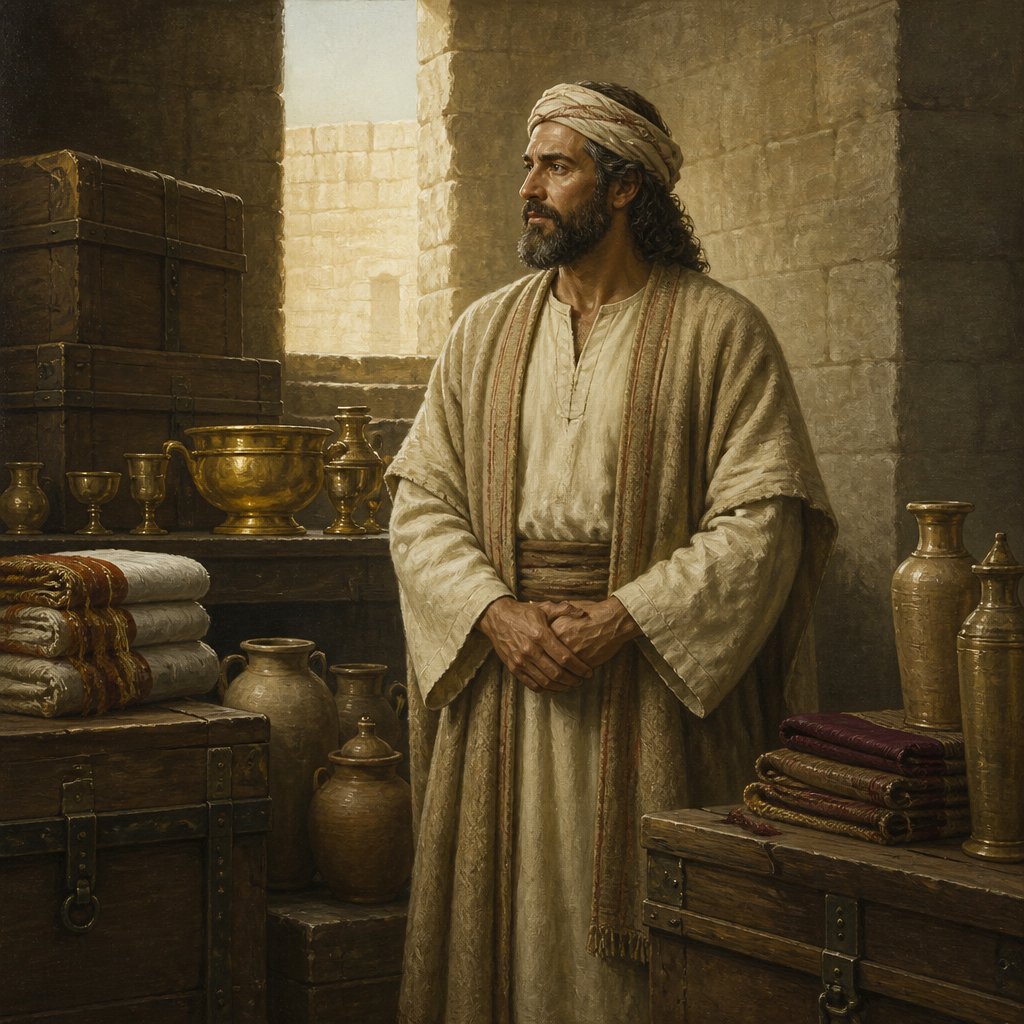
As we delve into 1 Chronicles 26:24, which states, "And Shebuel the son of Gershom, the son of Moses, was ruler of the treasures," we find ourselves confronted with a verse that might initially appear to be a mere historical note. However, within this succinct statement lies a profound lesson about stewardship, legacy, and the importance of our roles in God’s kingdom.
To grasp the significance of Shebuel’s position, we must first understand the context in which he operated. He was not just any figure; he was the grandson of Moses—the man chosen by God to lead the Israelites out of Egypt, who conversed with God face-to-face, and who delivered the Ten Commandments. This heritage was not lost on Shebuel. The weight of responsibility that rested on his shoulders was immense, as he was charged with the treasures of the temple, an essential role in the service and worship of God.
Being a ruler of treasures signifies not only authority over physical resources but also the necessity for integrity and diligence. Shebuel's role necessitates that he exercised wisdom in managing these resources, ensuring they were used for their intended purposes, which included the support of the Levites, the worship of God, and the maintenance of the temple. His forebear, Moses, taught him about sacredness, obedience, and the importance of placing God above all. In a world teeming with distractions and temptations, how deeply does this resonate with us?
As Christians today, we too are bestowed with treasures—not merely in the form of financial resources but also in talents, abilities, relationships, and time. How we manage these treasures is crucial. The calling to be stewards of what we have is echoed throughout Scripture, urging us to remember that everything we possess is a gift from God, meant to be used for His glory rather than our selfish ambitions.
In the New Testament, Jesus reiterates this principle in Luke 16:10, stating, "He that is faithful in that which is least is faithful also in much." Herein lies a challenge for each of us: are we being faithful stewards of every blessing we have received? Whether it is our finances, time, or skills, God desires that we manage these gifts with faithfulness and gratitude. Shebuel’s role as ruler of the treasures encourages us to ponder how we handle the assets entrusted to us.
Moreover, examining Shebuel’s lineage brings forth the essence of legacy. He was living in the shadows of a giant—Moses—and rather than reject this identity, he embraced it. What a unique opportunity we have to create a legacy grounded in faith, just as Shebuel was influenced by his father Gershom and grandfather Moses. Each generation in our families can either advance God’s kingdom or pull away from Him. Are we equipping our children and those around us with a foundation of faith? Are we inspiring them to view their lives and possessions through a lens of purpose?
As we reflect on Shebuel’s life, we must remember that it’s not merely about what we accumulate but how we use what God has placed in our hands. Our stewardship and legacy will extend beyond our earthly lives. Like Shebuel, we are called to build upon the foundation laid by others and to leave an inheritance of faith for generations to come. In Acts 20:35, Paul reminds us, "It is more blessed to give than to receive."
In conclusion, let Shebuel’s role as ruler of the treasures encourage us to evaluate our stewardship, acknowledge our heritage in faith, and commit to living a life that leaves a lasting legacy. With every resource, let us ask ourselves: Are we honoring God in our choices? Are we being faithful stewards of the treasures entrusted to us? May we seek His guidance in every endeavor, believing that each act of stewardship paves the way for a brighter, faith-rooted future.
Want to reflect more on 1 Chronicles 26:24?
Continue your spiritual journey with Bible Chat — an AI-powered tool for exploring God's Word through conversation. Ask questions, discover connections, and deepen your understanding.
Get Our Apps


1 Chronicles 26:24 Artwork

1 Chronicles 26:24 - "And Shebuel the son of Gershom, the son of Moses, was ruler of the treasures."
"And Shebuel the son of Gershom, the son of Moses, was ruler of the treasures." - 1 Chronicles 26:24

1 Chronicles 24:26 - "The sons of Merari were Mahli and Mushi: the sons of Jaaziah; Beno."
"The sons of Merari were Mahli and Mushi: the sons of Jaaziah; Beno." - 1 Chronicles 24:26

2 Chronicles 24:26 - "And these are they that conspired against him; Zabad the son of Shimeath an Ammonitess, and Jehozabad the son of Shimrith a Moabitess."

1 Chronicles 1:26 - "Serug, Nahor, Terah,"

1 Chronicles 24:24 - "Of the sons of Uzziel; Michah: of the sons of Michah; Shamir."

1 Chronicles 1:24 - "¶ Shem, Arphaxad, Shelah,"

1 Chronicles 8:26 - "And Shamsherai, and Shehariah, and Athaliah,"

1 Chronicles 8:24 - "And Hananiah, and Elam, and Antothijah,"

1 Chronicles 26:23 - "Of the Amramites, and the Izharites, the Hebronites, and the Uzzielites:"

1 Chronicles 24:15 - "The seventeenth to Hezir, the eighteenth to Aphses,"

1 Chronicles 24:16 - "The nineteenth to Pethahiah, the twentieth to Jehezekel,"

1 Chronicles 24:11 - "The ninth to Jeshua, the tenth to Shecaniah,"

1 Chronicles 26:1 - "Concerning the divisions of the porters: Of the Korhites was Meshelemiah the son of Kore, of the sons of Asaph."

"Serug, Nahor, Terah," - 1 Chronicles 1:26

1 Chronicles 24:14 - "The fifteenth to Bilgah, the sixteenth to Immer,"

1 Chronicles 24:9 - "The fifth to Malchijah, the sixth to Mijamin,"

1 Chronicles 24:13 - "The thirteenth to Huppah, the fourteenth to Jeshebeab,"

1 Chronicles 24:10 - "The seventh to Hakkoz, the eighth to Abijah,"

1 Chronicles 24:8 - "The third to Harim, the fourth to Seorim,"

1 Chronicles 24:12 - "The eleventh to Eliashib, the twelfth to Jakim,"

1 Chronicles 12:26 - "Of the children of Levi four thousand and six hundred."

1 Chronicles 26:18 - "At Parbar westward, four at the causeway, and two at Parbar."

1 Chronicles 26:3 - "Elam the fifth, Jehohanan the sixth, Elioenai the seventh."

1 Chronicles 24:22 - "Of the Izharites; Shelomoth: of the sons of Shelomoth; Jahath."

1 Chronicles 24:29 - "Concerning Kish: the son of Kish was Jerahmeel."

1 Chronicles 26:9 - "And Meshelemiah had sons and brethren, strong men, eighteen."

1 Chronicles 16:26 - "For all the gods of the people are idols: but the LORD made the heavens."

"¶ Shem, Arphaxad, Shelah," - 1 Chronicles 1:24