Guardians of the Gates: A Lesson on Stewardship from Parbar
"At Parbar westward, four at the causeway, and two at Parbar." - 1 Chronicles 26:18
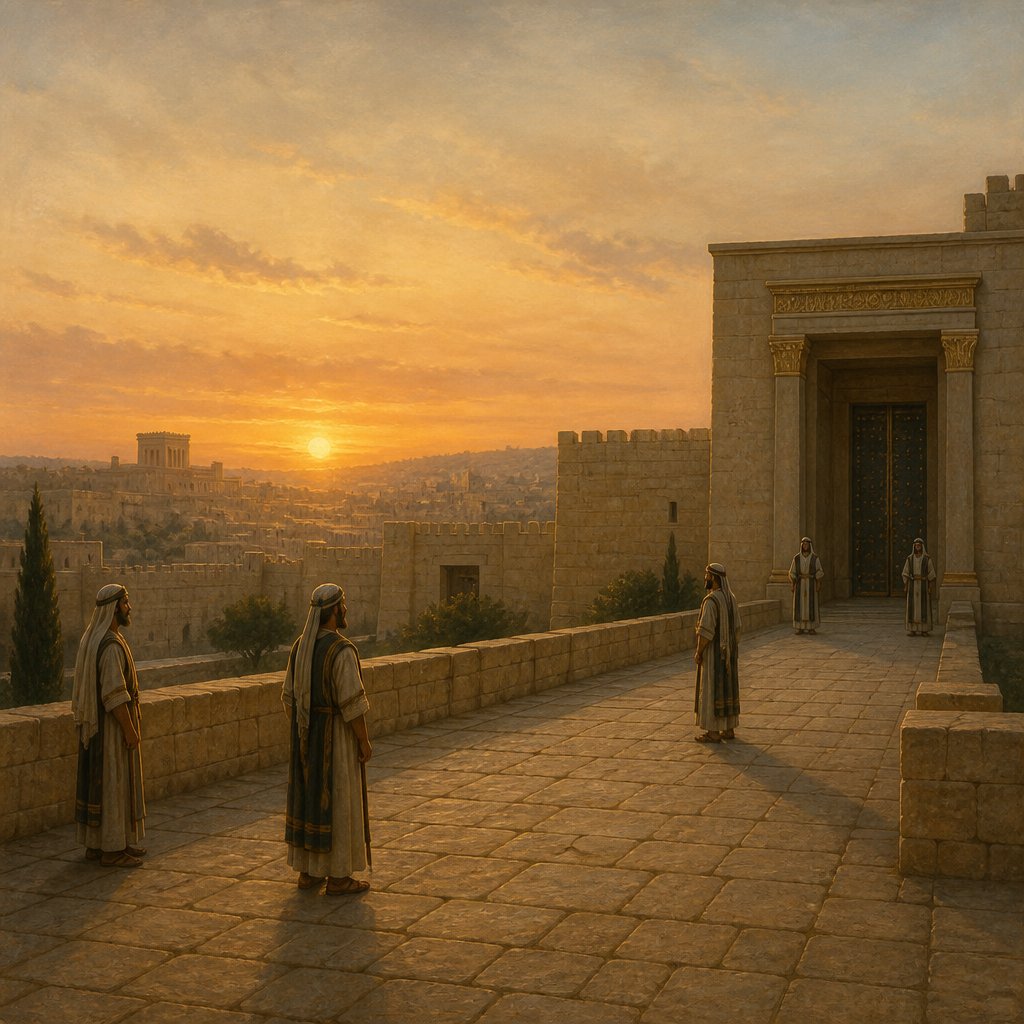
In an age where boundaries are often blurred, it’s essential to reflect on the Biblical significance of guardianship and responsibility, as exemplified in 1 Chronicles 26:18: "At Parbar westward, four at the causeway, and two at Parbar." This seemingly abstract verse holds profound implications for understanding stewardship, vigilance, and the sacred duty we, as believers, have in protecting what God has entrusted to us.
The context of this scripture reveals the organization of the temple gatekeepers under King David’s reign. The gatekeepers were appointed with wisdom and intention, serving as the first line of defense for the sanctity and security of God’s dwelling. Their roles were not merely functional; they symbolized a spiritual assignment bestowed upon those who recognized the importance of their task. The specific mention of Parbar and the designation of numbers signal that the place of worship—and indeed worship itself—is something to be safeguarded with diligence and devotion.
The Parbar itself is referenced as a significant location, a place of separation between the sacred and the secular. Gatekeepers were assigned not only to manage access but to discern who could enter and commune in the presence of God. This responsibility indicates the profound respect and honor required when approaching anything connected to the divine. It is easy to dismiss such details in our modern interpretation of worship, yet they evoke a powerful reminder of the reverence due to God and the stewardship we carry, not just over physical places, but in our lives and communities.
As we explore the role of the gatekeepers, we might reflect on what it means to be a steward in today’s context. In biblical times, these guardians were critical in preventing anything that could defile the worship experience. In a sense, we too are gatekeepers in our communities, families, and even within our hearts. We must consider what we allow to enter our spaces—be it physical, mental, or spiritual. Each of us has the ability to monitor what influences our environment. Who are we letting influence our thoughts? What ideologies are we accepting that challenge our faith? We bear responsibility for ensuring that we remain faithful to God’s word, guarding against anything that could compromise our integrity or cause harm to others.
Moreover, the specifics—"four at the causeway, and two at Parbar"—provide a beautiful picture of unity and teamwork. It reminds us that even in our assignments, whether in ministry or within our daily lives, we are not alone. The causeway suggests a place of convergence—a pathway that connects different aspects of our lives. It highlights the importance of collaboration and support amongst believers as we guard the ways in which we live our faith fully in public and in private. The two stationed at Parbar may symbolize the necessity for contemplation and prayer, essential for any effective stewardship. We must seek God’s guidance, engage in continual prayer, and align our stewardship efforts with His purpose.
Finally, as we meditate on this verse, let’s remind ourselves that true guarding comes from a heart that prioritizes intimacy with God. Our vigilance is rooted not in fear, but in love—a love that compels us to watch over our homes, our hearts, and our communities. Just as the gatekeepers stood stationed at their posts, so too are we called to be vigilant ministers of reconciliation, peace, and justice.
May we look to our lives with the same dedication that the gatekeepers of Parbar exhibited. Let’s commit ourselves to being guardians of what is holy, to those entrusted to our care, and be mindful stewards of the incredible grace offered to us through Christ. Remember, dedication in service will not go unnoticed by our Heavenly Father, who honors and rewards the faithfulness of those who stand watch.
Want to reflect more on 1 Chronicles 26:18?
Continue your spiritual journey with Bible Chat — an AI-powered tool for exploring God's Word through conversation. Ask questions, discover connections, and deepen your understanding.
Get Our Apps


1 Chronicles 26:18 Artwork

1 Chronicles 26:18 - "At Parbar westward, four at the causeway, and two at Parbar."
"At Parbar westward, four at the causeway, and two at Parbar." - 1 Chronicles 26:18

1 Chronicles 1:26 - "Serug, Nahor, Terah,"

1 Chronicles 8:26 - "And Shamsherai, and Shehariah, and Athaliah,"

1 Chronicles 26:23 - "Of the Amramites, and the Izharites, the Hebronites, and the Uzzielites:"

1 Chronicles 26:1 - "Concerning the divisions of the porters: Of the Korhites was Meshelemiah the son of Kore, of the sons of Asaph."

2 Chronicles 18:26 - "And say, Thus saith the king, Put this fellow in the prison, and feed him with bread of affliction and with water of affliction, until I return in peace."

"Serug, Nahor, Terah," - 1 Chronicles 1:26

1 Chronicles 12:26 - "Of the children of Levi four thousand and six hundred."

1 Chronicles 26:3 - "Elam the fifth, Jehohanan the sixth, Elioenai the seventh."

1 Chronicles 1:18 - "And Arphaxad begat Shelah, and Shelah begat Eber."

1 Chronicles 26:24 - "And Shebuel the son of Gershom, the son of Moses, was ruler of the treasures."

1 Chronicles 26:9 - "And Meshelemiah had sons and brethren, strong men, eighteen."

1 Chronicles 16:26 - "For all the gods of the people are idols: but the LORD made the heavens."

1 Chronicles 26:15 - "To Obed-edom southward; and to his sons the house of Asuppim."

1 Chronicles 29:26 - "¶ Thus David the son of Jesse reigned over all Israel."

1 Chronicles 23:18 - "Of the sons of Izhar; Shelomith the chief."

1 Chronicles 26:19 - "These are the divisions of the porters among the sons of Kore, and among the sons of Merari."

1 Chronicles 24:26 - "The sons of Merari were Mahli and Mushi: the sons of Jaaziah; Beno."

1 Chronicles 7:26 - "Laadan his son, Ammihud his son, Elishama his son,"

1 Chronicles 25:26 - "The nineteenth to Mallothi, he, his sons, and his brethren, were twelve:"

1 Chronicles 26:27 - "Out of the spoils won in battles did they dedicate to maintain the house of the LORD."

1 Chronicles 26:5 - "Ammiel the sixth, Issachar the seventh, Peulthai the eighth: for God blessed him."

1 Chronicles 6:26 - "As for Elkanah: the sons of Elkanah; Zophai his son, and Nahath his son,"

"And Shamsherai, and Shehariah, and Athaliah," - 1 Chronicles 8:26

1 Chronicles 27:26 - "And over them that did the work of the field for tillage of the ground was Ezri the son of Chelub:"

1 Chronicles 8:18 - "Ishmerai also, and Jezliah, and Jobab, the sons of Elpaal;"

1 Chronicles 24:18 - "The three and twentieth to Delaiah, the four and twentieth to Maaziah."

1 Chronicles 26:13 - "¶ And they cast lots, as well the small as the great, according to the house of their fathers, for every gate."

1 Chronicles 26:20 - "¶ And of the Levites, Ahijah was over the treasures of the house of God, and over the treasures of the dedicated things."