The Value of Service in God's House
"The two and twentieth to Giddalti, he, his sons, and his brethren, were twelve:" - 1 Chronicles 25:29
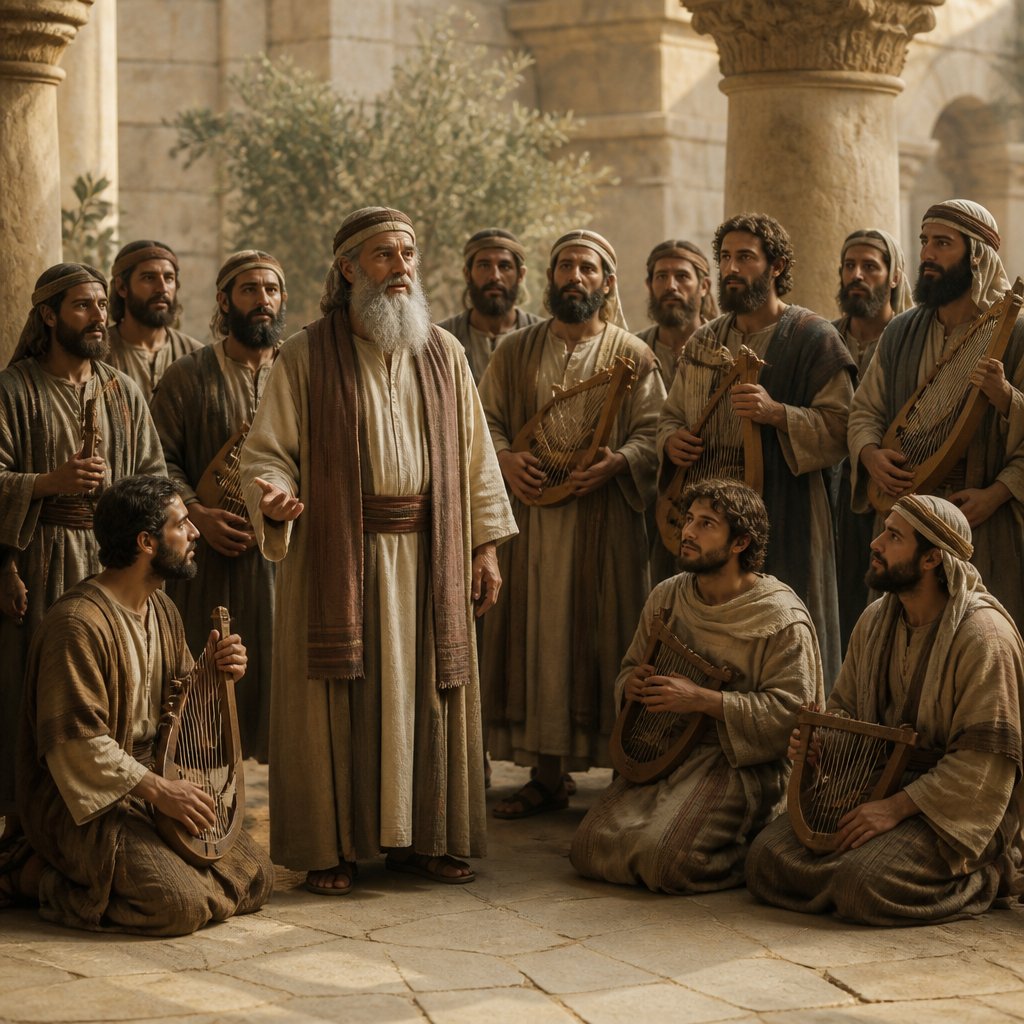
1 Chronicles 25:29 tells us, "The two and twentieth to Giddalti, he, his sons, and his brethren, were twelve." At first glance, these details may seem mundane, a simple record of duties assigned to temple musicians. However, within these verses lies a rich tapestry of God's divine order, the importance of service, and the commitment to community worship that defines a life devoted to Him.
The context of 1 Chronicles is particularly important as it chronicles King David's preparations for temple worship. The details about divisions of the priests and Levites, like the one mentioned in this verse regarding Giddalti and his family, emphasize the significance God placed on organized worship and the importance of each individual's role within the community. This structure mirrors God's own nature: orderly, purposeful, and intentional.
The account in Chronicles reveals that King David was not merely focused on the structure of worship but was driven by a heartfelt desire to restore the people's connection with God. Each placement in service, each assigned role, was a testament to the importance of offering skilled praise. In civilizations where many things are left to happenstance, the careful arrangement of musicians shows us a deeper truth: God values order and excellence in our worship.
Giddalti, as mentioned in this verse, was given a specific role within the broader context of worship, representing a lineage that served God alongside his sons, showcasing the idea of generational service. As parents and leaders in faith, we have immense influence on the next generation's commitment to Christ. Giddalti’s family involvement illustrates that worship and service to God are not isolated acts but communal, multi-generational undertakings. How are we instilling worship values in our families today? Is our service exemplary enough to draw others—especially our children—closer to God?
Moreover, the number 'twelve' signifies completeness and God's covenant with His people. The presence of Giddalti and his twelve family members illustrates the fullness of service available to God—each individual and their unique gifts contributing to the whole picture of worship. In the Body of Christ, each member plays a vital role (1 Corinthians 12:12-27). The significance of service in the house of God transcends the physical act and moves into the spiritual realm, where we align our gifts with His purpose. Every note played or song sung during worship, every prayer uttered, contributes to the overall atmosphere of worship and honors God.
Service in the house of God requires commitment, both from individuals and collectively as a body. It involves sacrifice, practice, and dedication toward a higher calling. Just as Giddalti and his family dedicated themselves to the service of music, we too are called to dedicate ourselves to the pursuit of excellence in our own roles within the church, whether it be through music, teaching, hospitality, or any other form of service.
Finally, let us reflect on the deeper meaning of Giddalti's assignment. His choice to serve, alongside his sons and brethren, signals to us the importance of unity in worship—each person bringing their unique voice to the chorus that celebrates the God they serve. This verse invites us to consider not only our individual call to service but also our roles within the community of believers. Are we encouraging those around us to join us in this work? Are we fostering a spirit of worship that extends beyond ourselves to include others in our praises?
As we meditate on 1 Chronicles 25:29 today, may we be inspired by Giddalti's legacy, embracing both our individual and communal call to service, and dedicating ourselves wholeheartedly to glorifying God amidst our fellow believers. The act of service, then, becomes not merely a duty but a delightful participation in the astounding work of God.
In all things, let us strive for excellence, unity, and a heart intent on worship, understanding that even in the small details, God is building something magnificent through our collective contributions.
Want to reflect more on 1 Chronicles 25:29?
Continue your spiritual journey with Bible Chat — an AI-powered tool for exploring God's Word through conversation. Ask questions, discover connections, and deepen your understanding.
Get Our Apps


1 Chronicles 25:29 Artwork

1 Chronicles 25:29 - "The two and twentieth to Giddalti, he, his sons, and his brethren, were twelve:"

"The two and twentieth to Giddalti, he, his sons, and his brethren, were twelve:" - 1 Chronicles 25:29

1 Chronicles 29:25 - "And the LORD magnified Solomon exceedingly in the sight of all Israel, and bestowed upon him such royal majesty as had not been on any king before him in Israel."

1 Chronicles 1:25 - "Eber, Peleg, Reu,"

1 Chronicles 4:29 - "And at Bilhah, and at Ezem, and at Tolad,"

1 Chronicles 1:29 - "¶ These are their generations: The firstborn of Ishmael, Nebaioth; then Kedar, and Adbeel, and Mibsam,"

1 Chronicles 11:29 - "Sibbecai the Hushathite, Ilai the Ahohite,"

1 Chronicles 25:25 - "The eighteenth to Hanani, he, his sons, and his brethren, were twelve:"

1 Chronicles 24:29 - "Concerning Kish: the son of Kish was Jerahmeel."

2 Chronicles 29:25 - "And he set the Levites in the house of the LORD with cymbals, with psalteries, and with harps, according to the commandment of David, and of Gad the king's seer, and Nathan the prophet: for so was the commandment of the LORD by his prophets."

1 Chronicles 8:25 - "And Iphedeiah, and Penuel, the sons of Shashak;"

1 Chronicles 6:25 - "And the sons of Elkanah; Amasai, and Ahimoth."

1 Chronicles 29:29 - "Now the acts of David the king, first and last, behold, they are written in the book of Samuel the seer, and in the book of Nathan the prophet, and in the book of Gad the seer,"

"Eber, Peleg, Reu," - 1 Chronicles 1:25

1 Chronicles 29:26 - "¶ Thus David the son of Jesse reigned over all Israel."

1 Chronicles 8:29 - "And at Gibeon dwelt the father of Gibeon; whose wife's name was Maachah:"

1 Chronicles 24:25 - "The brother of Michah was Isshiah: of the sons of Isshiah; Zechariah."

1 Chronicles 2:29 - "And the name of the wife of Abishur was Abihail, and she bare him Ahban, and Molid."

"And at Bilhah, and at Ezem, and at Tolad," - 1 Chronicles 4:29

1 Chronicles 16:29 – "Ascribe to the Lord the glory due his name; bring an offering and come before him."

1 Chronicles 29:13 - "Now therefore, our God, we thank thee, and praise thy glorious name."

1 Chronicles 26:29 - "¶ Of the Izharites, Chenaniah and his sons were for the outward business over Israel, for officers and judges."

"Sibbecai the Hushathite, Ilai the Ahohite," - 1 Chronicles 11:29

1 Chronicles 25:22 - "The fifteenth to Jeremoth, he, his sons, and his brethren, were twelve:"

1 Chronicles 25:23 - "The sixteenth to Hananiah, he, his sons, and his brethren, were twelve:"

1 Chronicles 4:25 - "Shallum his son, Mibsam his son, Mishma his son."

1 Chronicles 25:12 - "The fifth to Nethaniah, he, his sons, and his brethren, were twelve:"

1 Chronicles 25:17 - "The tenth to Shimei, he, his sons, and his brethren, were twelve:"

1 Chronicles 25:21 - "The fourteenth to Mattithiah, he, his sons, and his brethren, were twelve:"

1 Chronicles 25:26 - "The nineteenth to Mallothi, he, his sons, and his brethren, were twelve:"