The Art of Offering: A Commitment to Worship
"And to offer all burnt sacrifices unto the LORD in the sabbaths, in the new moons, and on the set feasts, by number, according to the order commanded unto them, continually before the LORD:" - 1 Chronicles 23:31
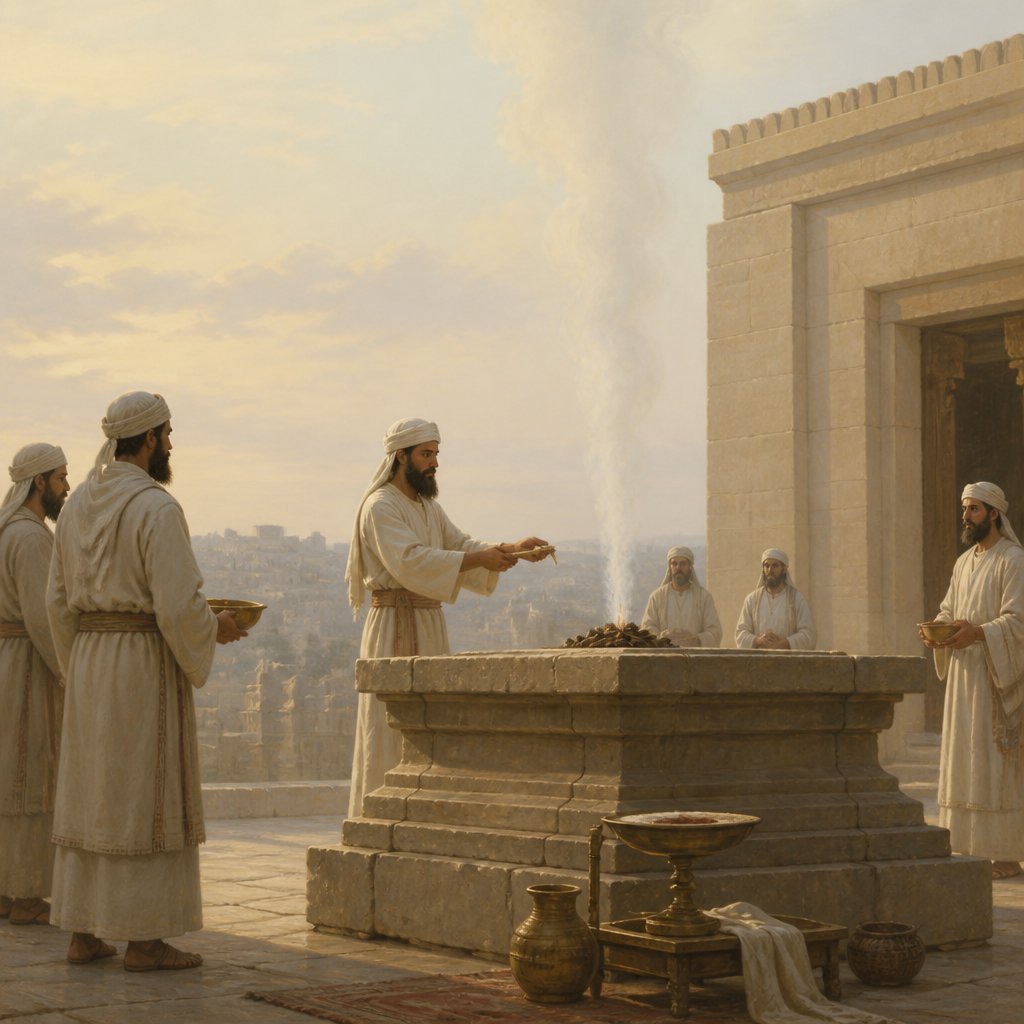
In 1 Chronicles 23:31, we encounter a significant instruction regarding the worship practices of the Israelites: "And to offer all burnt sacrifices unto the LORD in the sabbaths, in the new moons, and on the set feasts, by number, according to the order commanded unto them, continually before the LORD." This verse highlights profound aspects of sacrifice, commitment, and the importance of a structured approach to worship that resonates with believers today.
### Contextual Understanding
To fully grasp the essence of this verse, we must appreciate its historical and theological context. The Israelites had just been relieved of the arduous task of wandering in the wilderness and were now settling in the promised land. King David’s dedication to establishing a centralized place of worship in Jerusalem set the stage for a worship system that mirrored the order and holiness of their relationship with God. David's son, Solomon, would build the Temple, where these sacrifices would take shape profoundly.
This verse mentions "burnt sacrifices," which represents total surrender and devotion to God. It implies that everything offered is consumed by fire, symbolizing that nothing is held back from the Lord. Each sacrifice given was meant to demonstrate submission and acknowledgment of God’s sovereignty.
### The Importance of Time
The act of offering burnt sacrifices at specific times—sabbaths, new moons, and set feasts—underscores the value of timing in the worship of God. Each of these occasions marks significant moments in the Jewish calendar, drawing attention to both the rhythm established by God and the importance of acknowledging His sovereignty regularly.
1. **Sabbaths**: The Sabbath is a day of rest—a time set apart for reflection on God's creation and goodness. By offering sacrifices on this day, the Israelite community expressed their faithfulness and the acknowledgment of God's provision throughout the week. Similarly, today, the observance of the Sabbath helps us pause and recalibrate our lives, reminding us to reconnect with God amidst our busy schedules.
2. **New Moons**: The new moon was a time for new beginnings, a fresh start that was marked by joyful celebration and offerings to the Lord. For believers, this analogy translates to understanding that in Christ, every day is an opportunity for a new beginning. As 2 Corinthians 5:17 states, "Therefore if any man be in Christ, he is a new creature: old things are passed away; behold, all things are become new."
3. **Set Feasts**: These feasts—which included Passover and Pentecost—were deeply ingrained in the life of the people. They offered reminders of God's deliverance, provision, and promise. It teaches us that continual celebration and remembrance of God’s acts of grace ought to be a lifestyle choice for us as well.
### The Call for Consistency
The latter part of the verse emphasizes doing so "continually before the LORD." This reiteration of the necessity for consistency in worship is vital. Offering sacrifices was not a mere routine or a checkbox task; it was a lifestyle. In the same way, our relationship with God cannot be sporadic. It must be rooted in steadfastness and intentional. Regular prayer, worship, and acts of service should characterize our daily lives as we seek to honor God in all we do.
### Conclusion
Hence, the essence of 1 Chronicles 23:31 is a call to worship that is intentional, structured, and continuous. It invites us to present our offerings in a way that reflects total surrender to the Lord. These principles remind us that worship is more than music and preaching; it involves every aspect of our lives, revealing our commitment and fidelity to God.
In your journey of faith, consider dedicating specific times for worship, reflection, and sacrifice, echoing the Hebrew community’s commitment to their God. Let it not just be a duty but a joyful participation in the divine exchange—our lives laid down for His glory!
Want to reflect more on 1 Chronicles 23:31?
Continue your spiritual journey with Bible Chat — an AI-powered tool for exploring God's Word through conversation. Ask questions, discover connections, and deepen your understanding.
Get Our Apps


1 Chronicles 23:31 Artwork

1 Chronicles 23:31 - "And to offer all burnt sacrifices unto the LORD in the sabbaths, in the new moons, and on the set feasts, by number, according to the order commanded unto them, continually before the LORD:"
"And to offer all burnt sacrifices unto the LORD in the sabbaths, in the new moons, and on the set feasts, by number, according to the order commanded unto them, continually before the LORD:" - 1 Chronicles 23:31

1 Chronicles 1:31 - "Jetur, Naphish, and Kedemah. These are the sons of Ishmael."
2 Chronicles 31:1

2 Chronicles 31:1

1 Chronicles 8:31 - "And Gedor, and Ahio, and Zacher."

1 Chronicles 23:23 - "The sons of Mushi; Mahli, and Eder, and Jeremoth, three."

1 Chronicles 7:31 - "And the sons of Beriah; Heber, and Malchiel, who is the father of Birzavith."

1 Chronicles 8:23 - "And Abdon, and Zichri, and Hanan,"

1 Chronicles 1:23 - "And Ophir, and Havilah, and Jobab. All these were the sons of Joktan."

1 Chronicles 23:7 - "¶ Of the Gershonites were, Laadan, and Shimei."

1 Chronicles 26:23 - "Of the Amramites, and the Izharites, the Hebronites, and the Uzzielites:"

"And Gedor, and Ahio, and Zacher." - 1 Chronicles 8:31

1 Chronicles 2:31 - "And the sons of Appaim; Ishi. And the sons of Ishi; Sheshan. And the children of Sheshan; Ahlai."

1 Chronicles 11:31 - "Ithai the son of Ribai of Gibeah, that pertained to the children of Benjamin, Benaiah the Pirathonite,"

"Jetur, Naphish, and Kedemah. These are the sons of Ishmael." - 1 Chronicles 1:31

1 Chronicles 23:18 - "Of the sons of Izhar; Shelomith the chief."

1 Chronicles 23:16 - "Of the sons of Gershom, Shebuel was the chief."

1 Chronicles 23:15 - "The sons of Moses were, Gershom, and Eliezer."

1 Chronicles 15:23 - "And Berechiah and Elkanah were doorkeepers for the ark."

1 Chronicles 25:31 - "The four and twentieth to Romamti-ezer, he, his sons, and his brethren, were twelve."

1 Chronicles 27:31 - "And over the flocks was Jaziz the Hagerite. All these were the rulers of the substance which was king David's."

1 Chronicles 23:20 - "Of the sons of Uzziel; Michah the first, and Jesiah the second."

1 Chronicles 3:23 - "And the sons of Neariah; Elioenai, and Hezekiah, and Azrikam, three."

1 Kings 15:31 - "¶ Now the rest of the acts of Nadab, and all that he did, are they not written in the book of the chronicles of the kings of Israel?"

1 Chronicles 4:31 - "And at Beth-marcaboth, and Hazar-susim, and at Beth-birei, and at Shaaraim. These were their cities unto the reign of David."

1 Chronicles 6:31 - "And these are they whom David set over the service of song in the house of the LORD, after that the ark had rest."

1 Chronicles 23:8 - "The sons of Laadan; the chief was Jehiel, and Zetham, and Joel, three."

1 Chronicles 23:12 - "¶ The sons of Kohath; Amram, Izhar, Hebron, and Uzziel, four."

1 Chronicles 12:31 - "And of the half tribe of Manasseh eighteen thousand, which were expressed by name, to come and make David king."