The Continuity of God's Sovereignty: Reflections on Leadership and Legacy in 1 Chronicles 1:47
"And when Hadad was dead, Samlah of Masrekah reigned in his stead." - 1 Chronicles 1:47
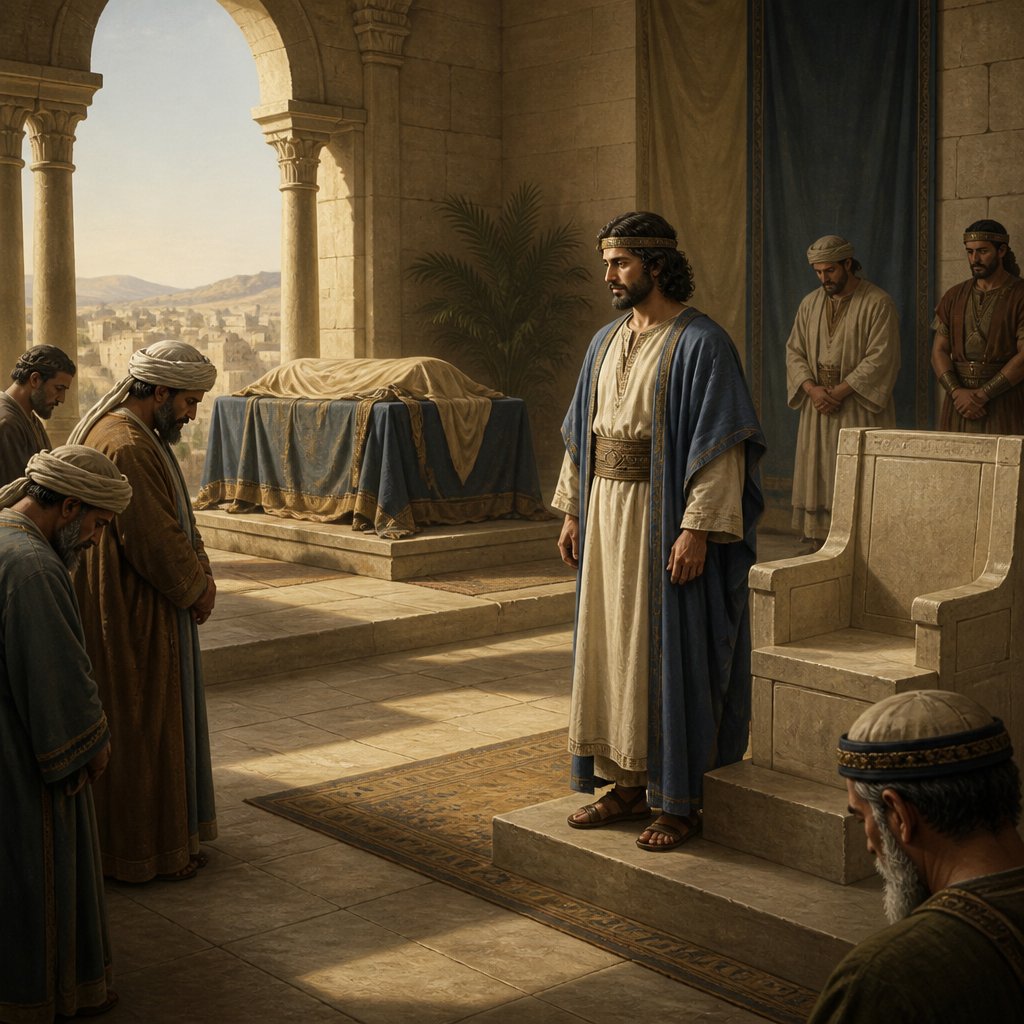
As we delve into the seemingly simple verse from 1 Chronicles 1:47, "And when Hadad was dead, Samlah of Masrekah reigned in his stead," we are ushered into a world that resonates with profound biblical truths about leadership, legacy, and the overarching sovereignty of God. At first glance, this verse may seem like a mere documentation of succession in leadership among the Edomites, but upon deeper reflection, it unveils rich lessons pertinent to our spiritual journey today.
Leadership is a recurring theme in the Scripture, and it reflects our relationship with God, society, and ourselves. Hadad’s death and the subsequent rise of Samlah mark a significant transition for the people of Edom. Hadad, a formidable leader, had his reign characterized by challenges and achievements. His death introduces a shift, reminding us that earthly leadership is transient; it ultimately yields to the will and plan of God. Just as Hadad came to power through divine providence, so too does Samlah ascend. This transition beckons us to acknowledge that no earthly king or ruler can compare to the sovereignty of the King of Kings.
In the context of our lives, we frequently encounter transitions, be it in our personal lives, careers, or ministries. Each change invites us to trust in God’s unfailing plan. Often, we may cling to what we know, fearing the unknown or new leadership, but scripture reminds us in multiple passages, including Proverbs 19:21, "There are many devices in a man's heart; nevertheless the counsel of the Lord, that shall stand." Like the Edomites, we are to remain faithful, recognizing that God’s sovereignty supersedes any individual’s reign and that His plans for us are for our good.
Let us also consider the effects of leaders on their followers. A leader’s character and decisions shape society's moral and spiritual landscape. Hadad’s death could represent a loss for the people – it could mean a potential return to idolatry or turmoil, which often follows ungodly leadership. In contrast, the mention of Samlah invokes the curiosity of his governance and the hopes for continued alignment with God’s purposes. For Christians, this challenges us to engage prayerfully with our leaders. Whether in the secular sphere or within the Church, we are to lift them in prayer, asking God to guide them in righteousness, so that the legacy they leave encourages growth and reverence towards God.
Legacy, thus, becomes a key theme in our meditation on this verse. Samlah inherits not only power but also the unspoken legacy of Hadad. The influence of leaders reverberates through generations, and it calls for an introspective look within ourselves. What kind of legacy are we building? Will our lives, marked by Christ’s teachings and love, inspire future generations? Matthew 5:16 proclaims, "Let your light so shine before men, that they may see your good works, and glorify your Father which is in heaven." In defining our legacy, we must ensure it aligns with glorifying God and fulfilling His purpose in our lives.
Finally, in our meditation, we are reminded that every reign—no matter how powerful—is temporary. The kingdom of this world will ultimately give way to God's eternal kingdom. The reign of Samlah, like all of history, is in God’s hands. This awareness brings hope, especially in our times of uncertainty and change. God is still on the throne, orchestrating the affairs of men for His glory and our ultimate good. Let us then embrace uncertainty with faith, remaining steadfast in our mission to embody Christ’s teachings in every aspect of our lives.
As we reflect on 1 Chronicles 1:47, let us pray for our leaders, assess our legacy, and, above all, submit ourselves to the providential rule of God, who reigns forever and ever.
Want to reflect more on 1 Chronicles 1:47?
Continue your spiritual journey with Bible Chat — an AI-powered tool for exploring God's Word through conversation. Ask questions, discover connections, and deepen your understanding.
Get Our Apps


1 Chronicles 1:47 Artwork

1 Chronicles 1:47 - "And when Hadad was dead, Samlah of Masrekah reigned in his stead."

"And when Hadad was dead, Samlah of Masrekah reigned in his stead." - 1 Chronicles 1:47

1 Chronicles 11:47 - "Eliel, and Obed, and Jasiel the Mesobaite."

1 Chronicles 2:47 - "And the sons of Jahdai; Regem, and Jotham, and Gesham, and Pelet, and Ephah, and Shaaph."

1 Chronicles 6:47 - "The son of Mahli, the son of Mushi, the son of Merari, the son of Levi."

"Eliel, and Obed, and Jasiel the Mesobaite." - 1 Chronicles 11:47

"The son of Mahli, the son of Mushi, the son of Merari, the son of Levi." - 1 Chronicles 6:47

"And the sons of Jahdai; Regem, and Jotham, and Gesham, and Pelet, and Ephah, and Shaaph." - 1 Chronicles 2:47

ezekiel 47:1-12

ezekiel 47:1-12

ezekiel 47:1-12

ezekiel 47:1-12

ezekiel 47:1-12

Ezekiel 47:1-12

ezekiel 47:1-12

ezekiel 47:1-12

ezekiel 47:1-12

ezekiel 47:1-12

ezekiel 47:1-12

ezekiel 47:1-12

ezekiel 47:1-12

ezekiel 47:1-12

1 Kings 22:47 - "There was then no king in Edom: a deputy was king."

Ezequiel 47, 1-9. 12

Ezekiel 47:1-9, 12

Luke 1:47 - "And my spirit hath rejoiced in God my Saviour."

Numbers 1:47 - "¶ But the Levites after the tribe of their fathers were not numbered among them."

1 Corinthians 15:47 - "The first man is of the earth, earthy: the second man is the Lord from heaven."

Jeremiah 47:1 - "The word of the LORD that came to Jeremiah the prophet against the Philistines, before that Pharaoh smote Gaza."

1 Chronicles 1:15