The Legacy of Leadership: Lessons from Jobab's Reign
"And when Bela was dead, Jobab the son of Zerah of Bozrah reigned in his stead." - 1 Chronicles 1:44
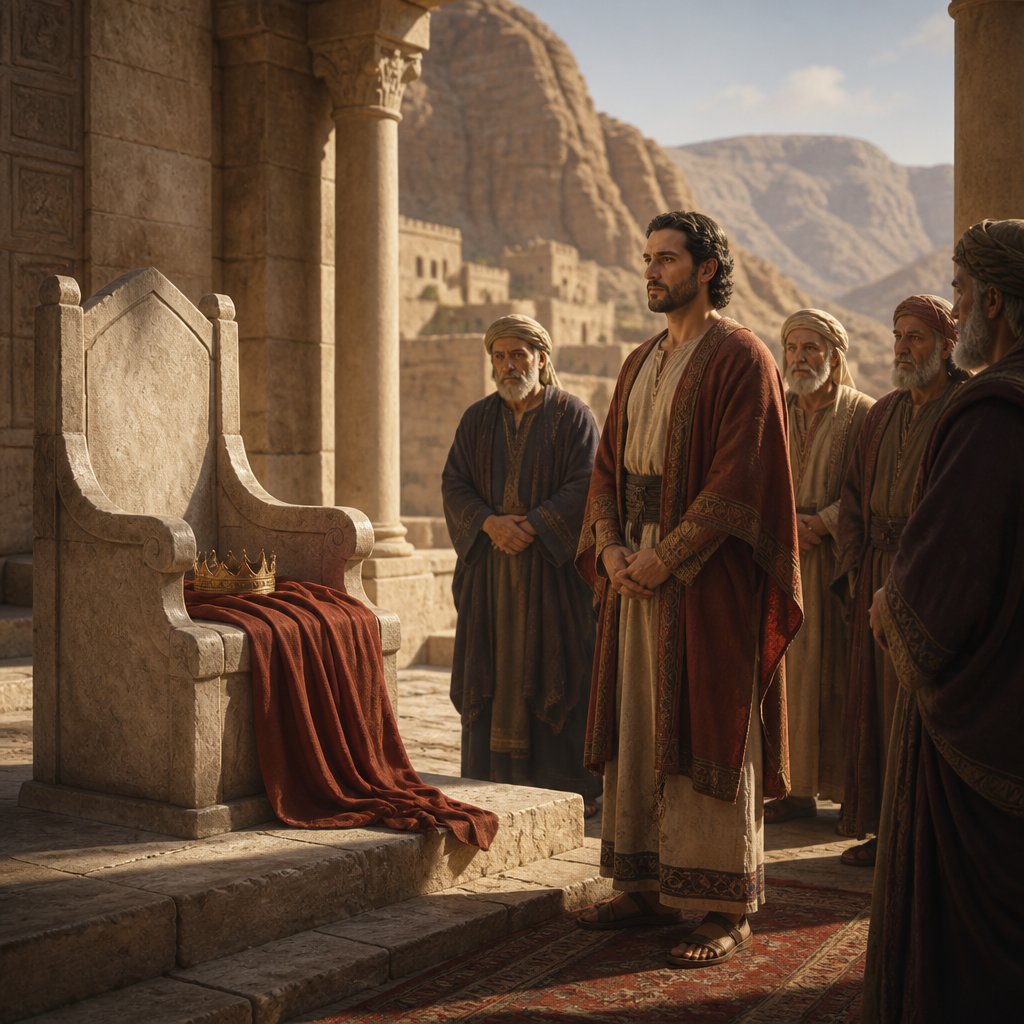
In the vast tapestry of the Bible, we often encounter verses that may seem insignificant at first glance, containing names and genealogies obscured by time. Yet, even a seemingly simple verse like 1 Chronicles 1:44, which states, "And when Bela was dead, Jobab the son of Zerah of Bozrah reigned in his stead," can convey profound lessons about leadership, the passage of time, and God's sovereign hand in history.
As we reflect on this verse, let us first consider the context of leadership as embodied by Jobab. The reign of Jobab comes after the death of Bela, indicating a transition of power. Transition is a powerful theme in life—be it in our personal lives, our communities, or even in broader national narratives. Jobab, the son of Zerah, stepping up to reign, serves as a reminder that leadership is often cyclical; with each ending, there is a new beginning.
The characteristics of a good leader are timeless. Jobab's heritage, being the son of Zerah and hailing from Bozrah, signifies that leadership should not only be about power or position but also about lineage, character, and the legacy one imparts. Bozrah, in this historical context, was a significant city known for its strength and strategic importance. Jobab’s leadership can be seen as an opportunity to build on the foundation laid by those who came before him. In our own lives, we are called to be stewards of the legacy we inherit and the environment we create for those who follow.
Moreover, Jobab’s reign beckons us to examine our approach towards leadership. In Proverbs 21:1, we read, "The king's heart is in the hand of the Lord, as the rivers of water: he turneth it whithersoever he will." This verse encapsulates the theological perspective that God is ultimately in control of leadership transitions and that human rulers are instruments of His divine purpose. Jobab’s ascent could symbolize God's providence and the unfolding of His plan for His people, emphasizing that every leader, however obscure, is part of His greater narrative.
There are also considerations about the nature of reign itself. Jobab, though mentioned briefly, follows in the line of kings and is part of a larger story of the people of Israel, who at the time were grappling with identity, faith, and nationhood. The leaders we choose (or allow to rise) will shape our future significantly. Who reigns in our hearts today? Is it Christ, guiding us through His wisdom, or is it our fears, doubts, and uncertainties? Each day we choose the governance of our actions and decisions, aiming to reflect the character of Christ in our conduct.
In practical terms, we can ask ourselves how we handle situations when the leadership transitions in our lives. What do we do when a mentor leaves our life, a job changes hands, or we step into new roles—be it at work, in our families, or our communities? Transitions may provoke discomfort or fear, but they also present ample opportunities for growth and renewal. We can take inspiration from Jobab’s ascension. Instead of clinging to the past, we can embrace the changes with hope and assurance that God is at work.
Let us also take a moment to remember the humility required of leaders. Jobab's story, distilled to this single verse, carries no grand accomplishments; his reign is not celebrated for conquests or remarkable deeds, but serves as a part of the lineage that leads to greater narratives in Scripture. Leadership is not about self-aggrandizement; it’s about serving others, moving with grace, and ensuring that the next generation is equipped to carry the torch forward.
As we conclude this reflection on 1 Chronicles 1:44, let us ponder the legacy we wish to leave and the leadership roles we hold in various areas of our lives. Are we leading with justice, wisdom, and integrity? Are we prepared for the transitions that come our way and committed to keeping Christ at the center of our reign? May we strive to emulate Jobab's commitment to leadership, facing our own transitions with faith and determination, all under God's divine guidance.
Want to reflect more on 1 Chronicles 1:44?
Continue your spiritual journey with Bible Chat — an AI-powered tool for exploring God's Word through conversation. Ask questions, discover connections, and deepen your understanding.
Get Our Apps


1 Chronicles 1:44 Artwork

1 Chronicles 1:44 - "And when Bela was dead, Jobab the son of Zerah of Bozrah reigned in his stead."
"And when Bela was dead, Jobab the son of Zerah of Bozrah reigned in his stead." - 1 Chronicles 1:44

1 Chronicles 11:44 - "Uzzia the Ashterathite, Shama and Jehiel the sons of Hothan the Aroerite,"

1 Chronicles 2:44 - "And Shema begat Raham, the father of Jorkoam: and Rekem begat Shammai."
1 Chronicles 6:44 - "And their brethren the sons of Merari stood on the left hand: Ethan the son of Kishi, the son of Abdi, the son of Malluch,"

1 Chronicles 9:44 - "And Azel had six sons, whose names are these, Azrikam, Bocheru, and Ishmael, and Sheariah, and Obadiah, and Hanan: these were the sons of Azel."
"Uzzia the Ashterathite, Shama and Jehiel the sons of Hothan the Aroerite," - 1 Chronicles 11:44
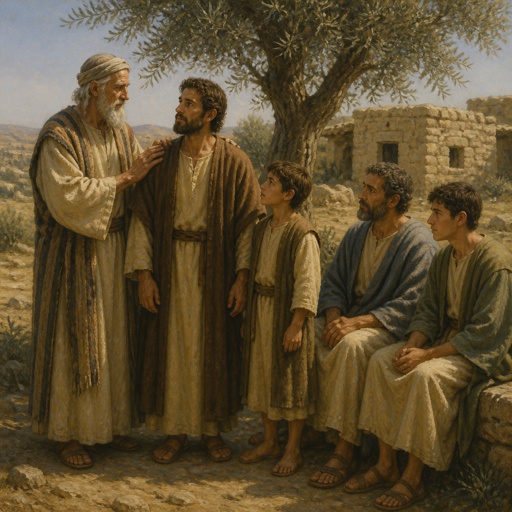
"And Shema begat Raham, the father of Jorkoam: and Rekem begat Shammai." - 1 Chronicles 2:44

Ezekiel 44 v 1

Ezekiel 44 v 1

Matthew 5:44

Matthew 5:44

acts 10:44-46
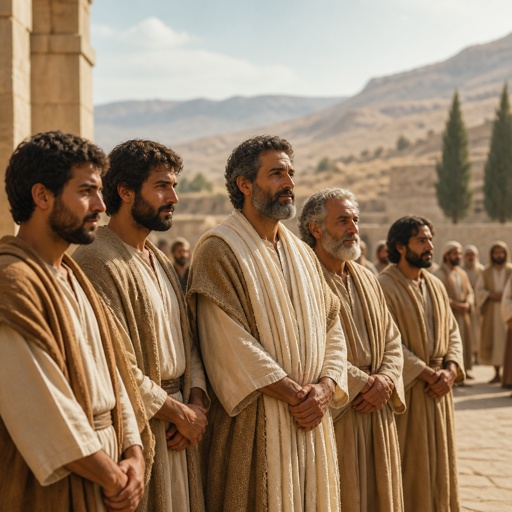
"And their brethren the sons of Merari stood on the left hand: Ethan the son of Kishi, the son of Abdi, the son of Malluch," - 1 Chronicles 6:44

John 1:44 - "Now Philip was of Bethsaida, the city of Andrew and Peter."

1 Kings 22:44 - "And Jehoshaphat made peace with the king of Israel."

1 Chronicles 1:15

1 Chronicles 1:15

1 Kings 7:44 - "And one sea, and twelve oxen under the sea;"
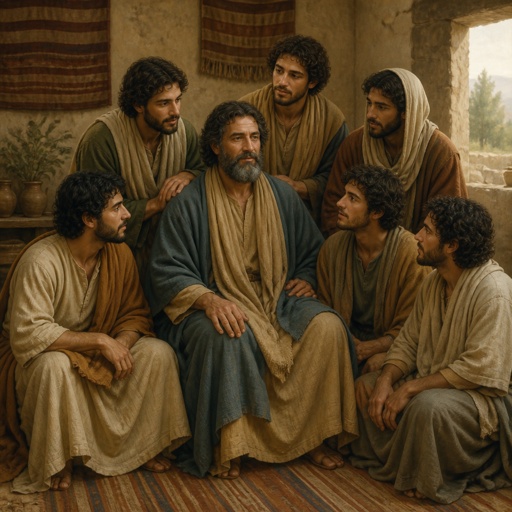
"And Azel had six sons, whose names are these, Azrikam, Bocheru, and Ishmael, and Sheariah, and Obadiah, and Hanan: these were the sons of Azel." - 1 Chronicles 9:44

1 Chronicles 1:1 - "Adam, Sheth, Enosh,"

1 Chronicles 1:24 - "¶ Shem, Arphaxad, Shelah,"

1 Chronicles 1:3 - "Henoch, Methuselah, Lamech,"

1 Chronicles 1:2 - "Kenan, Mahalaleel, Jered,"

1 Corinthians 15:44 - "It is sown a natural body; it is raised a spiritual body. There is a natural body, and there is a spiritual body."

1 Kings 1:44 - "And the king hath sent with him Zadok the priest, and Nathan the prophet, and Benaiah the son of Jehoiada, and the Cherethites, and the Pelethites, and they have caused him to ride upon the king's mule:"

1 Chronicles 1:25 - "Eber, Peleg, Reu,"

1 Chronicles 1:26 - "Serug, Nahor, Terah,"

"Adam, Sheth, Enosh," - 1 Chronicles 1:1

Isaiah 44:1 - "Yet now hear, O Jacob my servant; and Israel, whom I have chosen:"