A Heart to Pray: Embracing God’s Promises
"For thou, O my God, hast told thy servant that thou wilt build him an house: therefore thy servant hath found in his heart to pray before thee." - 1 Chronicles 17:25
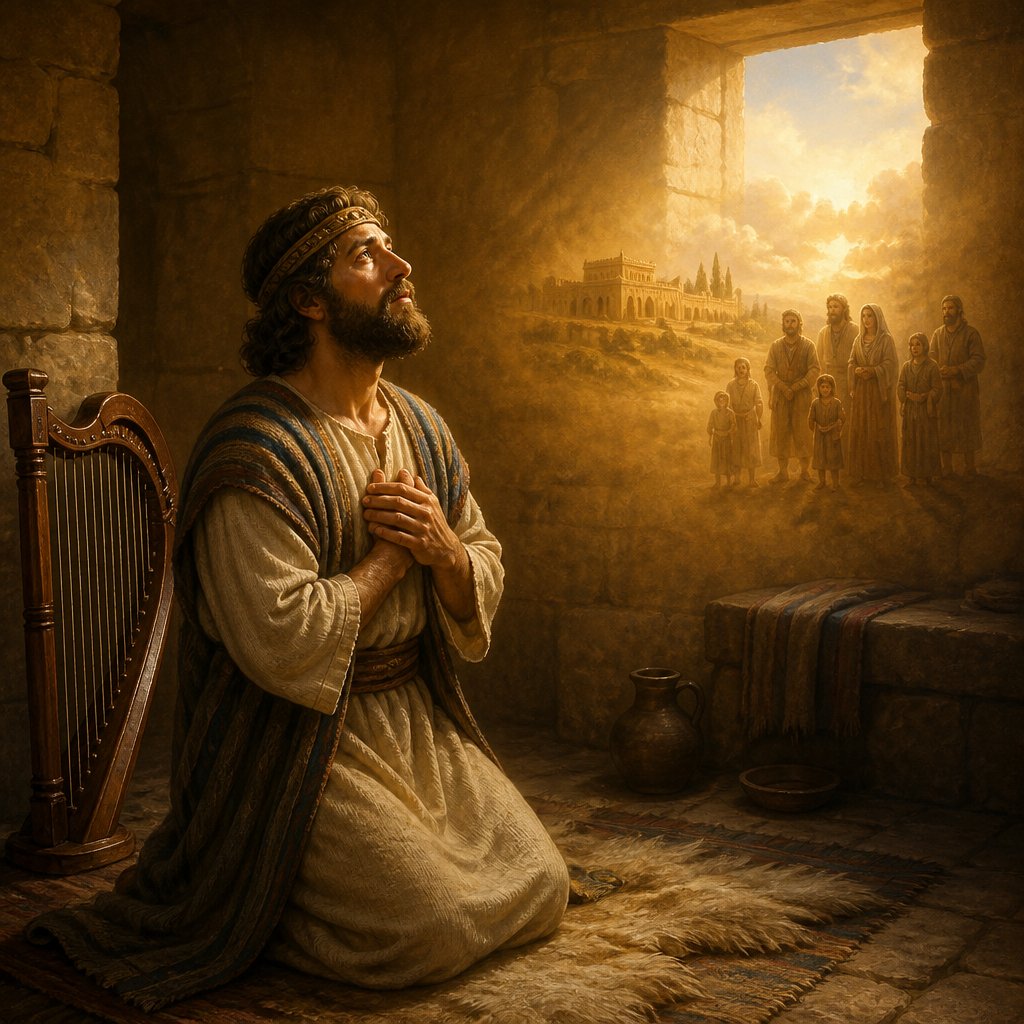
In 1 Chronicles 17:25, we read: "For thou, O my God, hast told thy servant that thou wilt build him an house: therefore thy servant hath found in his heart to pray before thee." This profound declaration from King David encapsulates not only a heartfelt response to God’s promise but also highlights the essence of prayer stemming from a deep-seated understanding of God’s intentions for our lives.
To grasp the full significance of this verse, we must consider the context. David, the servant of God, has been chosen to lead the nation of Israel, transitioning them from a nomadic lifestyle to a settled state, enabling the Ark of the Covenant to reside in a majestic tent he built. Yet, within David burned a desire to honor God further by building a permanent house, a temple. God, however, had other plans; He revealed to David that it would be his son Solomon who would construct this house. This message initially could have disheartened David, yet, instead of disappointment, it spurred him to a deeper worship through prayer.
David’s response is crucial; he recognized that receiving a promise from God does not correlate to an instant fulfillment of our desires. Instead, it invites us into a relationship with the divine—a relationship characterized by communication. David's expression in this passage indicates a profound shift within him; the acknowledgment of God’s plan ignited a desire to seek God even more fervently.
There is a beautiful interplay between God’s declaration and David’s reaction. God speaks, and David listens. The crux of this verse is not solely in the promise of a temple but in the act of prayer that arises from understanding that God has a plan. Similarly, our lives are filled with moments where God reveals His purpose for us, yet our immediate reaction can sometimes be to feel inadequate or overwhelmed. However, like David, we are called to respond in prayer—finding solace, strength, and insight in our conversations with God.
David’s prayer emanates from a heart that has received divine revelation. He does not pray out of obligation or duty but out of a genuine response to God’s grace. Discovering that God has chosen to build him a house—that is, establishing a lasting legacy through his lineage—spurs a deeper relationship, one that seeks God earnestly. This teaches us that our prayer life must be grounded in recognizing God’s active work in our lives; it must stem from gratitude and admiration for His plans beyond our understanding.
God’s promise to David signifies hope and continuity—a theme echoed throughout scripture. The house He promises to build for David is not just a physical structure but symbolizes God’s enduring relationship with David’s offspring. It sets the stage for the coming of Jesus Christ, who would ultimately be the fulfillment of this promise through the lineage of David. Thus, the prayer of David not only accounted for immediate needs but also resonated through generations, revealing God’s overarching narrative of redemption.
In our prayer lives, therefore, we are also invited to look beyond the immediate and embrace the eternal implications of our communion with God. The act of praying should not merely be about seeking our desires but about aligning our hearts with His will. We may not always understand the essence of God's promises in our lives, but we can take assurance in knowing that prayer keeps us connected to the source of our hope.
In closing, let us carry the weight of David's realization in our hearts. When faced with God’s promises, let us not refrain from prayer but be emboldened to seek Him further and discover the depths of His plans, just as David did. Our hearts should echo David's sentiment: a heart attuned to God's voice, compelled to pray, and ready to engage with the eternal legacy He is building in each of us. May our lives also be marked by a deep devotion and conversation with God, fully embracing His promises.
Want to reflect more on 1 Chronicles 17:25?
Continue your spiritual journey with Bible Chat — an AI-powered tool for exploring God's Word through conversation. Ask questions, discover connections, and deepen your understanding.
Get Our Apps


1 Chronicles 17:25 Artwork

1 Chronicles 17:25 - "For thou, O my God, hast told thy servant that thou wilt build him an house: therefore thy servant hath found in his heart to pray before thee."
"For thou, O my God, hast told thy servant that thou wilt build him an house: therefore thy servant hath found in his heart to pray before thee." - 1 Chronicles 17:25

1 Chronicles 25:17 - "The tenth to Shimei, he, his sons, and his brethren, were twelve:"
"The tenth to Shimei, he, his sons, and his brethren, were twelve:" - 1 Chronicles 25:17

1 Chronicles 1:25 - "Eber, Peleg, Reu,"

1 Chronicles 25:25 - "The eighteenth to Hanani, he, his sons, and his brethren, were twelve:"

1 Chronicles 8:25 - "And Iphedeiah, and Penuel, the sons of Shashak;"

1 Chronicles 6:25 - "And the sons of Elkanah; Amasai, and Ahimoth."

"Eber, Peleg, Reu," - 1 Chronicles 1:25

1 Chronicles 24:25 - "The brother of Michah was Isshiah: of the sons of Isshiah; Zechariah."

1 Chronicles 8:17 - "And Zebadiah, and Meshullam, and Hezeki, and Heber,"

1 Chronicles 6:17 - "And these be the names of the sons of Gershom; Libni, and Shimei."

2 Chronicles 25:17 - "¶ Then Amaziah king of Judah took advice, and sent to Joash, the son of Jehoahaz, the son of Jehu, king of Israel, saying, Come, let us see one another in the face."

1 Chronicles 25:22 - "The fifteenth to Jeremoth, he, his sons, and his brethren, were twelve:"

1 Chronicles 25:12 - "The fifth to Nethaniah, he, his sons, and his brethren, were twelve:"

1 Chronicles 25:23 - "The sixteenth to Hananiah, he, his sons, and his brethren, were twelve:"

1 Chronicles 4:25 - "Shallum his son, Mibsam his son, Mishma his son."

1 Chronicles 25:21 - "The fourteenth to Mattithiah, he, his sons, and his brethren, were twelve:"

1 Chronicles 25:19 - "The twelfth to Hashabiah, he, his sons, and his brethren, were twelve:"

1 Chronicles 25:13 - "The sixth to Bukkiah, he, his sons, and his brethren, were twelve:"

1 Chronicles 25:26 - "The nineteenth to Mallothi, he, his sons, and his brethren, were twelve:"

1 Chronicles 25:10 - "The third to Zaccur, he, his sons, and his brethren, were twelve:"

1 Chronicles 25:15 - "The eighth to Jeshaiah, he, his sons, and his brethren, were twelve:"

1 Chronicles 25:20 - "The thirteenth to Shubael, he, his sons, and his brethren, were twelve:"

1 Chronicles 25:24 - "The seventeenth to Joshbekashah, he, his sons, and his brethren, were twelve:"

1 Chronicles 25:11 - "The fourth to Izri, he, his sons, and his brethren, were twelve:"

1 Chronicles 25:27 - "The twentieth to Eliathah, he, his sons, and his brethren, were twelve:"

1 Chronicles 25:16 - "The ninth to Mattaniah, he, his sons, and his brethren, were twelve:"

1 Chronicles 25:14 - "The seventh to Jesharelah, he, his sons, and his brethren, were twelve:"

1 Chronicles 25:18 - "The eleventh to Azareel, he, his sons, and his brethren, were twelve:"