Restoring the Divine Presence: A Journey Back to God
"And let us bring again the ark of our God to us: for we enquired not at it in the days of Saul." - 1 Chronicles 13:3
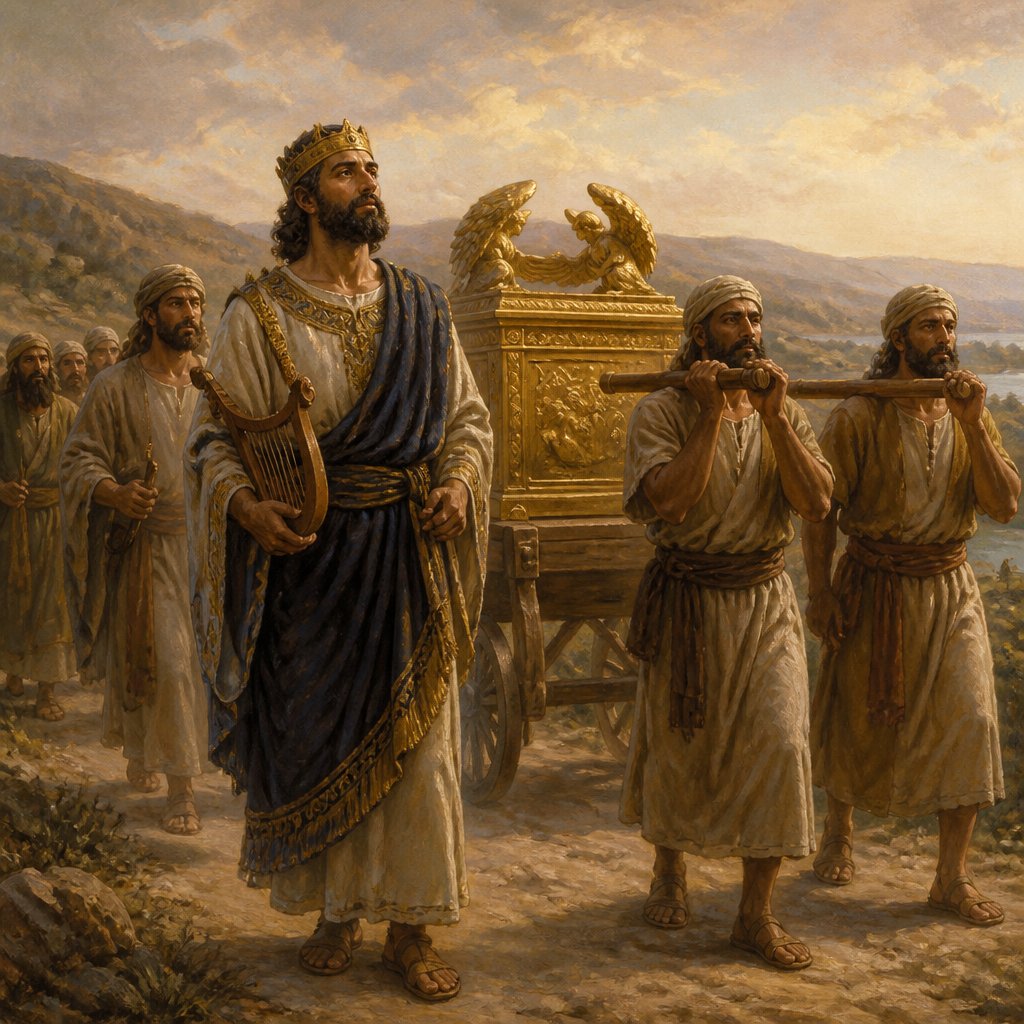
In 1 Chronicles 13:3, we see the hearts of the people stirred as King David gathers them with a poignant call to restore the Ark of the Covenant, saying, "And let us bring again the ark of our God to us: for we enquired not at it in the days of Saul." This verse encapsulates a profound truth about the relationship between Israel and God during that tumultuous period of history. As we delve into this passage, we can uncover deep lessons about our own spiritual lives and our desire for the nearness of God.
At the heart of David's directive is a reflection on neglect and a yearning for restoration. The Ark of the Covenant, a physical representation of God's presence among His people, had been neglected during the reign of Saul. This period was marked by a lack of spiritual inquiry and reliance on God. Instead, the nation faced troubles and challenges without seeking divine guidance, indicating a distance from their Creator.
In this context, David's statement reflects a collective consciousness that recognizes their spiritual deficiency. "For we enquired not at it in the days of Saul" signifies a broader issue – the people had withdrawn from a life of seeking God. They had not sought His will, His guidance, or His presence. Instead, they operated in a void, relying on their own wisdom and strategies.
This theme resonates deeply within our contemporary lives. How often do we find ourselves navigating through life without the anchor of divine guidance? Like the Israelites, we can easily drift into periods of spiritual neglect, neglecting the presence of God in our everyday lives. The world is full of distractions, and amidst career pressures, family obligations, and personal struggles, we might forget to seek God’s counsel. Our prayers might become routine, and scripture might become less of a daily bread and more of a forgotten map.
David’s call to action invites us to reflect on the significance of the Ark. Bringing the Ark back symbolizes a return to God’s presence; it encapsulates a desire to seek Him earnestly and allow His presence to lead. In many ways, we often have to acknowledge our own wanderings away from God. Just as David took stock of his nation’s spiritual state, we too need to evaluate our hearts regularly. Are we seeking God's presence intentionally? Are we prioritizing our relationship with Him in our daily lives?
The consequences of ignoring God's presence, as history shows, can lead to significantly adverse outcomes. Saul's reign was plagued by disobedience and a lack of God’s guidance, which ultimately contributed to division and strife in Israel. On the contrary, David's reign, once the Ark was brought back, was characterized by glory, unity, and a palpable sense of God’s favor. It teaches us that when we prioritize God by inviting His presence back into our lives, we can experience restoration, peace, and clarity amid life's chaos.
In practical terms, how might we bring the 'Ark' back into our lives? It can begin with setting aside dedicated time for prayer and Bible study, allowing God’s Word to shape our thoughts and actions. It involves creating spaces in our lives to listen for God’s voice; it could mean seeking community support, being part of a church, or finding accountability with fellow believers who encourage us in our walk.
As we ponder these thoughts, let us remember that David’s initiative to retrieve the Ark was not merely about an object; it was about a relationship—a relationship with the God who desired to dwell with His people. So, let us echo David's sentiments today: let us earnestly seek to bring back the presence of God in our lives and let it transform our hearts anew. For He is waiting for us to return, to rekindle that divine connection, and to transform our weary souls with His love and grace.
In closing, let us pray: "Lord, I desire your presence in my life. Help me identify the areas where I have neglected seeking you. I commit to prioritizing our relationship and beckon you into the depths of my heart. Amen."
Want to reflect more on 1 Chronicles 13:3?
Continue your spiritual journey with Bible Chat — an AI-powered tool for exploring God's Word through conversation. Ask questions, discover connections, and deepen your understanding.
Get Our Apps


1 Chronicles 13:3 Artwork

1 Chronicles 13:3 - "And let us bring again the ark of our God to us: for we enquired not at it in the days of Saul."

"And let us bring again the ark of our God to us: for we enquired not at it in the days of Saul." - 1 Chronicles 13:3

1 Chronicles 3:13 - "Ahaz his son, Hezekiah his son, Manasseh his son,"

"Ahaz his son, Hezekiah his son, Manasseh his son," - 1 Chronicles 3:13

1 Chronicles 1:13 - "And Canaan begat Zidon his firstborn, and Heth,"

1 Chronicles 1:3 - "Henoch, Methuselah, Lamech,"

1 Chronicles 13:1 - "And David consulted with the captains of thousands and hundreds, and with every leader."

1 Chronicles 24:13 - "The thirteenth to Huppah, the fourteenth to Jeshebeab,"

1 Chronicles 12:13 - "Jeremiah the tenth, Machbanai the eleventh."

2 Chronicles 3:13 - "The wings of these cherubims spread themselves forth twenty cubits: and they stood on their feet, and their faces were inward."

1 Chronicles 3:3 - "The fifth, Shephatiah of Abital: the sixth, Ithream by Eglah his wife."

1 Chronicles 6:13 - "And Shallum begat Hilkiah, and Hilkiah begat Azariah,"

1 Thessalonians 3:13

1 Thessalonians 3:13

1 Chronicles 3:7 - "And Nogah, and Nepheg, and Japhia,"

1 Thessalonians 3:13

1 Thessalonians 3:13

1 Thessalonians 3:13

1 Chronicles 13:13 - "So David brought not the ark home to himself to the city of David, but carried it aside into the house of Obed-edom the Gittite."

Lamentations 3:13

Colossians 3:13

1 Chronicles 4:13 - "And the sons of Kenaz; Othniel, and Seraiah: and the sons of Othniel; Hathath."

1 Chronicles 14:13 - "And the Philistines yet again spread themselves abroad in the valley."

1 Chronicles 3:8 - "And Elishama, and Eliada, and Eliphelet, nine."

1 Chronicles 3:6 - "Ibhar also, and Elishama, and Eliphelet,"

1 Chronicles 7:13 - "¶ The sons of Naphtali; Jahziel, and Guni, and Jezer, and Shallum, the sons of Bilhah."

1 Thessalonians 3:13

1 Thessalonians 3:13

1 Thessalonians 3:13

"Henoch, Methuselah, Lamech," - 1 Chronicles 1:3