Mighty Men of Ephraim: The Legacy of Valor
"And of the children of Ephraim twenty thousand and eight hundred, mighty men of valour, famous throughout the house of their fathers." - 1 Chronicles 12:30
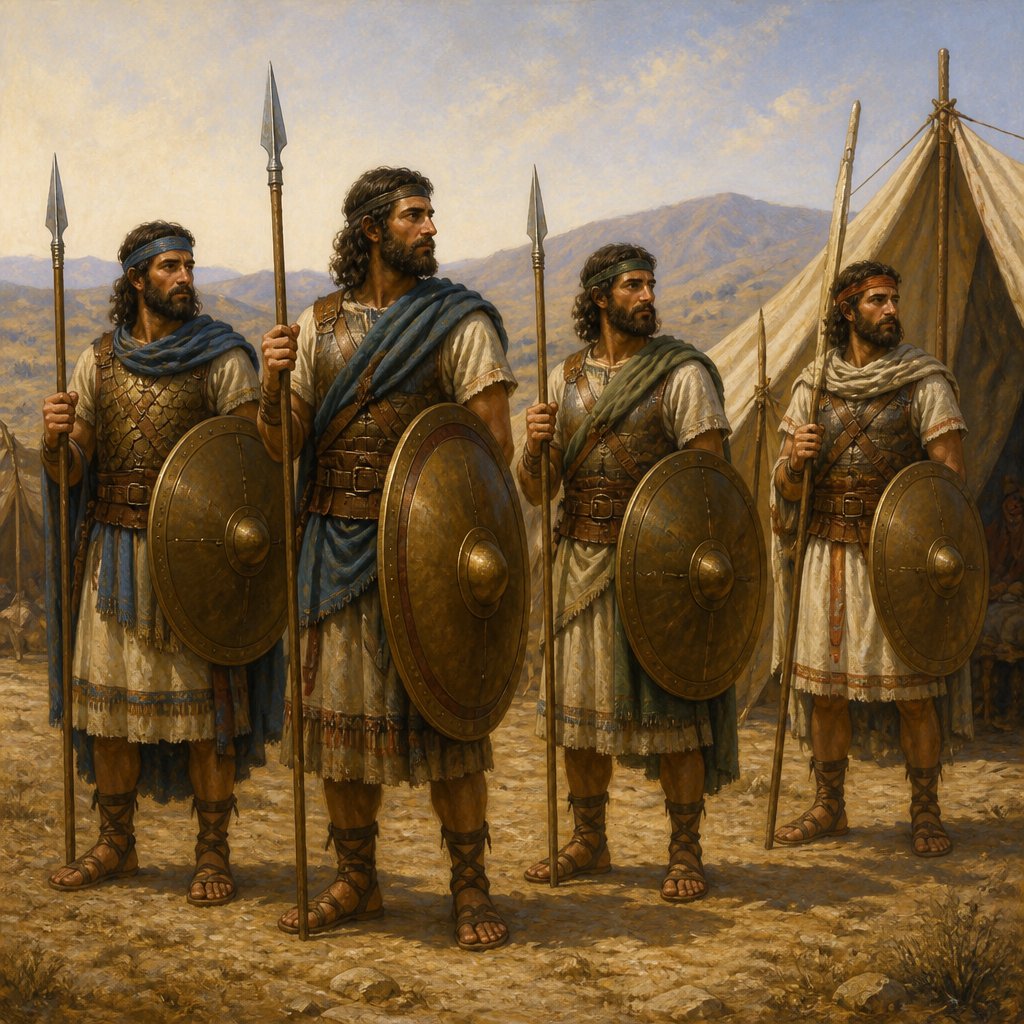
In 1 Chronicles 12:30, we read, "And of the children of Ephraim twenty thousand and eight hundred, mighty men of valour, famous throughout the house of their fathers." This verse captures a significant moment in the history of Israel, highlighting the valor and contribution of the tribe of Ephraim during a pivotal time. As we explore this reference, it invites us to examine what it means to be a "mighty man of valour" and how we can cultivate such qualities in our lives today.
### The Context of Valor
The chapter provides a context where the tribes of Israel rally to support David in becoming king. Ephraim, one of the leading tribes, contributes a formidable number of warriors who are characterized by their might and bravery. To be a "mighty man of valour" in ancient Israel was not merely about physical strength; it encompassed courage in battle, loyalty to one's leader, faithfulness to one's calling, and an unwavering spirit in the face of adversity. This vivid imagery calls to mind the qualities we aspire to embody as followers of Christ in our journeys today.
### Understanding Our Legacy
The phrase "famous throughout the house of their fathers" resonates deeply with the idea of legacy. It prompts us to reflect on the legacy we inherit as believers and the one we are crafting for future generations. The Ephraimites did not gain their reputation merely through acts of valor on the battlefield; it was also through their steadfastness to God’s covenant and their willingness to fight for what was right. As believers, we are inheritors of a legacy of faith, exemplified by those who came before us, exemplifying what it means to live a life of truth and courage.
### Mighty in Faith
To be recognized as a "mighty man of valour" in our context today might mean being mighty in faith rather than in warfare. Hebrews 11 highlights numerous examples of individuals whose faith led them to accomplish great things for God. Just as the Ephraimites were known for their physical prowess, we, too, can be known for our spiritual strength. When we stand firm in our beliefs, advocate for justice, and extend grace to others, we reassert our strength not through aggression but through love and righteousness.
### The Importance of Unity
The rallying of the tribes around David signifies the power of unity. In our quest to become "mighty" in our communities and our families, we must prioritize coming together. Just as the children of Ephraim joined forces with others, we, too, are called to collaborate and support one another in our Christian walk. Each of us possesses unique gifts and contributions that, when united, create a powerful force for good. In John 17:21, Jesus prayed, "That they all may be one; as thou, Father, art in me, and I in thee, that they also may be one in us." Our unity is paramount in manifesting God’s kingdom on Earth.
### Courageous Action
To embody the essence of a "mighty man of valour" requires us to take courageous action. It is not enough to acknowledge our faith; we must also act on it, sometimes in the face of fear or doubt. Ephraim's warriors rallied behind David, demonstrating that true valor often requires a willingness to step into the unknown. Each of us faces our personal battles, whether spiritual, mental, or relational. We need to recognize that God has equipped us with the courage to face these challenges. As Paul reminds us in Philippians 4:13, "I can do all things through Christ which strengtheneth me."
### Conclusion
In conclusion, let the example of the children of Ephraim inspire us to cultivate a life characterized by valor, faith, and community. May we strive to be recognized not just as individuals of strength, but as vibrant members of God’s family, echoing the righteousness of our ancestors. Let us open our hearts to be transformed into mighty persons of valor—known for our faith, our actions, and our love. Remember, it is through God's strength that we achieve greatness, and it is through His call that we build a lasting legacy. Embrace the call to courage and let us forge ahead, inspiring others with our own stories of valor.
Want to reflect more on 1 Chronicles 12:30?
Continue your spiritual journey with Bible Chat — an AI-powered tool for exploring God's Word through conversation. Ask questions, discover connections, and deepen your understanding.
Get Our Apps


1 Chronicles 12:30 Artwork

1 Chronicles 12:30 - "And of the children of Ephraim twenty thousand and eight hundred, mighty men of valour, famous throughout the house of their fathers."
"And of the children of Ephraim twenty thousand and eight hundred, mighty men of valour, famous throughout the house of their fathers." - 1 Chronicles 12:30

1 Chronicles 1:30 - "Mishma, and Dumah, Massa, Hadad, and Tema,"

1 Chronicles 4:30 - "And at Bethuel, and at Hormah, and at Ziklag,"

2 Chronicles 30:12 - "Also in Judah the hand of God was to give them one heart to do the commandment of the king and of the princes, by the word of the LORD."

1 Chronicles 11:30 - "Maharai the Netophathite, Heled the son of Baanah the Netophathite,"

1 Chronicles 9:30 - "And some of the sons of the priests made the ointment of the spices."

1 chronicles 12:8

1 Chronicles 12:12 - "Johanan the eighth, Elzabad the ninth,"

1 Chronicles 23:30 - "And to stand every morning to thank and praise the LORD, and likewise at even;"

1 Chronicles 7:30 - "The sons of Asher; Imnah, and Isuah, and Ishuai, and Beriah, and Serah their sister."

1 Chronicles 8:30 - "And his firstborn son Abdon, and Zur, and Kish, and Baal, and Nadab,"

1 Chronicles 2:30 - "And the sons of Nadab; Seled, and Appaim: but Seled died without children."

1 Chronicles 27:30 - "Over the camels also was Obil the Ishmaelite: and over the asses was Jehdeiah the Meronothite:"

1 Chronicles 6:30 - "Shimea his son, Haggiah his son, Asaiah his son."

"And at Bethuel, and at Hormah, and at Ziklag," - 1 Chronicles 4:30

"Mishma, and Dumah, Massa, Hadad, and Tema," - 1 Chronicles 1:30

1 Chronicles 16:30 - "Fear before him, all the earth: the world also shall be stable, that it be not moved."

1 Chronicles 25:30 - "The three and twentieth to Mahazioth, he, his sons, and his brethren, were twelve:"

1 Chronicles 1:12 - "And Pathrusim, and Casluhim, (of whom came the Philistines,) and Caphthorim."

The Plague on the Firstborn - Exodus 11, 12:1-30

The Plague on the Firstborn - Exodus 11, 12:1-30

1 Chronicles 21:30 - "But David could not go before it to enquire of God: for he was afraid because of the sword of the angel of the LORD."

1 Chronicles 24:30 - "The sons also of Mushi; Mahli, and Eder, and Jerimoth. These were the sons of the Levites after the house of their fathers."

1 Chronicles 12:10 - "Mishmannah the fourth, Jeremiah the fifth,"

1 Chronicles 12:13 - "Jeremiah the tenth, Machbanai the eleventh."

1 Chronicles 12:11 - "Attai the sixth, Eliel the seventh,"

1 Chronicles 24:12 - "The eleventh to Eliashib, the twelfth to Jakim,"

"Johanan the eighth, Elzabad the ninth," - 1 Chronicles 12:12

1 Corinthians 12:30 - "Have all the gifts of healing? do all speak with tongues? do all interpret?"