The Cost of Loyalty: A Reflection on 1 Chronicles 12:19
"And there fell some of Manasseh to David, when he came with the Philistines against Saul to battle: but they helped them not: for the lords of the Philistines upon advisement sent him away, saying, He will fall to his master Saul to the jeopardy of our heads." - 1 Chronicles 12:19
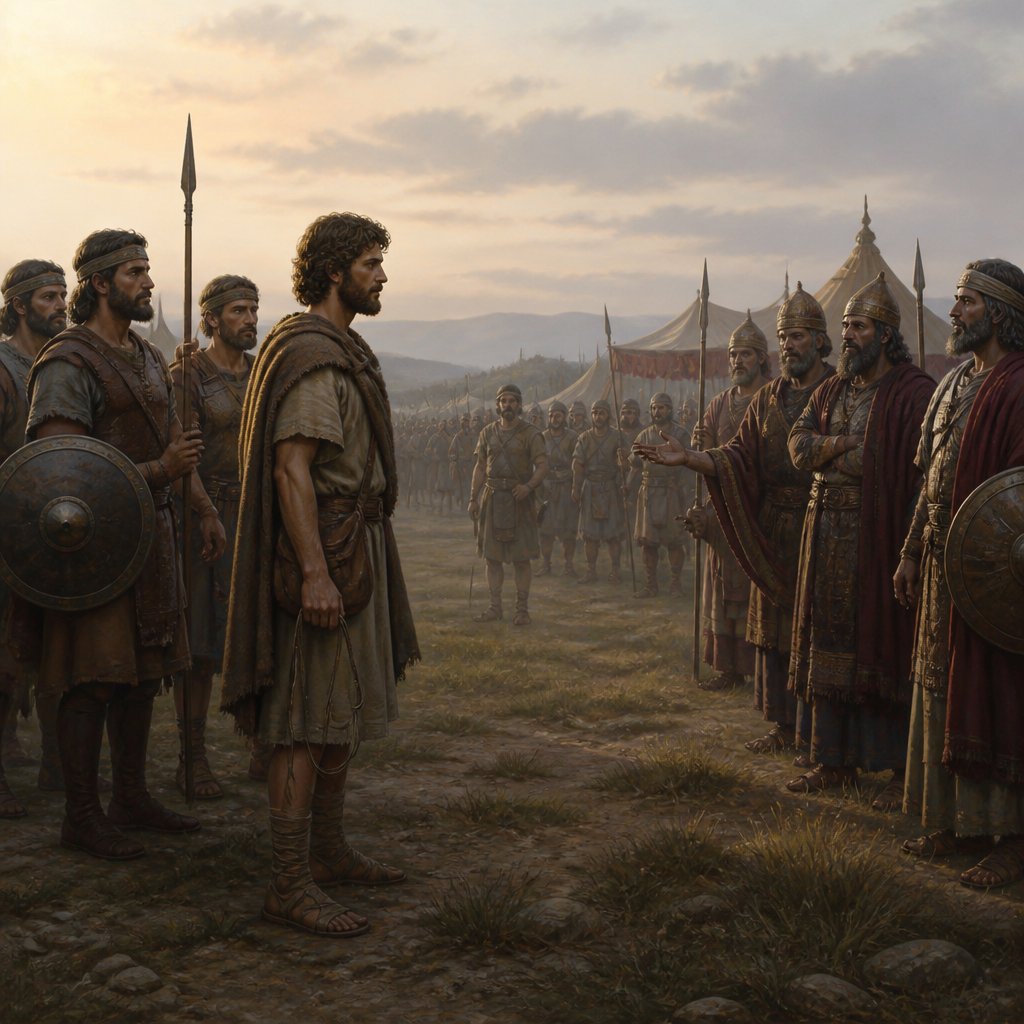
In the annals of history, few stories resonate as deeply as the saga of David and Saul. One particularly poignant moment occurs in 1 Chronicles 12:19, where it is recorded, "And there fell some of Manasseh to David, when he came with the Philistines against Saul to battle: but they helped them not: for the lords of the Philistines upon advisement sent him away, saying, He will fall to his master Saul to the jeopardy of our heads."
This verse serves as a stirring reminder of the complexities of allegiance, loyalty, and the often-painful decisions we must make in our spiritual journey. David, a man after God's own heart, found himself in a precarious position, drawn into a conflict where his honor, destiny, and relationships were all tested. To fully appreciate the depth of this passage, we must explore the narrative surrounding it, the themes of loyalty and betrayal, and how they apply to our own lives today.
**The Context of Conflict**
In the larger narrative, David had been on the run from Saul, who was consumed by jealousy and fear over David's rising prominence. At this time, David sought refuge among the Philistines, the very enemies of Israel. Joining forces with them meant aligning with those who were fundamentally opposed to his own people, the very nation God had called him to lead. However, this move was both strategic and desperate; it reflected David's desire to survive amidst conflict.
As David rallied warriors around him, some from the tribe of Manasseh chose to leave the Philistine camp and defect to David’s side. It is critical to note that their decision came with significant personal risk. Aligning themselves with David, who was still seen as a traitor by Saul, could mean treason in the eyes of both the Philistines and Saul’s loyalists. This illustrates the high stakes involved in acts of loyalty; when we choose to follow the path laid out for us by God, we often do so at a great personal cost.
**The Dilemma of Dual Allegiance**
The verse speaks to two critical realities of human experience: the struggle for allegiance and the fear of repercussions. The leaders of the Philistines, understanding the precariousness of David’s loyalties, feared that he would revert to his allegiance to Saul, thereby putting their lives in danger. Their caution speaks to a deeper truth about the often-complicated nature of loyalties in our own lives — whether it’s between family, friends, or our commitments to God.
In making choices aligned with our faith, like the men of Manasseh did, we may find ourselves in conflict with places we once belonged. We may even face skepticism from those outside our newfound path. Jesus warned of this in Matthew 10:34-36, stating, "Think not that I am come to send peace on earth: I came not to send peace, but a sword. For I am come to set a man at variance against his father, and the daughter against her mother, and the daughter in law against her mother in law. And a man's foes shall be they of his own household."
**The Reward of Faithful Loyalty**
The men of Manasseh chose to align themselves with David, who would later become King and a symbol of divine promise. Their loyalty would not go unrewarded; their courageous act of allegiance ultimately contributed to the establishment of a righteous kingdom that honored God. When we make choices that place us on the path of faith, we must remember that God sees our sacrifices.
In our day-to-day lives, each decision to follow God, especially in the face of opposition, can yield profound blessings that sometimes only become evident later in our journey. Loyalty to God is never in vain; it builds resilience, character, and ultimately, it aligns us with the purposes of the Almighty.
**Conclusion**
As we reflect on 1 Chronicles 12:19, let us examine our own allegiances. Are there areas where God is calling us, yet fear or societal expectation holds us back? The men of Manasseh teach us the value of aligning ourselves with God’s chosen, standing firm in faith even when it entails personal risk. May we, like them, demonstrate courage in our convictions, choosing loyalty to God above all else, knowing that such a decision will always lead to divine affirmation and blessing.
Want to reflect more on 1 Chronicles 12:19?
Continue your spiritual journey with Bible Chat — an AI-powered tool for exploring God's Word through conversation. Ask questions, discover connections, and deepen your understanding.
Get Our Apps


1 Chronicles 12:19 Artwork
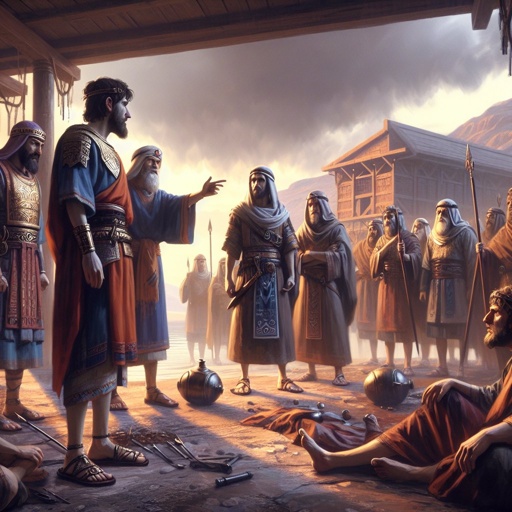
1 Chronicles 12:19 - "And there fell some of Manasseh to David, when he came with the Philistines against Saul to battle: but they helped them not: for the lords of the Philistines upon advisement sent him away, saying, He will fall to his master Saul to the jeopardy of our heads."
"And there fell some of Manasseh to David, when he came with the Philistines against Saul to battle: but they helped them not: for the lords of the Philistines upon advisement sent him away, saying, He will fall to his master Saul to the jeopardy of our heads." - 1 Chronicles 12:19
1 Chronicles 19:12 - "And he said, If the Syrians be too strong for me, then thou shalt help me: but if the children of Ammon be too strong for thee, then I will help thee."

1 chronicles 12:8

2 Kings 12:19 - "¶ And the rest of the acts of Joash, and all that he did, are they not written in the book of the chronicles of the kings of Judah?"

1 Chronicles 12:12 - "Johanan the eighth, Elzabad the ninth,"

1 Chronicles 8:19 - "And Jakim, and Zichri, and Zabdi,"

1 Chronicles 1:12 - "And Pathrusim, and Casluhim, (of whom came the Philistines,) and Caphthorim."

Exodus 12:1-19

1 Chronicles 5:19 - "And they made war with the Hagarites, with Jetur, and Nephish, and Nodab."

1 Chronicles 12:10 - "Mishmannah the fourth, Jeremiah the fifth,"

1 Chronicles 12:13 - "Jeremiah the tenth, Machbanai the eleventh."

1 Chronicles 12:11 - "Attai the sixth, Eliel the seventh,"

1 Chronicles 16:19 - "When ye were but few, even a few, and strangers in it."

1 Chronicles 7:19 - "And the sons of Shemidah were, Ahian, and Shechem, and Likhi, and Aniam."

1 Chronicles 24:12 - "The eleventh to Eliashib, the twelfth to Jakim,"

1 peter 4:12-19

"Johanan the eighth, Elzabad the ninth," - 1 Chronicles 12:12

1 Chronicles 12:7 - "And Joelah, and Zebadiah, the sons of Jeroham of Gedor."

1 Chronicles 26:19 - "These are the divisions of the porters among the sons of Kore, and among the sons of Merari."

1 Chronicles 6:19 - "The sons of Merari; Mahli, and Mushi. And these are the families of the Levites according to their fathers."

1 Chronicles 27:19 - "Of Zebulun, Ishmaiah the son of Obadiah: of Naphtali, Jerimoth the son of Azriel:"

2 Chronicles 19:1 - "And Jehoshaphat the king of Judah returned to his house in peace to Jerusalem."

Apocalipsis 11, 19; 12, 1-6. 10

1 Chronicles 6:12 - "And Ahitub begat Zadok, and Zadok begat Shallum,"

1 Chronicles 12:26 - "Of the children of Levi four thousand and six hundred."

1 Chronicles 12:9 - "Ezer the first, Obadiah the second, Eliab the third,"

1 Chronicles 12:6 - "Elkanah, and Jesiah, and Azareel, and Joezer, and Jashobeam, the Korhites,"

1 Chronicles 25:19 - "The twelfth to Hashabiah, he, his sons, and his brethren, were twelve:"

1 Chronicles 12:5 - "Eluzai, and Jerimoth, and Bealiah, and Shemariah, and Shephatiah the Haruphite,"