The Sacredness of Sacrifice: A Reflection on 1 Chronicles 11:19
"And said, My God forbid it me, that I should do this thing: shall I drink the blood of these men that have put their lives in jeopardy? for with the jeopardy of their lives they brought it. Therefore he would not drink it. These things did these three mightiest." - 1 Chronicles 11:19
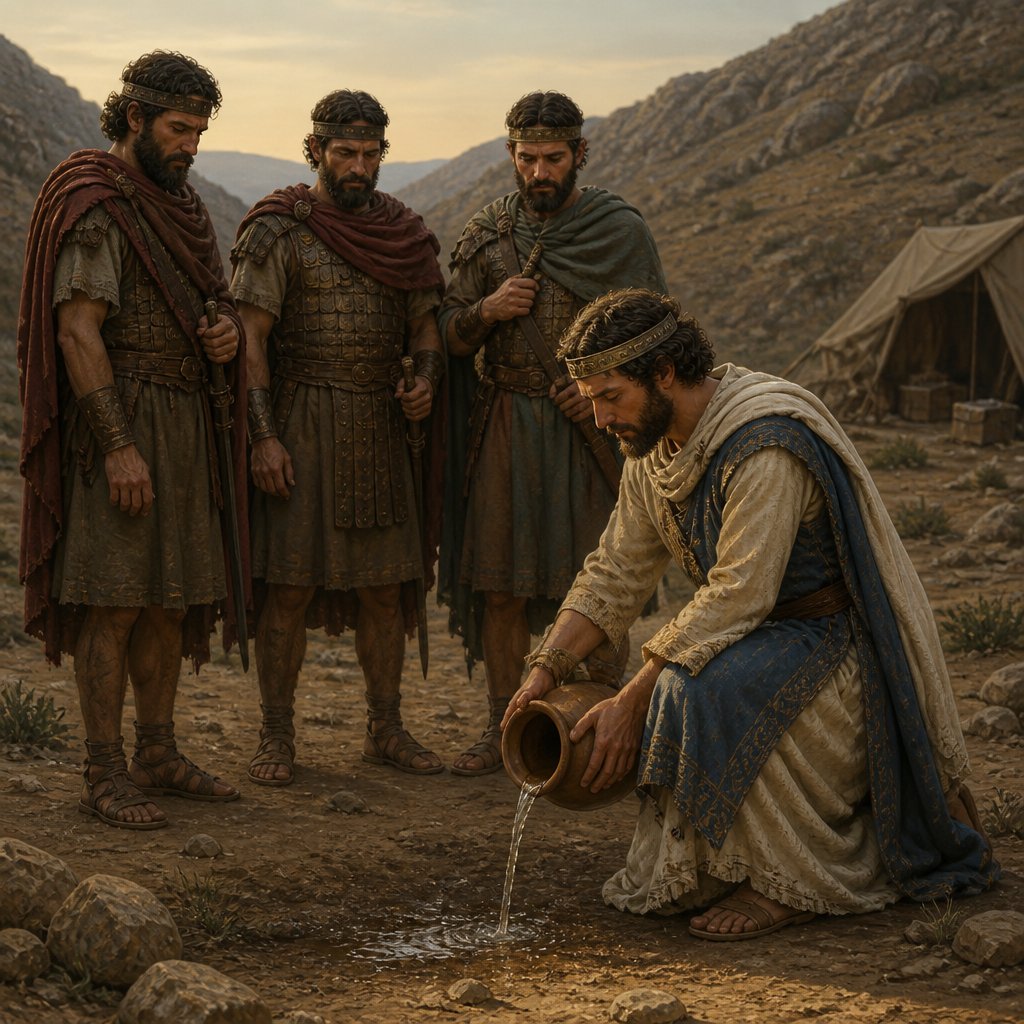
As we delve into the profound message of 1 Chronicles 11:19, we encounter a powerful declaration of reverence, loyalty, and the weight of sacrifice. The verse tells us the words of David: "And said, My God forbid it me, that I should do this thing: shall I drink the blood of these men that have put their lives in jeopardy? for with the jeopardy of their lives they brought it. Therefore he would not drink it. These things did these three mightiest."
In this passage, we witness a moment laden with significance. King David, having received water from the well of Bethlehem, refrains from drinking it. This water, drawn from perilous circumstances, symbolizes the ultimate sacrifice made by his mighty men—three hero warriors who risked their lives to fulfill their king’s desire. It is not just water that they brought back, but a testament to their loyalty and valor. Through David's response, we are prompted to reflect on the deeper meanings of sacrifice and honor.
Firstly, the notion of sacrifice is paramount in this verse. These mighty men surged through enemy lines to draw water from a well in Bethlehem, a place that held not just geographical significance but deep emotional ties for David. Their act was not merely about quenching thirst; it was a declaration of their commitment to their leader. David understood that this water was akin to their blood; it encapsulated their struggle, their risk, their lives. This raises crucial reflections on what we value and the lengths we are willing to go for those we honor, be it through acts of service, commitment, or even simple gestures of love.
Moreover, David's reaction reveals the essence of humility and respect for those who sacrifice. He acknowledges the peril these men faced and recognizes that the act of drinking that water would diminish their bravery. For David, drinking the water would mean dishonoring the very lives that were put at risk for him. This teaches us a valuable lesson: to assume a posture of gratitude and acknowledgment for the sacrifices made by others in our lives. In our modern context, how often do we stop to appreciate the efforts of those who go above and beyond for us? Whether it's a family member, friend, or colleague, recognizing their sacrifices fosters deeper relationships and mutual respect.
Additionally, this scene evokes a call to honor the sanctity of life and sacrifice. In David’s refusal to drink the water, we see a foundational principle—there is sacredness in the sacrifices made by others. Every act of service entails its personal costs and risks. He elevates the act of his men beyond mere action and places it within the realm of reverent acknowledgment. This teaches us the value of recognizing the heart behind actions, not just the actions themselves. Are we mindful of the ‘blood’ behind the ‘water’ in our relationships?
As we reflect upon this passage from an interpersonal perspective, let us ask ourselves how we can better honor those who sacrifice for us. How can we emulate David’s respect and humility in our dealings with others? What might it look like in our daily life to recognize and appreciate the burdens borne by our families, friends, and communities?
Finally, let us consider our personal sacrifices. In what ways are we called to lay down our lives, albeit in smaller ways, for those around us? David’s refusal to partake in the water, understanding its cost, serves as a reminder that our lives are interconnected. In laying down our preferences and comforts, we reflect the heart of Christ, who ultimately gave His life for us. As we embody this principle, may we strive to live lives marked by selflessness, respect, and the celebration of others' sacrifices.
In closing, once we truly appreciate the depth of sacrifice, we cultivate gratitude and a renewed sense of purpose in our lives. Like David, may we continually seek to uphold the dignity and honor of those around us who sacrifice. Let our hearts echo the truth that every act of love is a precious gift, and may we be ever mindful of the lives that make such gifts possible.
Want to reflect more on 1 Chronicles 11:19?
Continue your spiritual journey with Bible Chat — an AI-powered tool for exploring God's Word through conversation. Ask questions, discover connections, and deepen your understanding.
Get Our Apps


1 Chronicles 11:19 Artwork
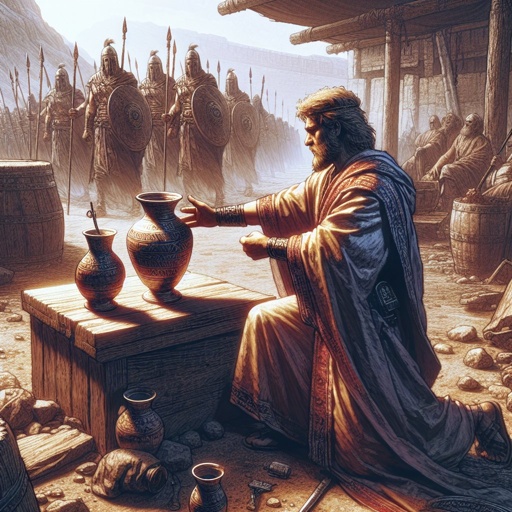
1 Chronicles 11:19 - "And said, My God forbid it me, that I should do this thing: shall I drink the blood of these men that have put their lives in jeopardy? for with the jeopardy of their lives they brought it. Therefore he would not drink it. These things did these three mightiest."
"And said, My God forbid it me, that I should do this thing: shall I drink the blood of these men that have put their lives in jeopardy? for with the jeopardy of their lives they brought it. Therefore he would not drink it. These things did these three mightiest." - 1 Chronicles 11:19

1 Chronicles 19:11 - "And the rest of the people he delivered unto the hand of Abishai his brother, and they set themselves in array against the children of Ammon."

2 Chronicles 11:19 - "Which bare him children; Jeush, and Shamariah, and Zaham."

1 Chronicles 8:19 - "And Jakim, and Zichri, and Zabdi,"

Nehemiah 11:1-19

1 Chronicles 1:11 - "And Mizraim begat Ludim, and Anamim, and Lehabim, and Naphtuhim,"

1 Chronicles 5:19 - "And they made war with the Hagarites, with Jetur, and Nephish, and Nodab."

1 Chronicles 11:29 - "Sibbecai the Hushathite, Ilai the Ahohite,"

1 Chronicles 12:11 - "Attai the sixth, Eliel the seventh,"

1 Chronicles 24:11 - "The ninth to Jeshua, the tenth to Shecaniah,"

1 Chronicles 11:40 - "Ira the Ithrite, Gareb the Ithrite,"

1 Chronicles 11:27 - "Shammoth the Harorite, Helez the Pelonite,"

1 Chronicles 11:36 - "Hepher the Mecherathite, Ahijah the Pelonite,"

1 Chronicles 16:19 - "When ye were but few, even a few, and strangers in it."

1 Chronicles 7:19 - "And the sons of Shemidah were, Ahian, and Shechem, and Likhi, and Aniam."

1 Chronicles 11:47 - "Eliel, and Obed, and Jasiel the Mesobaite."

1 Chronicles 11:33 - "Azmaveth the Baharumite, Eliahba the Shaalbonite,"
"Which bare him children; Jeush, and Shamariah, and Zaham." - 2 Chronicles 11:19

1 Chronicles 8:11 - "And of Hushim he begat Abitub, and Elpaal."

1 Chronicles 11:43 - "Hanan the son of Maachah, and Joshaphat the Mithnite,"

1 Chronicles 26:19 - "These are the divisions of the porters among the sons of Kore, and among the sons of Merari."

1 Chronicles 6:19 - "The sons of Merari; Mahli, and Mushi. And these are the families of the Levites according to their fathers."

1 Chronicles 27:19 - "Of Zebulun, Ishmaiah the son of Obadiah: of Naphtali, Jerimoth the son of Azriel:"

2 Chronicles 19:1 - "And Jehoshaphat the king of Judah returned to his house in peace to Jerusalem."

1 Chronicles 11:32 - "Hurai of the brooks of Gaash, Abiel the Arbathite,"

1 Chronicles 11:41 - "Uriah the Hittite, Zabad the son of Ahlai,"

1 Chronicles 11:37 - "Hezro the Carmelite, Naarai the son of Ezbai,"
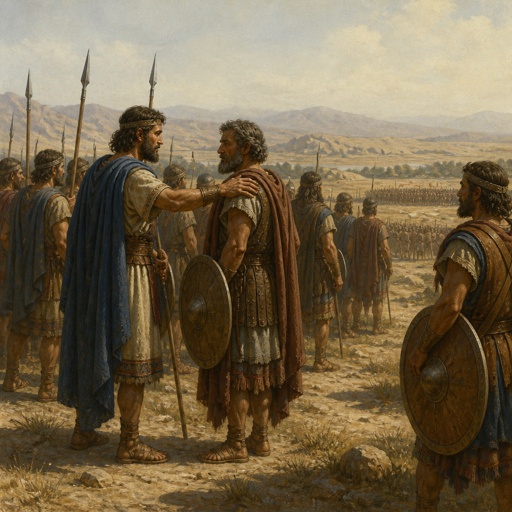
"And the rest of the people he delivered unto the hand of Abishai his brother, and they set themselves in array against the children of Ammon." - 1 Chronicles 19:11

Apocalipsis 11, 19; 12, 1-6. 10